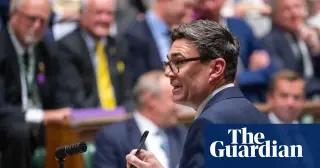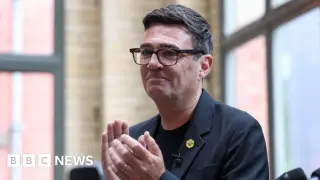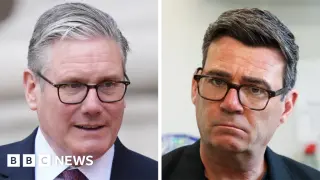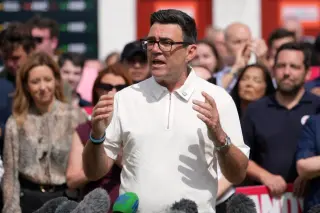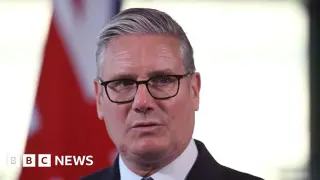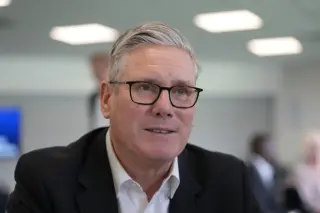
British Prime Minister Keir Starmer faces renewed pressure within the Labour Party after local election losses, as he meets party members and reiterates his agenda, signaling perseverance despite the setback.
Labour endured a bruising set of local election results for Sir Keir Starmer, prompting scrutiny of the party’s appeal as other UK parties—including Reform UK under Nigel Farage and the SNP in Holyrood—made gains, signaling a fragmented political landscape ahead of national contests.
Keir Starmer says he will remain prime minister despite Labour suffering heavy local-election losses across the north and Midlands, with calls for his resignation coming from some MPs. Reform UK makes significant gains, including taking Havering in London, underscoring a fragmentation of two-party politics. Labour held some London councils but lost others like Wandsworth and Westminster, while its cabinet remains loyal. Starmer accepts responsibility and plans to set out a renewed policy agenda in forthcoming speeches ahead of the king’s address, aiming to move closer to the EU to win back voters.
BBC’s Elections 2026 live blog reports counting underway across 46 English councils, with Redditch declaring Labour’s majority lost as Reform gains eight seats to Labour’s one (Greens and Conservatives also shedding). Early key ward results in Peterborough show Lib Dem gains amid rising Reform/Green shares, while Havering, Basildon and Chorley register Reform momentum. Labour ministers warn of difficult results, and Wales’ Senedd contest is shaping up as a potential Labour setback. Counting continues across England, with Scotland and Wales counts due Friday.
Labour is expected to lose control of the Senedd, ending 27 years of Welsh government, with Plaid Cymru and Reform UK in a tight race under Wales’s proportional system; counting begins Friday and a majority is unlikely, potentially triggering leadership questions for Keir Starmer and possible talks on forming the next Welsh government.
Britain's centre-left Labour government, led by Home Secretary Shabana Mahmood, is drawing on Denmark's hardline migration policies to counter Nigel Farage's right-wing surge, proposing tougher asylum rules, temporary status, and welfare conditions tied to compliance, while facing internal Liberal opposition and seeking to preserve public consent and expand safe routes for genuine refugees.
Labour, Reform UK and the Green Party are contesting the Gorton and Denton by-election in a tight three-way race that could boost Keir Starmer or signal momentum for Reform and the Greens, while by-elections of this kind do not change Parliament's arithmetic.
Health Secretary Wes Streeting published his private messages with former US ambassador Peter Mandelson, presenting them as not close friends while using the disclosures to counter smears as he pursues a leadership bid. The exchanges show Streeting fearing he could lose his seat, criticising the government’s lack of a growth strategy, and weighing Labour’s stance on Palestine recognition amid Mandelson’s controversial appointment and ongoing investigations.
Former Liverpool MP Peter Kilfoyle says Tony Blair’s 1994 Labour leadership bid involved Peter Mandelson, who was allegedly kept out of sight behind the scenes under the codename 'Bobby'; Kilfoyle says Blair told him Mandelson would be kept away, and Blair’s team used a veil of secrecy around Mandelson, who later became a central figure in New Labour. Mandelson’s career was later dogged by several scandals, and after ties to Jeffrey Epstein he was sacked as the UK’s ambassador to the US last year.
Pat McFadden urged Labour MPs not to oust Keir Starmer over the Mandelson controversy, saying the prime minister’s 2024 appointment as US ambassador was a mistake but leadership turnover wouldn’t fix the country’s problems. The piece also notes Union pressure for a leadership refresh, ongoing scrutiny of Mandelson’s links to Epstein, calls for Mandelson to return or donate any payoff, and the Metropolitan Police investigation, with up to 100,000 Mandelson documents expected to be released.
Provisional Home Office data show about 60,000 foreign nationals were removed from the UK in the 19 months since Labour took office in July 2024, a 15% rise from the prior period, while January 2026 recorded the lowest removals in almost three years largely due to fewer voluntary departures. Under Labour, voluntary departures have made up around three-quarters of removals, but that share fell to 62% in January; final figures may change when published. Labour has pledged to increase returns for people with no legal right to be in the UK, and there are no official statistics on the number of people in the country illegally. For more, BBC Verify’s migration tracker is referenced in the update.
Labour MPs grow angrier over Lord Mandelson’s links to Jeffrey Epstein as documents about Mandelson’s vetting for the US ambassador post move toward ISC review; ministers defend the vetting process while Starmer confirms he regrets appointing Mandelson after being misled, with the party bracing for more questions as Starmer prepares a major speech in East Sussex.
DOJ-released emails show Lord Mandelson maintained a frank, often jokey friendship with Jeffrey Epstein before and after Epstein’s 2008 conviction, including discussions about Labour figures and Mandelson’s memoir. Keir Starmer says Mandelson misled him about the extent of the relationship ahead of Mandelson’s appointment as US ambassador, and the bond appears to have cooled by 2012, with Mandelson insisting he never left Epstein’s side.
Peter Mandelson, once a central architect of New Labour and a former British ambassador to the US, is under a US criminal probe for allegedly leaking market-sensitive information to Jeffrey Epstein after the 2008 financial crisis. New Epstein documents show deeper ties, including emails praising Epstein and suggesting pressure on British ministers, prompting Keir Starmer to dismiss him from Washington and triggering a Metropolitan Police investigation into misconduct in public office. The disclosures threaten Labour's credibility and have set off a political crisis as opponents seize on Mandelson’s past to critique leadership decisions.
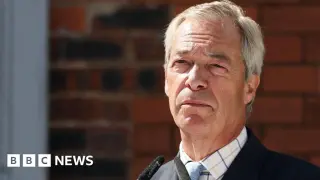
Reform UK leader Nigel Farage unveils a five-point plan to “save Britain’s pubs,” including cutting VAT to 10%, scrapping the hospitality NIC rise, reducing beer duty by 10%, and phasing out pub business rates, funded by social-security changes such as reinstating a two‑child cap on universal credit, aiming to capitalize on pub distress and Labour’s policy gaps.