
Fluffy Ice Hazards Loom for Ocean Moon Landers
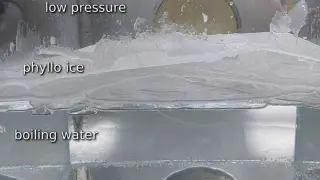
New vacuum-chamber experiments modeling Europa- and Enceladus-like conditions find that low-pressure cryogenic freezing can produce highly porous, croissant-shaped 'fluffy ice' layers. These layers could be several meters to tens of meters thick, creating brittle ice that threatens lander stability or burial on the surface, complicating future missions to ocean worlds. Researchers will simulate flowing cryovolcanic flows to better mimic real surfaces, and mission planners (Europa Clipper, JUICE, and future landers) will need to rethink landing gear and procedures to cope with this icy hazard.