space-and-spaceflight15.88 min read
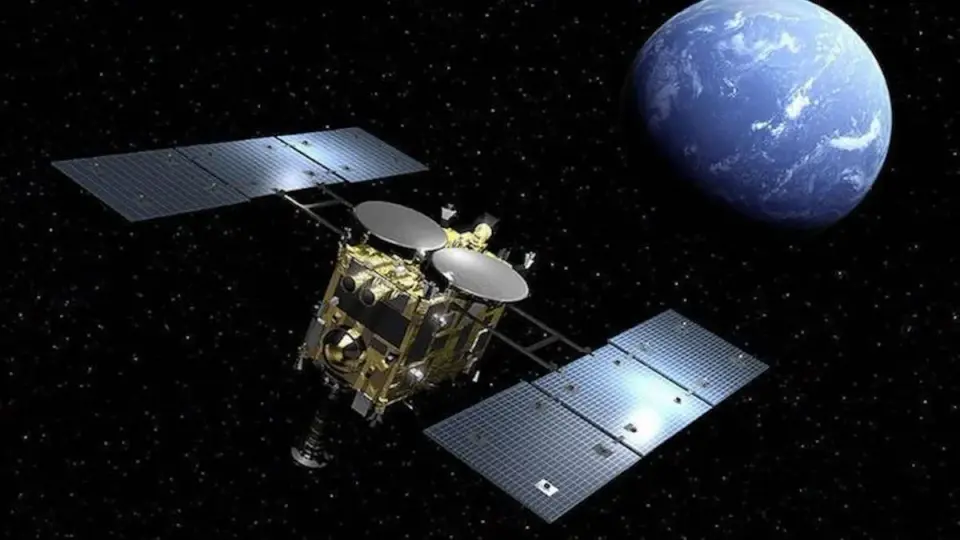
JAXA Engineers Plan Hybrid Engine Repair to Save Hayabusa2’s Asteroid Mission
3 days ago•Source: Gizmodo

The latest space and spaceflight stories, each synthesized from multiple sources with added background and context.
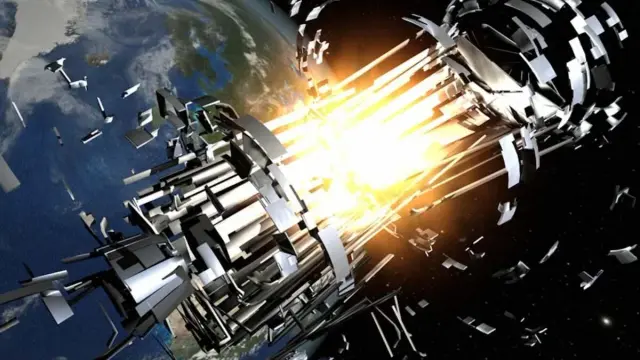
A defunct U.S. intelligence satellite, designated USA-32 and nicknamed 'Farrah III,' unexpectedly fragmented in low Earth orbit on September 13, 2026. Launched in 1988 to intercept Soviet signals, the spacecraft broke apart at an altitude of 775 kilometers, creating a debris cloud. While the U.S. Space Force reports no immediate threats to other spacecraft, the cause of the explosion remains unknown, with possibilities ranging from propellant failure to space debris impact.
Gizmodo•16 days ago
Gizmodo•23 days ago
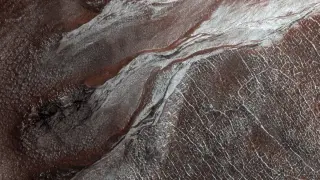
A new arXiv preprint analyzing Mars Express and MRO data suggests Martian gullies aren’t carved by liquid water—and CO2 geysers aren’t the culprit either. The authors favor CO2-ice–driven sublimation or avalanche-like flows during the late stages of seasonal ice loss, based on a lack of spectral water signals and a timing mismatch with geyser activity, though the work remains a preprint not yet peer-reviewed.
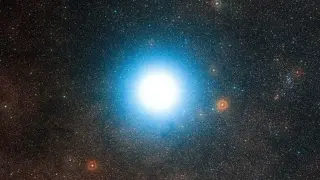
A Seattle nonprofit’s Fermi Explorer Mission plans a 1-kg probe to Alpha Centauri by 2029, using solar-electric propulsion and a 12-year Sun-orbit to reach escape velocity, then travel interstellar distances. The 4x4x4 inch payload will include a digitized Golden Record and messages from children; the mission is expected to cost under $15 million and could take up to 80,000 years, aiming to inspire future generations rather than be completed within one lifetime.

President Trump interrupted NASA’s post-launch briefing for the Nancy Grace Roman Space Telescope to congratulate the agency and claim funding, a moment that echoes his earlier attempts to cancel or slash funding for NASA’s science missions; Congress shielded Roman from cuts, and Trump later signed an order establishing a U.S. Space Academy.
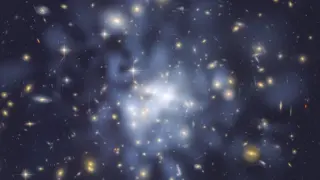
A Chinese Academy of Sciences team reports a sharp gamma-ray line in 15.5 years of Fermi Gamma-ray Space Telescope data, arguing it provides strong direct evidence for dark matter in the form of weakly interacting massive particles (WIMPs). The authors say the signal fits expectations for WIMP annihilation, but gamma-ray lines can arise from instrumental or astrophysical sources, so confirmation will require further data and independent verification as new gamma-ray observatories come online.
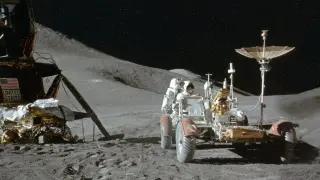
NASA researchers tested five Earth microbes (including Deinococcus radiodurans and Aspergillus niger) in simulated lunar conditions and found that shadowed lunar polar pockets could preserve microbes in cryptobiosis, suggesting the Moon may be less inhospitable than thought and that astronauts could unintentionally contaminate it; the study in Science Advances used LRO data to map radiation and UV exposure and highlights cold traps at the poles as potential refuges for microbial life, raising planetary-protection considerations and opportunities for future sterile experiments.
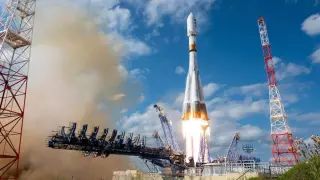
A Ukrainian missile strike hit the Progress Rocket Space Center in Russia’s Samara region, a hub that builds Soyuz-2 rockets and underpins Roscosmos’ launch cadence for ISS transport, military satellites, and Earth observation. Zelenskyy said Flamingo missiles were used, and imagery suggests Building 106A (a clean-room avionics facility) may have been damaged. If confirmed, production delays could slow launches through 2027–2030, compounding Roscosmos’ funding and international-isolation challenges and potentially denting Russia’s space ambitions relative to the U.S. and China.
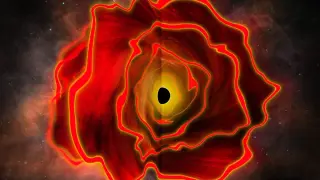
Nature-published researchers report the discovery of MoM-BH*-1, a newly identified object that resembles a giant star but radiates energy like a black hole, wrapped in dense gas and outshining its host galaxy. Scientists label it a “black hole star,” a find that could illuminate how the first supermassive black holes formed and connect to the JWST-detected little red dots from the cosmic dawn; further JWST observations are planned to constrain its mass and atmospheric properties.
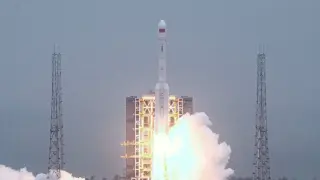
About 85 seconds after liftoff from Wenchang, China's Long March 7A exploded in a massive fireball, destroying the ChinaSat 4B payload; investigators say an unidentified anomaly is under review, marking the rocket's first failure since its 2020 debut after a long streak of successful missions.
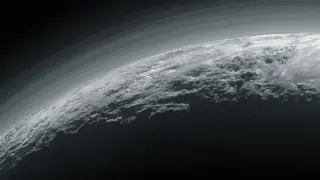
New Horizons data and Earth-based stellar occultations show Pluto’s atmospheric pressure rose from 1988 to 2015, stayed roughly constant until about 2021, and then declined by as much as 16% by 2022 as the dwarf planet moved farther from the Sun, potentially signaling the first signs of atmospheric collapse that had been anticipated for decades; continued observations over the coming years will be needed to confirm the trend, with Pluto not returning closer to the Sun until 2114.
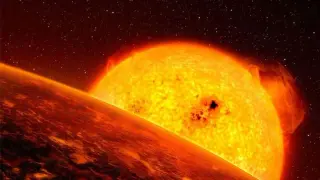
A speculative arXiv preprint outlines a megaproject to keep Earth habitable for 9.1 quadrillion years: build a 435,000‑mile sunshade just outside the Moon’s orbit to block the Sun, mine Moon and Ceres for materials to anchor a vast tether, and power an artificial Sun via fusion reactors in Jupiter beamed to Earth; to avoid the Sun’s red giant engulfment, Earth would be nudged outward to about 1.2 AU, with additional safeguards addressing tectonics, water loss and other cosmic threats. The concept remains theoretical and unproven.