Tag

Enceladus

All articles tagged with #enceladus

Enceladus: sampling an alien ocean without landing via its plume
space3 days ago

Enceladus: sampling an alien ocean without landing via its plume

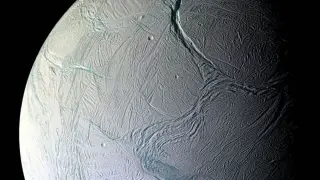
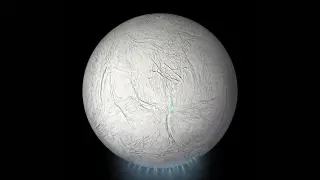
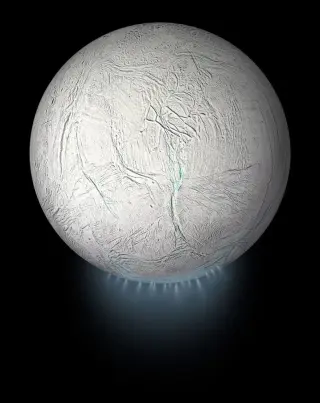
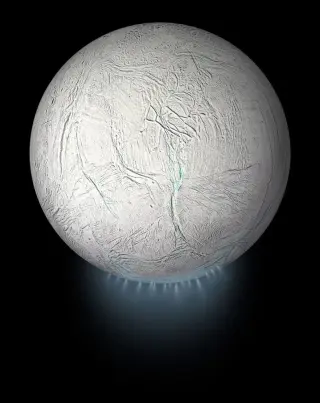
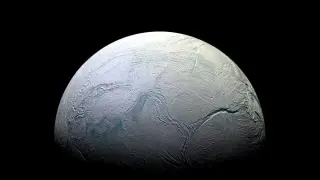
Enceladus, a small moon of Saturn, hides a global ocean beneath its ice and vents a plume of water vapor and ice grains through south-pole fractures, feeding Saturn’s E ring. Cassini flew through this plume from 2004–2017, sampling material from the ocean that had been altered en route and finding organic compounds and phosphorus, which points to habitability rather than life—no life-detection instruments were onboard. Future missions with dedicated biosignature instruments could probe further, but none are funded yet; current insights come from re-analysis of Cassini data and the plume’s status as a processed sample of an alien ocean.

Cassini’s final plunge: a controlled Saturn dive to protect Saturn’s moons
space4 days ago

Cassini’s final plunge: a controlled Saturn dive to protect Saturn’s moons

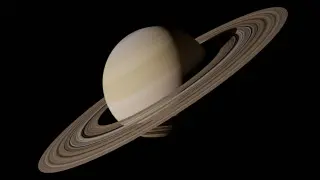
NASA ended Cassini’s 13-year Saturn mission by steering the spacecraft into Saturn in 2017 to prevent any chance of contaminating Enceladus or Titan as fuel ran low. In its last 90 seconds, Cassini’s thrusters fought against Saturn’s tenuous upper atmosphere to keep its antenna aimed at Earth, transmitting real-time data on the planet’s atmosphere, magnetic field, and surrounding environment. The dive secured crucial science while ensuring the moons’ environments remained pristine, a decision that also highlighted the value of planetary protection for future missions.

Cassini's Grand Finale: A Deliberate Farewell to Protect Enceladus and Unveil Saturn's Secrets
space8 days ago

Cassini's Grand Finale: A Deliberate Farewell to Protect Enceladus and Unveil Saturn's Secrets

After 20 years in orbit, Cassini ended in 2017 with a controlled plunge into Saturn to prevent a fuel-depleted craft from contaminating Enceladus; its Grand Finale sent the orbiter on 22 dives through a 1,500-mile gap between Saturn's cloud tops and the inner edge of its rings, yielding landmark data on Saturn’s gravity, magnetic field, rings, and upper atmosphere, while Enceladus’s plumes revealed a subsurface ocean and organic chemistry. To avoid any contamination, Cassini carried plutonium-powered generators that would disperse if the craft burned up, ending the mission but leaving a vast scientific data legacy.

Fluffy Ice Hazards Loom for Ocean Moon Landers
space-and-spaceflight11 days ago

Fluffy Ice Hazards Loom for Ocean Moon Landers

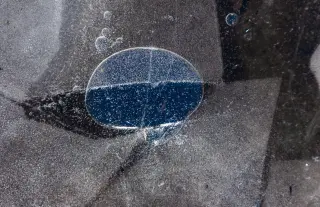
New vacuum-chamber experiments modeling Europa- and Enceladus-like conditions find that low-pressure cryogenic freezing can produce highly porous, croissant-shaped 'fluffy ice' layers. These layers could be several meters to tens of meters thick, creating brittle ice that threatens lander stability or burial on the surface, complicating future missions to ocean worlds. Researchers will simulate flowing cryovolcanic flows to better mimic real surfaces, and mission planners (Europa Clipper, JUICE, and future landers) will need to rethink landing gear and procedures to cope with this icy hazard.

Webb and Hubble Spotlight Saturn in Infrared: Rings, Moons, and the Polar Hexagon
science2 months ago

Webb and Hubble Spotlight Saturn in Infrared: Rings, Moons, and the Polar Hexagon

Webb’s infrared images of Saturn, paired with Hubble’s visible-light data, show bright rings, a multi-layer atmosphere, and weather patterns, plus moons Janus, Dione and Enceladus; Enceladus’s plumes hint at a subsurface ocean, while the iconic north-polar hexagon remains visible as Saturn heads toward its 2025 equinox, with sharper views anticipated into the 2040s.

Enceladus: Saturn's Icy Moon Reveals Signs of Habitability and Potential Life
science7 months ago

Enceladus: Saturn's Icy Moon Reveals Signs of Habitability and Potential Life

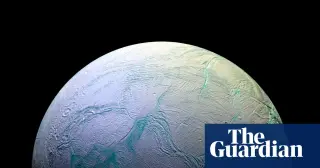
Astronomers have found complex organic molecules in Saturn's moon Enceladus, suggesting it may be a promising candidate in the search for extraterrestrial life, based on data from the Cassini spacecraft indicating chemical reactions in its underground ocean. While not confirming life, these findings increase the moon's habitability potential, prompting interest in future missions.