Tag

Europa

All articles tagged with #europa

Galileo’s Swan Song: NASA Sacrificed a Probe to Shield Europa’s Hidden Ocean
space4 days ago

Galileo’s Swan Song: NASA Sacrificed a Probe to Shield Europa’s Hidden Ocean

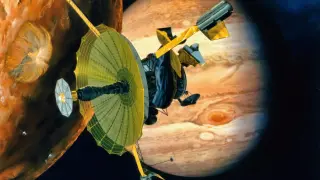
In 2003 NASA deliberately crashed the Galileo spacecraft into Jupiter to prevent a potential contaminant from a drifting probe reaching Europa, after data suggested a subsurface salty ocean on Europa (and discoveries about other Jovian moons). The decision reflected planetary-protection rules: if a world could harbor life, a failing or abandoned spacecraft must not risk introducing Earth biology. Galileo’s extended mission delivered key findings about Europa, Ganymede, and Callisto, and its disposal set a precedent for how future outer-planet missions are planned to avoid contaminating ocean worlds like Europa.

Europa plume claims lose steam after reanalysis
space6 days ago

Europa plume claims lose steam after reanalysis

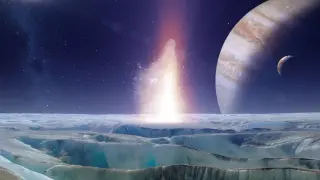
A 14-year reanalysis of Hubble data casts doubt on Europa’s previously claimed water vapor plumes, lowering confidence from about 99.9% to under 90% and suggesting the earlier detections may have been due to data placement noise; the team says plumes can’t be ruled out, but the question may be settled by NASA’s Europa Clipper mission expected to arrive in 2030.

Europa Plume Claims Doubted: Hydrogen Exosphere, Not Local Water Vapor
space-and-spaceflight6 days ago

Europa Plume Claims Doubted: Hydrogen Exosphere, Not Local Water Vapor

A new reanalysis of Hubble data reduces the 2014 claim of 200-km-high water-vapor plumes on Europa from 99.9% confidence to under 90%, suggesting the earlier signal may be statistical noise; meanwhile there’s evidence for a persistent hydrogen exosphere but no localized water vapor. Future missions like Europa Clipper and JUICE will help settle the question.

Fluffy Ice Hazards Loom for Ocean Moon Landers
space-and-spaceflight12 days ago

Fluffy Ice Hazards Loom for Ocean Moon Landers

New vacuum-chamber experiments modeling Europa- and Enceladus-like conditions find that low-pressure cryogenic freezing can produce highly porous, croissant-shaped 'fluffy ice' layers. These layers could be several meters to tens of meters thick, creating brittle ice that threatens lander stability or burial on the surface, complicating future missions to ocean worlds. Researchers will simulate flowing cryovolcanic flows to better mimic real surfaces, and mission planners (Europa Clipper, JUICE, and future landers) will need to rethink landing gear and procedures to cope with this icy hazard.

Europa's deep ocean could be energy-starved, study suggests
science3 months ago

Europa's deep ocean could be energy-starved, study suggests

A computer-modeling study indicates Europa’s global ocean may lack the energy needed to support life because its rocky interior is largely quiet and tidal heating is weak. Energy would be scarce for potential ecosystems, confined to shallow rocky zones or radiolysis-driven chemistry, making life less likely overall. The findings help guide the Europa Clipper mission’s search strategies, but confirmation would require direct samples from the ocean.

Europa’s Ice Shell Is Much Thicker Than We Thought, New Juno Data Show
space-and-spaceflight4 months ago

Europa’s Ice Shell Is Much Thicker Than We Thought, New Juno Data Show

A 2022 Juno flyby analysis estimates Europa’s ice shell in the observed region to be about 29 kilometers (18 miles) thick on average. If a warmer, convective inner layer exists, the total thickness could be greater; the presence of dissolved salt could reduce thickness by roughly 4.8 kilometers. Near-surface “scatterers” (cracks/pores) are likely small and not major pathways for exchange with the ocean. These findings help constrain how the subsurface ocean might connect to the surface and inform upcoming Europa Clipper and Juice missions in assessing the moon’s habitability.

Juno Estimates Europa’s Ice Shell at 29 Kilometers, Hinting at a Deeper Ocean
space4 months ago

Juno Estimates Europa’s Ice Shell at 29 Kilometers, Hinting at a Deeper Ocean

NASA’s Juno used its Microwave Radiometer to measure Europa’s near-surface ice shell during a 2022 flyby, finding an average thickness of about 29 km (18 miles) in the observed region and favoring thicker-shell models; if a salty layer exists, thickness could be reduced by about 3 miles. The data also reveal small near-surface scatterers—cracks and pores—not likely to provide major nutrient pathways to the subsurface ocean, with implications for future Europa Clipper and Juice missions.

Drifting surface ice could ferry life-supporting chemicals to Europa’s hidden ocean
space4 months ago

Drifting surface ice could ferry life-supporting chemicals to Europa’s hidden ocean

Washington State University researchers model lithospheric foundering on Jupiter’s moon Europa, showing that salt-rich surface ice can sink through the ice shell and transport oxidants formed by Jupiter’s radiation into the subsurface ocean in as little as 30,000 years, potentially delivering the ingredients needed for life and informing upcoming Europa Clipper investigations.

Europa's Seafloor Shows Little Activity, Reducing Life Prospects
science4 months ago

Europa's Seafloor Shows Little Activity, Reducing Life Prospects

A new study suggests that Europa's ocean floor likely lacks significant tectonic activity and hydrothermal vents, reducing its chances for supporting life, though other energy sources might still exist. The findings imply that Europa may be less hospitable for life than previously thought, but the search continues with upcoming missions like NASA's Europa Clipper.

Mysterious Spider-Like Formations on Europa and Jupiter Spark Alien Life Theories
science5 months ago

Mysterious Spider-Like Formations on Europa and Jupiter Spark Alien Life Theories

Scientists have proposed that the mysterious spider-like feature observed on Europa's surface, initially thought to be a structure within a crater, may have formed through processes similar to Earth's lake stars, but likely resulted from an asteroid impact that created cracks allowing salty water to seep through, providing insights into Europa's subsurface and potential signs of extraterrestrial life.