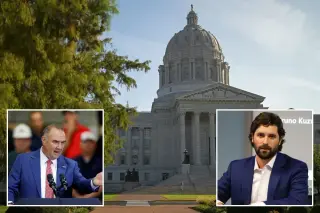
Missouri Secretary of State Denny Hoskins directed local officials to use the 2022 congressional map after a Supreme Court stay, but the 8th Circuit Court of Appeals fast-tracked a hearing for Sept. 17, reviving the legal battle over the controversial 'Missouri First' map.
Missouri voters rejected Amendments 4 and 5 by wide margins, prompting Republican leaders to pivot from income tax elimination to property tax relief. Democrats are leveraging the defeat to target vulnerable GOP candidates in November.
Missouri voters decisively rejected Amendments 4 and 5 in every county on August 4, 2026. Amendment 4, which would have required citizen-led constitutional changes to pass in every congressional district, and Amendment 5, which proposed eliminating the state income tax, both failed with less than 20% support statewide. The defeats marked a rare bipartisan rejection of proposals championed by Governor Mike Kehoe and the Republican legislature.
Missouri voters decisively rejected Amendment 5, a proposal to abolish the state income tax, with 84% voting no and 16% voting yes in the August 4 primary. The measure, backed by Governor Mike Kehoe and sponsored by Rep. Bishop Davidson, would have eliminated individual income taxes, which currently account for 63% of the state’s general revenue. Opponents, including the Missouri REALTORS group and campaigns like 'Protect MO Taxpayers,' argued that eliminating the income tax would force higher sales taxes, disproportionately burdening low- and middle-income residents while benefiting high earners. The defeat preserves Missouri’s current graduated income tax structure, ranging from 2% to 4.7%, and prevents the state from becoming the 10th without an individual income tax.
Missouri voters will decide on Amendment 5, a proposal to eliminate the state income tax by expanding sales and use taxes. Supporters argue this will spur economic growth, while opponents warn it will disproportionately burden low- and middle-income households. The measure grants lawmakers broad authority to adjust tax rates without specific exemptions, creating significant uncertainty regarding future costs for residents.