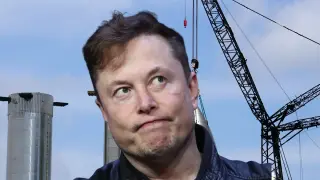
Bleecker Street moved up the release of Musk, Alex Gibney’s three-hour documentary about Elon Musk, to Oct. 9 after overwhelming demand; it premiered at Venice and will open in New York and Los Angeles before expanding nationwide, with Musk publicly attacking Gibney on X in response.
Alex Gibney’s new Musk documentary trailer previews a provocative portrait of Elon Musk, with voices describing him as both a “greatest living inventor” and a man who may have lost his mind; the film is more than three years in the making, had Venice premiere this fall, and is slated for a theatrical release this fall.
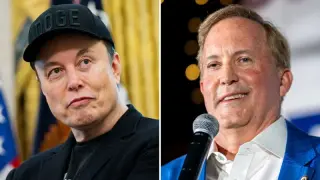
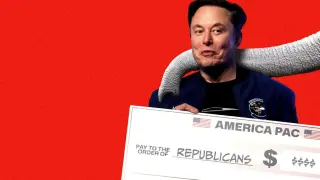
Elon Musk’s America PAC disclosed its first spending to aid Ken Paxton in Texas’ high-profile Senate contest, with about $840,000 going to 15 candidates (roughly $250,000 for Paxton) and an additional $2.9 million in midterm spending—nearly half of which targeted Texas. The move signals a major influx of national resources into the race as Paxton tries to overcome fundraising gaps amid past scandals, while other GOP groups join the effort and Democrats warn Musk’s involvement could become a political liability. The development shows how national money is increasingly shaping a contest that could determine Senate control, though money alone isn’t a guarantee.
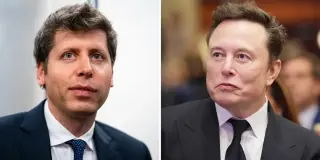
OpenAI is terminating its contract with Cursor, the coding startup recently acquired by SpaceX, citing trust concerns about whether SpaceX would use OpenAI's technology within its terms of service; Cursor’s access to OpenAI models will be shut off on November 12, and OpenAI says it will not provide future models like Astra to Cursor. The move follows ongoing tensions between Musk-backed ventures and OpenAI, though OpenAI stops short of accusing Cursor of violating terms.
SpaceX’s second post-IPO lockup tranche took effect, freeing up up to 319 million restricted shares (about 7% of shares under the 180-day lockup), with SPCX slipping in premarket trading. DZ Bank initiated coverage on the same day with a Sell rating and a $100 fair value, citing valuation risk given the capital needs to fund SpaceX’s future ventures. Musk owns roughly 48% of SpaceX and cannot sell until June 12, 2027; the unlock follows an August 6 release of about 911.5 million shares and a 389 million-share increase from the Cursor acquisition, with the lockups unwinding across multiple dates rather than all at once.
Elon Musk and Mark Zuckerberg are re-entering AI's elite with SpaceX's Grok 4.6/4.7 and Meta's Muse Glimmer—models that offer competitive performance at much lower cost and even run locally on a laptop—backed by big bets on SpaceX data, xAI, Cursor, and Scale AI to close gaps with OpenAI and Anthropic, though frontier labs still lead on performance.
Elon Musk and SpaceX/Tesla disclosed Terafab, a proposed 100-million-square-foot semiconductor megafactory in Grimes County, Texas, north of Houston, intended to centralize chip design, fabrication, packaging and testing to ease global supply bottlenecks. Phase one commitments total $16.8 billion with a binding floor of at least $5 billion and 1,800 jobs by 2030–2035; Intel has joined, though its exact contribution is unclear. The project carries a planned ceiling of up to $119 billion across multiple phases, with early production possible in 2027 and mass production targeted for 2028. The site will draw water from a nearby reservoir, and local reaction is divided amid incentives and land-use concerns.
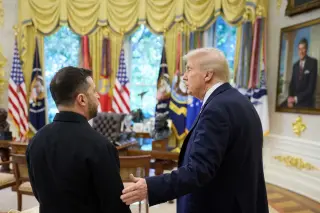
Ukraine asked U.S. President Donald Trump to persuade Elon Musk to allow Starlink to guide Ukrainian drones for strikes deep inside Russia, arguing expanded access would target Russian missile launchers and reduce dependence on scarce Patriot interceptors. SpaceX currently restricts Starlink to Ukrainian territory, including Crimea, with no commitment from Trump. Kyiv floated Starshield as an alternative and is pursuing a long-term plan to build a national satellite constellation by 2027 to lessen reliance on foreign systems.
Elon Musk plans to revive his America PAC to massively boost GOP turnout in the 2026 midterms, focusing on door-knocking, digital ads, and direct mail, coordinating with other GOP groups; the spend isn’t disclosed but is expected to be substantial, building on his 2024 donor record.
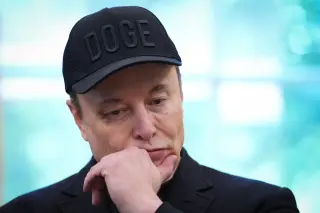
Even after DOGE’s sunset on July 4, 2026, its radical cost-cutting left a lasting footprint: alumni remain in key agencies—from the Pentagon to the State Department and SSA—shaping policy and digitization through the National Design Studio, while lawsuits persist, costs linger, and federal spending rose instead of collapsing as promised.
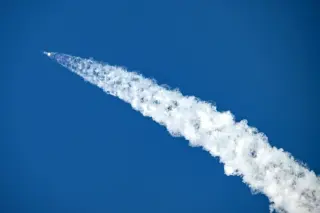
SpaceX stock closed at $131.11, below its $135 IPO price for the first time since the June debut, continuing a slide after an initial surge to near $193; the company raised $75 billion in the IPO and soon afterward issued $25 billion in debt, with short sellers close to $4 billion and market value down about $1.2 trillion from a mid-June peak, as investors await an earnings report and a Starship launch amid looming lockups that could spur more selling.
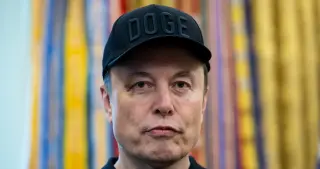
Trump’s Department of Government Efficiency (DOGE), led by Elon Musk and briefly paired with Vivek Ramaswamy, promised sweeping cuts and smarter governance but delivered limited savings, caused widespread disruption, and has largely faded as an ongoing program with a sunset set for July 4, 2026; many veterans moved on and the effort’s legacy remains debated.
The Wall Street Journal reports SpaceX is developing a slim AI hardware prototype thinner than an iPhone, but Elon Musk has denied the claim as utterly false; the piece notes SpaceX’s growing AI portfolio (SpaceXAI from xAI and Cursor) and a rumored device said to run a proprietary OS on a Qualcomm Snapdragon, though it may not reach market.
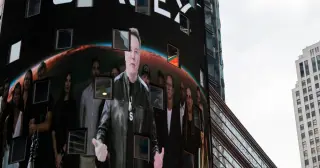
SpaceX priced about 555 million shares at $135 each, valuing the company at roughly $1.8 trillion and raising about $75 billion in the largest IPO on record, with a potential to exceed $86 billion if the greenshoe is exercised. It will trade as SPCX on Nasdaq, positioning SpaceX as a leading public-market tech/AI giant and potentially making Elon Musk the first trillionaire, as investors weigh the company’s rapid growth against its ongoing losses ($18.7B revenue in 2025 with a $4.9B net loss) and ambitious, speculative plans like space-based data centers and Mars missions. Activists also protested the concentration of Musk’s wealth and power surrounding the IPO.
SpaceX disclosed in an SEC filing that it sold $75 billion worth of shares at $135 each ahead of its Friday IPO, valuing the company at about $1.8 trillion and potentially making Elon Musk the world’s first trillionaire; trading will determine the final market value based on demand, with strong investor interest expected from both funds and retail buyers.