Millions of people nationwide have been reassigned to new congressional districts as states redraw voting maps, with ongoing court cases and legislative actions shaping how future elections will proceed.
A conservative legal group, PILF, filed a federal lawsuit on behalf of former Illinois Rep. Jeanne Ives to strike down Illinois' Voting Rights Act, arguing it violates the Fifteenth Amendment and Section 2 in the wake of the Supreme Court's Callais ruling; the suit attacks the Act's requirement to draw districts with racial considerations to create crossover or influence districts, seeks to block enforcement of the state VRA, and could test the reach of Callais beyond federal redistricting and threaten state-level protections for minority voters.
BI’s new series on the student-debt spiral shows how private loans that move between lenders and servicers can trigger mistaken balances, missing notices, and lawsuits. Profiles like Ashley Carlson and Hannah Bates illustrate how transfers and opaque communications leave borrowers unsure about who owns their debt, when they default, and how to resolve it, even as policy shifts threaten to reshape repayment. The piece highlights broader issues with private loans, consumer protections, and the rising legal costs for borrowers without attorney support.
A Superior Court judge ruled that Alaska can resume killing bears, including from helicopters, as part of a plan to bolster the Mulchatna caribou herd. The decision comes after conservation groups failed to show the state lacked a reasonable basis for the plan amid ongoing litigation over data on bear sustainability. Officials say bear removals, which totaled about 180 bears in 2023–2024 plus 11 more last year, have coincided with the herd’s slow recovery and are timed to protect calves during the calving season. The case is part of a long-running dispute over the program’s adoption and effectiveness.
Florida Gov. Ron DeSantis signed a new, aggressively gerrymandered congressional map into law, likely giving Republicans a substantial edge and triggering imminent legal challenges over partisan gerrymandering and the map’s legality under Florida’s constitutional ban, in a post-Voting Rights Act landscape following a Supreme Court ruling.
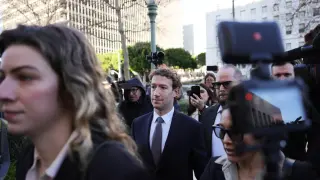
The Massachusetts Supreme Judicial Court ruled that Meta Platforms must face a state lawsuit alleging Instagram was designed to addict children, rejecting a Section 230 shield for these claims. The ruling centers on Meta’s conduct and design choices—such as push notifications, likes and infinite scrolling—rather than user content, and it marks a significant step in accountability for social-media platforms related to youth mental health; the case is part of a broader wave of similar actions across the United States.
Meta is pulling ads that seek to recruit clients for social-media addiction lawsuits across its platforms after recent verdicts that could widen platform liability. Advertising from national firms linked youth mental health harms to features like infinite scrolling and filters, and Meta says it won’t allow trial lawyers to profit from its platforms while lawsuits proceed. The move underscores ongoing scrutiny of youth safety online, with Meta bracing for potential losses and a broader global push for tighter social‑media regulation.
Elon Musk amended his lawsuit against OpenAI and Sam Altman, saying he will not seek personal damages and that any recovered profits (potentially up to $134 billion per his expert) should be returned to OpenAI’s charitable nonprofit; the filing seeks to unwind OpenAI’s for-profit conversion and restore its nonprofit status, with the trial looming and OpenAI labeling the move as harassment.
After a five-year legal battle over a verbal management agreement (allegedly 15% of net profits), Chance the Rapper was awarded just $35 in a dispute with ex-manager Pat Corcoran, who had sought millions; the verdict underscores the risks of informal contracts in music management.
The U.S. Department of Justice told a federal court that Anthropic’s designation as a supply-chain risk and restrictions on Claude AI for Pentagon use are lawful, arguing the government did not violate Anthropic’s First Amendment rights and that security concerns justify limiting access to DoD systems. Anthropic contends the government overstepped its authority and seeks relief in a lawsuit that could cost the company billions in revenue; a hearing is scheduled as the Defense Department weighs replacing Anthropic’s tools with offerings from Google, OpenAI, and xAI while the case unfolds.
New York’s Metropolitan Transportation Authority filed a federal lawsuit seeking roughly $58 million in federal funds for the Second Avenue Subway Phase 2 after the U.S. Department of Transportation paused grants over DEI-related concerns, part of a broader dispute with the Trump administration and Democrats over infrastructure funding. The suit argues the pause interfered with funding commitments and could jeopardize project timelines, following prior actions to recoup funds from the Gateway tunnel.
A divided DC Circuit panel refused to pause the Trump administration’s move to end Haiti’s Temporary Protected Status, leaving protections and work authorization in place for about 350,000 Haitians while lawsuits proceed, with judges warning that returning Haitians could expose them to violence and limited access to medical care.
Elon Musk is set to take the witness stand in a Twitter shareholder lawsuit alleging he misled investors about funding for his bid to take the company private, with the trial examining his statements and decisions surrounding the bid and their impact on investors.
A $100 million insurance dispute over losses tied to House of Cards' sixth season goes to trial, with Media Rights Capital suing Fireman’s Fund over coverage after Kevin Spacey’s illness and misconduct fallout forced production changes; Spacey’s cooperation as a witness and Netflix’s alleged tiebreaker rights loom large as the court decides whether the losses were solely caused by the sickness under the policy, potentially reshaping how production insurance handles such claims.
Following the Supreme Court's ruling invalidating much of Trump's tariffs, companies including FedEx, Dyson and L’Oréal have filed lawsuits seeking refunds under the International Emergency Economic Powers Act, with more than $100 billion at stake. The government had previously pledged refunds if Trump lost but now signals a lengthy fight; Treasury Secretary Scott Bessent said refunds could not start for about a month, while roughly 900 claims have been filed in federal court. The outcome could reshape tariff revenues and their effect on U.S. consumers and the economy as courts navigate how and when refunds are issued.