
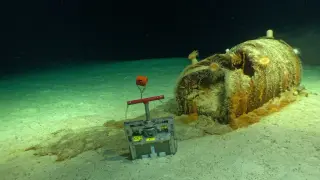
Deep-sea survey confirms radioactive leakage from 200,000 barrels dumped in Northeast Atlantic
A 2026 French-led expedition confirmed that over 200,000 barrels of low-level radioactive waste dumped in the Northeast Atlantic during the late 20th century are actively leaking. Using the submersible Nautile, scientists observed corroded containers spilling contents onto the seafloor at depths exceeding 4,700 meters. On-site measurements detected radionuclides like cobalt-60 and niobium-94 above background levels, verifying that containment has failed. While the waste was mixed with concrete or bitumen, the disposal strategy likely assumed gradual dispersal rather than permanent containment. Marine life, including anemones and crabs, has colonized the barrels, though it remains unknown if these organisms are absorbing the radioactive material. The findings, led by researchers from Clermont Auvergne University and ENS Paris, will inform OSPAR Convention efforts to monitor historic dumping sites. Further laboratory analysis is required to determine the exact extent of contamination and its ecological impact.