Tag

Novo Nordisk

All articles tagged with #novo nordisk

Semaglutide trial shows major BMI drops in children under 12, but raises growth questions
health1 day ago

Semaglutide trial shows major BMI drops in children under 12, but raises growth questions

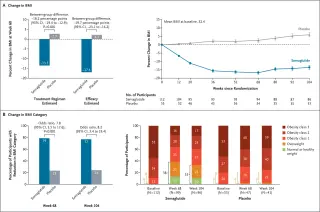
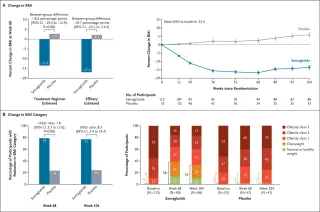
A phase 3 trial published in the New England Journal of Medicine found that once-weekly semaglutide significantly reduced body mass index (BMI) in children aged 6 to under 12 with obesity. While the drug showed strong efficacy in lowering weight and obesity status, it also resulted in less height growth compared to placebo. Novo Nordisk reported no safety concerns regarding pubertal development, but experts note long-term effects remain unknown.

Semaglutide trial shows major BMI drops in children under 12, but raises growth questions
health1 day ago

Semaglutide trial shows major BMI drops in children under 12, but raises growth questions

A phase 3 trial published in the New England Journal of Medicine found that once-weekly semaglutide significantly reduced body mass index (BMI) in children aged 6 to under 12 with obesity. While the drug showed strong efficacy in lowering weight and obesity status, it also resulted in less height growth compared to placebo. Novo Nordisk reported no safety concerns regarding pubertal development, but experts note long-term effects remain unknown.

Novo Nordisk Reports Wegovy Cuts BMI by 19.7 Points in Young Children
health8 days ago

Novo Nordisk Reports Wegovy Cuts BMI by 19.7 Points in Young Children

Novo Nordisk released full results from a late-stage trial showing that Wegovy significantly reduced body mass index in children aged 6 to 11. The drug lowered BMI by an average of 19.7 percentage points compared to a placebo over 68 weeks. Nearly 40% of treated children no longer met obesity criteria, and no safety issues regarding growth or puberty were observed. Novo Nordisk intends to seek FDA approval for this age group, where no medications are currently authorized.

Pharma Giants Defend GLP-1 Safety Amid New Contraceptive and Vision Warnings

Pharma Giants Defend GLP-1 Safety Amid New Contraceptive and Vision Warnings

Manufacturers of popular weight-loss medications are pushing back against emerging safety concerns while accelerating the development of next-generation treatments. The European Medicines Agency recently issued guidance stating that Eli Lilly’s Mounjaro may reduce the effectiveness of oral contraceptives, requiring users to employ additional barrier methods for four weeks after starting or increasing the dose. This warning stems from the drug’s effect on gastric emptying, which can alter medication absorption. In contrast, Novo Nordisk’s Wegovy was not included in this specific recommendation due to previous studies showing no significant impact on contraceptive efficacy. Meanwhile, a man in Taiwan filed a claim alleging that semaglutide, the active ingredient in Ozempic and Wegovy, caused vision loss, though authorities are still investigating the causal link. Despite these controversies, the market is expanding rapidly, with China approving Lilly’s oral drug Orforglipron and both companies reporting strong results from new clinical trials.

DJ Khaled Credits Wegovy and Golf for 75-Pound Weight Loss

DJ Khaled Credits Wegovy and Golf for 75-Pound Weight Loss

DJ Khaled has lost 75 pounds over the past year, dropping from approximately 295 to 212 pounds. The 50-year-old musician attributes the change to a combination of the GLP-1 medication Wegovy and a rigorous golf routine. He began the regimen in late 2025 after a physical incident during a performance highlighted the need for health intervention. Khaled now partners with Novo Nordisk to promote his wellness journey, which he brands as 'Walk, Golf, and Wegovy.'

FDA Mandates Class-Wide Eye Warning for GLP-1 Drugs Citing Rare NAION Risk
health13 days ago

FDA Mandates Class-Wide Eye Warning for GLP-1 Drugs Citing Rare NAION Risk

The U.S. Food and Drug Administration (FDA) has required manufacturers of all GLP-1 receptor agonists, including Ozempic, Wegovy, Mounjaro, and Zepbound, to add warnings about a rare eye condition called non-arteritic anterior ischemic optic neuropathy (NAION). This condition, often described as an 'eye stroke,' can cause sudden, painless vision loss or permanent blindness. The decision follows a review of 126 clinical trials involving over 134,000 patients, which found a higher incidence of NAION among GLP-1 users compared to placebo groups. While the FDA notes that a direct causal mechanism has not been established, the agency determined that the potential increased risk warrants a class-wide labeling update. Manufacturers, including Novo Nordisk and Eli Lilly, have stated that the data do not prove a cause-and-effect relationship and that the overall risk remains low. Medical experts advise patients not to stop their medication but to seek immediate ophthalmological care if they experience sudden vision changes.

Experts warn GLP-1 weight-loss boom threatens global insulin supply
health-and-pharma14 days ago

Experts warn GLP-1 weight-loss boom threatens global insulin supply

The Access to Medicine Foundation warns that the pharmaceutical industry's intense focus on lucrative GLP-1 weight-loss drugs is diverting resources away from essential insulin production. This shift risks destabilizing supply chains for type 1 diabetes patients, particularly in low- and middle-income countries where access to these medications remains limited. While GLP-1s were originally developed for type 2 diabetes, their massive market for obesity treatment has created higher profit margins, leading some firms to phase out older insulin products.

FDA Mandates Class-Wide Labeling for GLP-1 Drugs Citing Rare Eye Condition
health14 days ago

FDA Mandates Class-Wide Labeling for GLP-1 Drugs Citing Rare Eye Condition

The U.S. Food and Drug Administration (FDA) has required manufacturers of all glucagon-like peptide-1 (GLP-1) receptor agonists to update their labeling to include a warning about non-arteritic anterior ischemic optic neuropathy (NAION). This rare eye condition, sometimes called an 'eye stroke,' can cause sudden vision loss or blindness. The decision follows a review of clinical trials and real-world data showing a slightly higher incidence of NAION among GLP-1 users compared to placebo groups, though the FDA notes that a direct causal mechanism has not been established. The affected drugs include popular weight-loss and diabetes medications such as Novo Nordisk’s Ozempic and Wegovy, and Eli Lilly’s Mounjaro and Zepbound. While the condition is rare, the FDA emphasizes that patients should report symptoms like blurred vision or color distortion immediately. Analysts suggest the update is unlikely to significantly impact the widespread adoption of these drugs, given their substantial benefits for weight loss and metabolic health.

Novartis and Novo Nordisk heart drug trials fail to prevent cardiovascular events

Novartis and Novo Nordisk heart drug trials fail to prevent cardiovascular events

Two major clinical trials for experimental heart drugs failed to show benefits, challenging assumptions about lipoprotein(a) and inflammation as therapeutic targets. Novartis has discontinued its pelacarsen program, while experts debate whether the failures reflect flawed trial designs or fundamental biological misunderstandings.

FDA Cracks Down on Contaminated Compounded GLP-1 Drugs
health-and-science1 month ago

FDA Cracks Down on Contaminated Compounded GLP-1 Drugs

The FDA is intensifying scrutiny of compounded weight-loss drugs after inspections revealed mold and insect contamination at Chinese factories. Apothecary Pharma recalled its tirzepatide injections due to sterility concerns, while Novo Nordisk filed over 130 lawsuits against unauthorized sellers. Although shortages have ended, consumers still seek cheaper alternatives, prompting warnings about unvetted safety and quality.

Novo Nordisk reports 25% weight loss for CagriSema in women
health-and-pharma1 month ago

Novo Nordisk reports 25% weight loss for CagriSema in women

Novo Nordisk released new post-trial data showing its experimental combination drug CagriSema achieved an average 25% weight loss in women at 68 weeks. The results, based on an ideal adherence scenario, suggest the drug may outperform its current blockbuster, Wegovy, particularly for women across various menopausal stages. While the data supports efficacy, Wall Street remains cautious due to previous trial disappointments, though analysts project significant future sales.

New Mouse and Human Data Suggest GLP-1 Drugs May Slow Biological Aging
health-and-science1 month ago

New Mouse and Human Data Suggest GLP-1 Drugs May Slow Biological Aging

New research indicates that GLP-1 medications, primarily used for weight loss and diabetes, may slow biological aging and extend lifespan. Studies on mice show semaglutide extends life beyond what is expected from calorie restriction alone, while human trials suggest tirzepatide and semaglutide reduce biological age by two to four years in various organs. Experts caution that these benefits are not yet proven for healthy, non-obese individuals.

Maryland Man’s Blindness Case Highlights GLP-1 Vision Risks Amid New Rutgers Study
health1 month ago

Maryland Man’s Blindness Case Highlights GLP-1 Vision Risks Amid New Rutgers Study

Todd Engel, a 63-year-old Maryland resident, claims he became legally blind after taking Ozempic for diabetes. He was diagnosed with nonarteritic anterior ischemic optic neuropathy (NAION) in both eyes in 2024. While Novo Nordisk denies a causal link, a new Rutgers study finds a slight increased risk of this rare condition among GLP-1 users. Engel has sued the manufacturer for failing to warn patients.

Rutgers Study Quantifies Rare Vision Risk for GLP-1 Users Amidst Ongoing Litigation
health1 month ago

Rutgers Study Quantifies Rare Vision Risk for GLP-1 Users Amidst Ongoing Litigation

A new Rutgers University study published in the Annals of Internal Medicine finds that GLP-1 receptor agonists, including Ozempic and Wegovy, are associated with a slightly increased risk of ischemic optic neuropathy (ION). While the absolute risk is low, estimated at three to four additional cases per 10,000 patients over 18 months, the condition can cause sudden, permanent vision loss. This scientific data adds weight to hundreds of ongoing lawsuits against manufacturers like Novo Nordisk, who continue to deny a causal link. The study highlights that men and older adults face higher risks, urging prompt medical evaluation for sudden vision changes.