
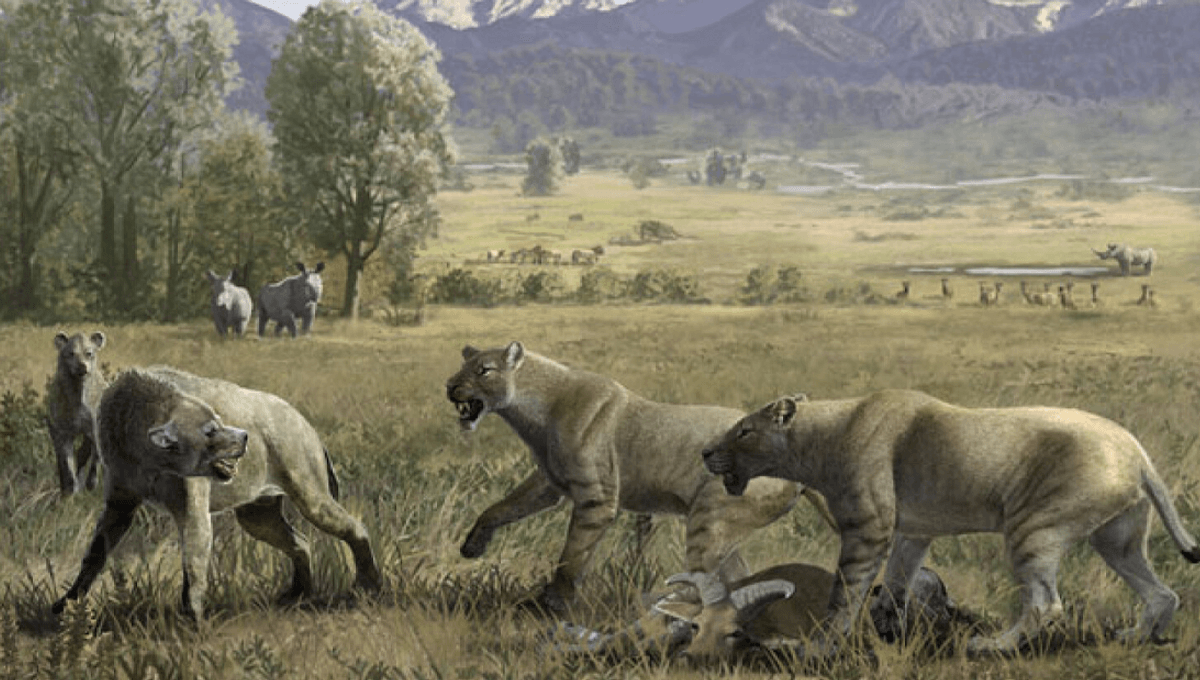
"Sabertooth Cats Showed Surprising Care for Each Other Despite Hunting Prowess"
A new skull fossil of a primitive sabertooth from the Linxia Basin, China, shows cranial adaptations to social behavior, and an injured forepaw reveals direct evidence of partner care. The sabertooths had adaptations to living in open environments that allowed them to thrive in the dry arid landscape that began spreading across the world. The evidence of the healed fractures, coupled with the cranial morphology, the benefits of hunting cooperatively in open space, plus the pressure to defend prey from large kleptoparasites, all point to the existence of partner care and social behavior within this species.