Tag

Fossil Record

All articles tagged with #fossil record

New Study Suggests 400-Million-Year-Old Giant Prototaxites Was Neither Tree Nor Fungus
science6 days ago

New Study Suggests 400-Million-Year-Old Giant Prototaxites Was Neither Tree Nor Fungus

A new study in Science Advances argues that Prototaxites, a 400-million-year-old organism reaching 7.5 meters in height, was not a fungus or tree but a distinct, extinct lineage. Fossil analysis shows its tubular structure lacks chitin and orderly branching typical of fungi, suggesting a unique form of multicellular complexity that remains ecologically mysterious.

Fossil Discovery: 98-Million-Year-Old Mantis Mimics Clubmoss Leaves
science10 days ago

Fossil Discovery: 98-Million-Year-Old Mantis Mimics Clubmoss Leaves

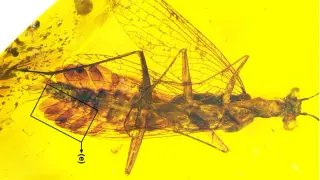
Researchers have identified a 98-million-year-old praying mantis preserved in Myanmar amber as the earliest known fossil evidence of insect-plant mimicry. Named Folimantis hyalinala, the specimen features abdominal extensions that closely resemble the leaves of the extinct clubmoss Selaginella grimaldii. Published in New Phytologist, the study suggests that mantises began evolving plant-like disguises long before flowering plants dominated ecosystems. The finding indicates that mimicry may have initially developed in the abdomen before spreading to other body parts, offering insights into the deep evolutionary history of insect camouflage.

New Fossil Map Directs Paleontologists to Recent Geological Eras for Undiscovered Marine Species
science11 days ago

New Fossil Map Directs Paleontologists to Recent Geological Eras for Undiscovered Marine Species

Researchers have developed a global map identifying where undiscovered prehistoric marine fossils are most likely to be found. By analyzing 540 million years of fossil data, they found that the most promising areas for new discoveries are in the relatively recent Cenozoic Era, rather than the extensively studied Paleozoic and Mesozoic eras. This tool aims to help scientists prioritize excavation sites and museum collections to efficiently fill gaps in Earth's biological history.

New Fossil Map Suggests Cenozoic Era Holds Greatest Potential for Paleontological Discovery
science11 days ago

New Fossil Map Suggests Cenozoic Era Holds Greatest Potential for Paleontological Discovery

Researchers have developed a global map identifying regions with the highest potential for discovering new prehistoric species. By analyzing 540 million years of marine fossil data, they found that recent geological periods, particularly the Cenozoic Era, offer more promising opportunities for new finds than the older Paleozoic and Mesozoic eras, which are already extensively studied. This tool aims to help scientists prioritize excavation sites and re-examine existing museum collections to fill gaps in Earth's biological history.

AI Model Suggests Three of Earth’s Five Mass Extinctions Were Gradual
science1 month ago

AI Model Suggests Three of Earth’s Five Mass Extinctions Were Gradual

A new AI model trained on nearly four million fossils suggests that three of Earth’s 'Big Five' mass extinctions may have been gradual declines rather than sudden catastrophes. Developed by researchers at Zhejiang Lab and Nanjing University, the model named OneStrata offers a high-resolution timeline of biodiversity changes over 300 million years. While it provides unprecedented global detail, some experts argue that existing local high-resolution data already offer similar insights, questioning whether the new model will fundamentally change current scientific understanding.

New Chinese Fossil Suggests Flight Evolved Independently in Birds and Microraptorines
science1 month ago

New Chinese Fossil Suggests Flight Evolved Independently in Birds and Microraptorines

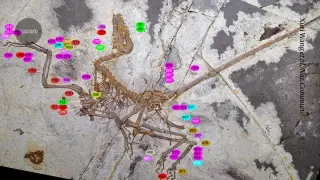
A newly described 57-centimeter microraptorine dinosaur, Norellraptor barsboldi, from Liaoning province, China, provides evidence that flight evolved independently in birds and non-avian dinosaurs. The fossil, dated to 145–100 million years ago, shares 30% of flight-related adaptations with birds but in a different sequence, supporting convergent evolution over a shared ancestral flight apparatus.

science2 months ago

20-Year Fossil Study Identifies Sedimentation Rate as Key to Time Averaging

An international consortium of researchers has completed a 20-year project analyzing over 7,500 marine fossils to determine the primary factors influencing 'time averaging' in the fossil record. The study, published in the Proceedings of the National Academy of Sciences, concludes that sedimentation rate is the dominant control on how much time is compressed into a single fossil layer. By combining data from multiple independent studies across eight countries, the team found that faster sediment accumulation reduces the mixing of fossils from different time periods, while slower accumulation allows remains from organisms living hundreds or thousands of years apart to be preserved together. This finding helps paleontologists better interpret the temporal resolution of fossil assemblages and understand past ecosystems.

Fossil Discovery Reveals 324-Million-Year-Old Amphibious Ancestor of Modern Insects
science2 months ago

Fossil Discovery Reveals 324-Million-Year-Old Amphibious Ancestor of Modern Insects

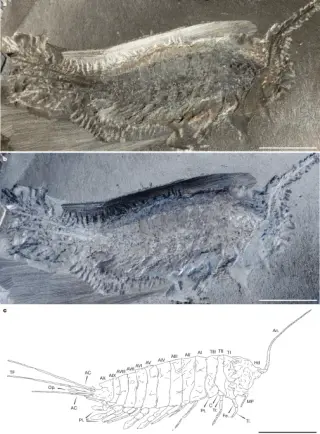
A newly described fossil, Chosha praecursor, from the Carboniferous period in Texas provides the first uncontested evidence of an early insect lineage. Dating to approximately 324 million years ago, this specimen bridges the gap between aquatic crustaceans and modern hexapods. It features insect-specific traits like an ovipositor and terminal filament, but retains nine pairs of paddle-like abdominal legs, suggesting a semi-aquatic lifestyle. This discovery helps reconcile molecular clock estimates with the fossil record, indicating that the transition to land was a gradual, amphibious process rather than a sudden shift.

Antarctic Fossil Reveals First Mammalian Predator in 55 Million Years
science2 months ago

Antarctic Fossil Reveals First Mammalian Predator in 55 Million Years

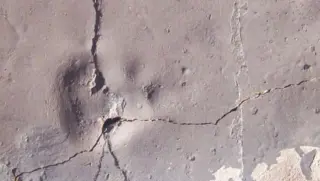
A 55-million-year-old footprint discovered on King George Island in Antarctica represents the first known mammal trackway on the continent. The fossil, labeled T-373, was found in volcanic mud and indicates the presence of a small, carnivorous mammal weighing approximately 1.3 kg. Researchers identify the trackmaker as a sparassodont, a weasel-like predator previously known only from South America. This discovery suggests that these animals migrated to Antarctica via a land bridge before the continents separated, fundamentally altering the understanding of the Eocene food web in the region.

Fossil Reveal: 324-Million-Year-Old 'Insect' Was a 24-Legged Aquatic Ancestor
science2 months ago

Fossil Reveal: 324-Million-Year-Old 'Insect' Was a 24-Legged Aquatic Ancestor

A 324-million-year-old fossil from Texas, previously misidentified as a juvenile crustacean, has been reclassified as a new insect species named Chosha praecursor. This 24-legged creature features paddle-like abdominal appendages, suggesting a semi-aquatic lifestyle and providing critical evidence for the gradual transition of insects from water to land.

Simulated Fossil Record Reveals How Bias Distorts Evolutionary History
science2 months ago

Simulated Fossil Record Reveals How Bias Distorts Evolutionary History

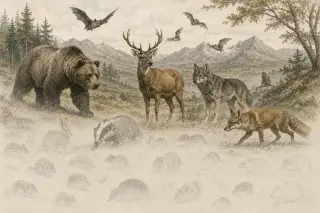
A new study demonstrates that the fossil record is inherently biased, leading to significant errors in reconstructing evolutionary history. By simulating the fossilization of modern mammals, researchers showed that future scientists would misinterpret current biodiversity and lineage relationships. The study highlights that factors like body size, geographic range, and hard body parts determine which species are preserved, meaning our current understanding of the past may be similarly skewed by these non-random preservation biases.