Tag

Phobos 1

All articles tagged with #phobos 1

JAXA cancels 1998 KY26 mission after engine failure, leaving Soviet probe theory unresolved
science-and-space2 days ago

JAXA cancels 1998 KY26 mission after engine failure, leaving Soviet probe theory unresolved

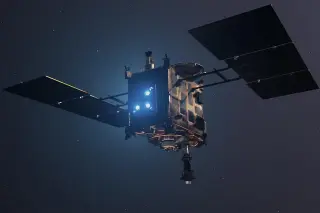
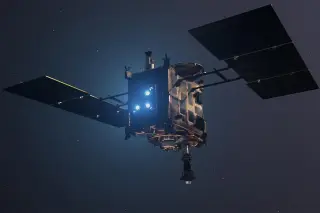
JAXA has canceled the planned 2031 Hayabusa2 rendezvous with the mysterious object 1998 KY26 due to ion engine failures, redirecting the probe to asteroid 2015 BM510 in 2028. This decision eliminates the primary opportunity for high-resolution surface imaging, leaving the debate over whether the object is a natural 'dark comet' or the lost 1988 Soviet probe Phobos 1 unresolved. While NASA and mainstream scientists attribute the object's anomalous acceleration to solar radiation forces, Harvard astrophysicist Avi Loeb argues it is a metallic spacecraft, noting that the cancellation removes the only definitive test for this hypothesis.
science5 days ago

NASA Chief Disputes Harvard Astrophysicist Over Mystery Object 1998 KY26

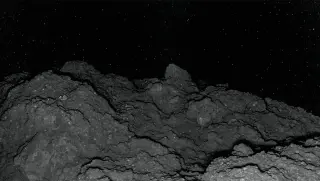
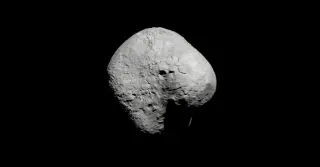
NASA Administrator Jared Isaacman asserts that the mysterious space object 1998 KY26 is an asteroid, rejecting claims by Harvard astrophysicist Avi Loeb that it is a lost Soviet spacecraft. Loeb argues the object’s non-gravitational acceleration and lack of cometary tail support the theory that it is the Phobos 1 probe, a claim Isaacman dismisses as unsupported. While scientific consensus remains divided, a 2031 mission by Japan’s Hayabusa2 spacecraft is expected to provide definitive data on the object’s composition.

JAXA Scraps 1998 KY26 Visit After Engine Failure, Leaving Soviet Probe Mystery Unresolved
space6 days ago

JAXA Scraps 1998 KY26 Visit After Engine Failure, Leaving Soviet Probe Mystery Unresolved

Japan’s space agency JAXA has cancelled the planned Hayabusa2 mission to asteroid 1998 KY26 due to an ion engine malfunction. The spacecraft will instead target asteroid 2015 BM510 in April 2028. This decision leaves the debate over whether 1998 KY26 is a natural object or the lost Soviet probe Phobos 1 unresolved, as direct observation is no longer scheduled.

Harvard Scientist Defies NASA Chief, Claims Accelerating Asteroid Is Lost Soviet Probe
science9 days ago

Harvard Scientist Defies NASA Chief, Claims Accelerating Asteroid Is Lost Soviet Probe

Harvard astrophysicist Avi Loeb publicly disputes NASA Administrator Jared Isaacman’s assertion that the accelerating space object 1998 KY26 is a standard asteroid. Loeb argues the object is actually the lost Soviet spacecraft Phobos 1, citing its non-gravitational acceleration and high reflectivity. While mainstream science leans toward a 'dark comet' or radiation-pressure explanation, new thermal models suggest the object is too warm to retain ice. The debate will be resolved in July 2031 when Japan’s Hayabusa2 spacecraft arrives for a direct rendezvous.

Loeb Suggests Hayabusa2’s Target Might Be a Soviet Relic, Not an Asteroid
science5 months ago

Loeb Suggests Hayabusa2’s Target Might Be a Soviet Relic, Not an Asteroid

Harvard astronomer Avi Loeb and colleagues speculate that 1998 KY26—the rapidly spinning object Hayabusa2 is set to study in 2031—could be a long‑lost Soviet spacecraft (Phobos 1) rather than a natural asteroid. The idea, based on suggested orbital similarities and size, is highly speculative and not yet peer‑reviewed; it aims to broaden the observational data considered when judging solar‑system objects, with Hayabusa2’s observations expected to help resolve the object's true origin.

Hayabusa2's Next Target Might Be a Soviet Space Relic, Not a Natural Asteroid
space5 months ago

Hayabusa2's Next Target Might Be a Soviet Space Relic, Not a Natural Asteroid

Hayabusa2 is heading toward the tiny, fast-spinning asteroid 1998 KY26, but a yet-to-be-peer-reviewed paper by Avi Loeb and collaborators speculates the object could be a long-lost Soviet spacecraft from the Phobos 1 mission rather than a natural body. The theory draws parallels in size and shape and notes potentially converging orbits, though the idea remains highly speculative and distant; if true, it could fuel debates about the nature of ‘Oumuamua and prompt scientists to consider man-made objects in searches for unusual space rocks. Awaiting Hayabusa2’s 2031 observations to resolve the mystery.”,