Tag

Avi Loeb

All articles tagged with #avi loeb

Japan Scraps 2031 Mission to Mysterious Object 1998 KY26, Leaving 'Soviet Probe' Theory Unresolved
science1 day ago

Japan Scraps 2031 Mission to Mysterious Object 1998 KY26, Leaving 'Soviet Probe' Theory Unresolved

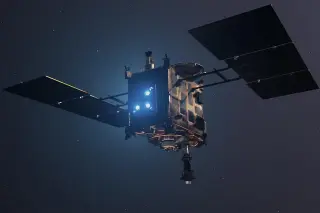
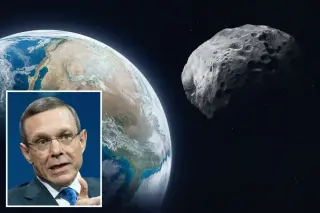
Japan’s JAXA has canceled its planned 2031 landing on the enigmatic object 1998 KY26 due to engine failures on the Hayabusa2 spacecraft. While mainstream science attributes the object’s unusual motion to solar radiation, Harvard astrophysicist Avi Loeb argues it may be the lost 1988 Soviet probe Phobos 1. The cancellation removes the only chance for a close-up surface inspection, though remote observations via the James Webb Space Telescope may still provide data.

JAXA cancels 1998 KY26 mission after engine failure, leaving Soviet probe theory unresolved
science-and-space2 days ago

JAXA cancels 1998 KY26 mission after engine failure, leaving Soviet probe theory unresolved

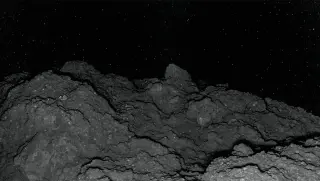
JAXA has canceled the planned 2031 Hayabusa2 rendezvous with the mysterious object 1998 KY26 due to ion engine failures, redirecting the probe to asteroid 2015 BM510 in 2028. This decision eliminates the primary opportunity for high-resolution surface imaging, leaving the debate over whether the object is a natural 'dark comet' or the lost 1988 Soviet probe Phobos 1 unresolved. While NASA and mainstream scientists attribute the object's anomalous acceleration to solar radiation forces, Harvard astrophysicist Avi Loeb argues it is a metallic spacecraft, noting that the cancellation removes the only definitive test for this hypothesis.

science5 days ago

NASA Chief Disputes Harvard Astrophysicist Over Mystery Object 1998 KY26

NASA Administrator Jared Isaacman asserts that the mysterious space object 1998 KY26 is an asteroid, rejecting claims by Harvard astrophysicist Avi Loeb that it is a lost Soviet spacecraft. Loeb argues the object’s non-gravitational acceleration and lack of cometary tail support the theory that it is the Phobos 1 probe, a claim Isaacman dismisses as unsupported. While scientific consensus remains divided, a 2031 mission by Japan’s Hayabusa2 spacecraft is expected to provide definitive data on the object’s composition.

JAXA Scraps 1998 KY26 Visit After Engine Failure, Leaving Soviet Probe Mystery Unresolved
space7 days ago

JAXA Scraps 1998 KY26 Visit After Engine Failure, Leaving Soviet Probe Mystery Unresolved

Japan’s space agency JAXA has cancelled the planned Hayabusa2 mission to asteroid 1998 KY26 due to an ion engine malfunction. The spacecraft will instead target asteroid 2015 BM510 in April 2028. This decision leaves the debate over whether 1998 KY26 is a natural object or the lost Soviet probe Phobos 1 unresolved, as direct observation is no longer scheduled.

Harvard Scientist Defies NASA Chief, Claims Accelerating Asteroid Is Lost Soviet Probe
science9 days ago

Harvard Scientist Defies NASA Chief, Claims Accelerating Asteroid Is Lost Soviet Probe

Harvard astrophysicist Avi Loeb publicly disputes NASA Administrator Jared Isaacman’s assertion that the accelerating space object 1998 KY26 is a standard asteroid. Loeb argues the object is actually the lost Soviet spacecraft Phobos 1, citing its non-gravitational acceleration and high reflectivity. While mainstream science leans toward a 'dark comet' or radiation-pressure explanation, new thermal models suggest the object is too warm to retain ice. The debate will be resolved in July 2031 when Japan’s Hayabusa2 spacecraft arrives for a direct rendezvous.

Hayabusa2’s 2031 Mission to 1998 KY26 Faces New Scientific Challenges
science-and-space10 days ago

Hayabusa2’s 2031 Mission to 1998 KY26 Faces New Scientific Challenges

Astronomers debate the nature of object 1998 KY26, which exhibits unexplained acceleration. While mainstream experts classify it as a 'dark comet,' Harvard’s Avi Loeb argues it is a lost Soviet spacecraft. New thermal models suggest it is too warm for buried ice, challenging the outgassing theory. JAXA’s Hayabusa2 is scheduled to visit the object in July 2031 to resolve these conflicting hypotheses.

Trump's UAP Science Council Faces Data Delays as Sixth File Batch Released
politics1 month ago

Trump's UAP Science Council Faces Data Delays as Sixth File Batch Released

The Trump administration released its sixth batch of Unidentified Anomalous Phenomena (UAP) files in September 2026, spanning records from 1952 to 2025. Despite this, Harvard astrophysicist Avi Loeb, who chairs the newly formed UAP Science Council, reports that intelligence agencies have not yet provided the classified data necessary to verify potential extraterrestrial technology. While the files include intriguing footage of high-speed objects, Loeb notes they do not constitute definitive proof of alien life.

Loeb Warns Satellite Constellations Will Blind Astronomers to Extraterrestrial Signals
science3 months ago

Loeb Warns Satellite Constellations Will Blind Astronomers to Extraterrestrial Signals

Harvard astrophysicist Avi Loeb argues that massive satellite deployments by SpaceX and others will create light pollution that prevents the detection of extraterrestrial technological signatures. He warns that this 'false negative' risk could lead humanity to falsely conclude it is alone in the universe. Loeb has publicly challenged Elon Musk on this issue and urges immediate action to preserve dark skies for scientific observation.

Loeb Suggests Hayabusa2’s Target Might Be a Soviet Relic, Not an Asteroid
science5 months ago

Loeb Suggests Hayabusa2’s Target Might Be a Soviet Relic, Not an Asteroid

Harvard astronomer Avi Loeb and colleagues speculate that 1998 KY26—the rapidly spinning object Hayabusa2 is set to study in 2031—could be a long‑lost Soviet spacecraft (Phobos 1) rather than a natural asteroid. The idea, based on suggested orbital similarities and size, is highly speculative and not yet peer‑reviewed; it aims to broaden the observational data considered when judging solar‑system objects, with Hayabusa2’s observations expected to help resolve the object's true origin.

Oumuamua: The First Interstellar Visitor Still Defying Explanation
space5 months ago

Oumuamua: The First Interstellar Visitor Still Defying Explanation

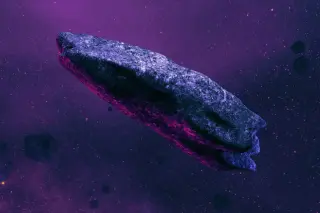
In 2017, the first confirmed interstellar object, Oumuamua, passed through the Solar System on a hyperbolic path and showed a tiny non-gravitational push without a visible tail. Natural explanations (e.g., venting hydrogen or nitrogen ices) exist, and Avi Loeb's artificial-origin idea remains controversial; since then Borisov and ATLAS behaved like comets, but Oumuamua remains an unresolved puzzle, underscoring data limits and the hope that Rubin Observatory will help settle what it could not.

3I/ATLAS as a Cosmic Seeder: Loeb Proposes Directed Panspermia
science6 months ago

3I/ATLAS as a Cosmic Seeder: Loeb Proposes Directed Panspermia

Harvard astronomer Avi Loeb suggests the interstellar visitor 3I/ATLAS could have seeded life across the Solar System via natural panspermia or even directed panspermia; while controversial, he argues that ice-encased life might survive transit and proposes intercepting future interstellar objects to test for extrasolar biology and compare it with Earth life.

Interstellar Seed? Loeb Suggests 3I/ATLAS Might Have Seeded Life Here
science6 months ago

Interstellar Seed? Loeb Suggests 3I/ATLAS Might Have Seeded Life Here

Harvard astronomer Avi Loeb proposes that the interstellar visitor 3I/ATLAS could have seeded life in the Solar System, either by ice-embedded life released as it traveled or through directed panspermia by an advanced civilization; while the idea is controversial and debated, Loeb argues that intercepting such objects could help determine if extrasolar life resembles Earth life, a notion that would have profound implications for our understanding of life's origins.

Loeb presses NASA on Martian cone; is it just a rock or could it be something else?
science7 months ago

Loeb presses NASA on Martian cone; is it just a rock or could it be something else?

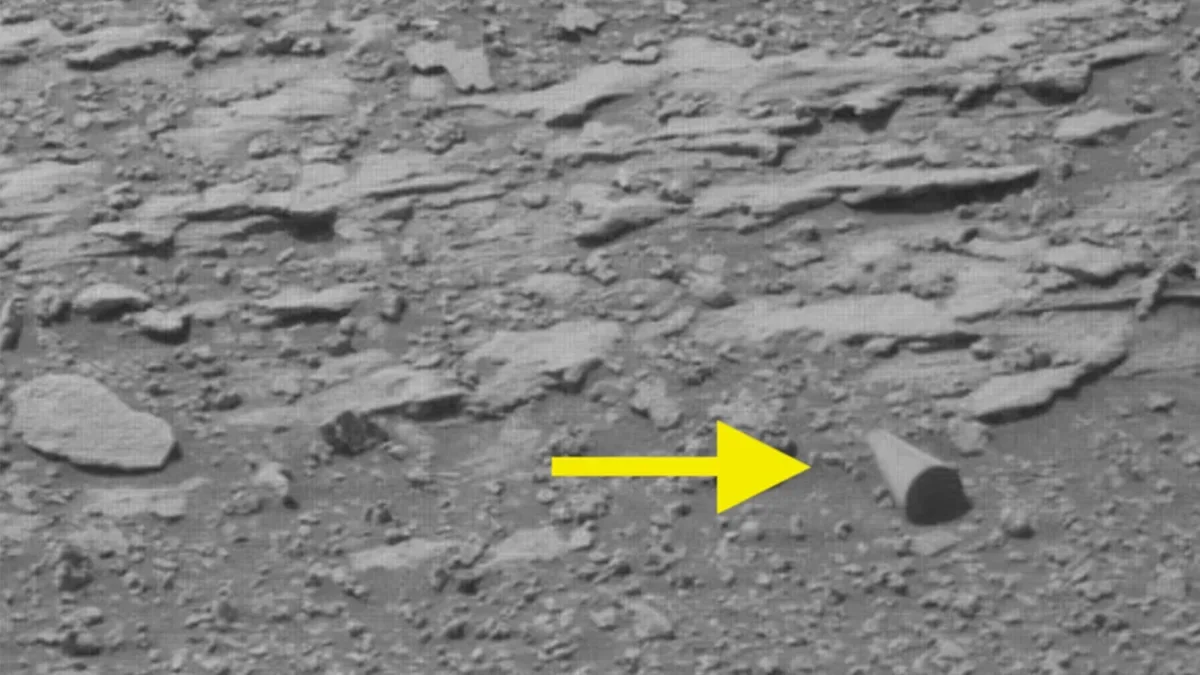
Harvard astrophysicist Avi Loeb challenges NASA’s claim that a cone-shaped feature photographed by the Curiosity rover in Gale Crater is merely a rock, arguing the object could be about 20 cm and may be debris, while NASA says it’s a small (about 1 cm) wind-sculpted formation and suggests pareidolia; Loeb has urged NASA to show another similar rock in Curiosity images to back its interpretation.