
Tag

Planetary Magnetic Fields

All articles tagged with #planetary magnetic fields

MeerKAT Telescope Confirms First Direct Radio Emissions from Exoplanet Beta Pictoris b
astronomy11 days ago

MeerKAT Telescope Confirms First Direct Radio Emissions from Exoplanet Beta Pictoris b

An international team using South Africa’s MeerKAT radio telescope array has detected variable radio bursts originating directly from Beta Pictoris b, a gas giant located 63 light-years from Earth. This marks the first confirmed instance of radio signals attributed to a single exoplanet rather than its entire star system. The discovery, which is not evidence of extraterrestrial life, allows scientists to study the magnetic fields of Jupiter-like planets, a factor critical for protecting atmospheres and assessing habitability.

A Quasi-1D Superionic Phase Could Lurk Inside Uranus and Neptune
science5 months ago

A Quasi-1D Superionic Phase Could Lurk Inside Uranus and Neptune

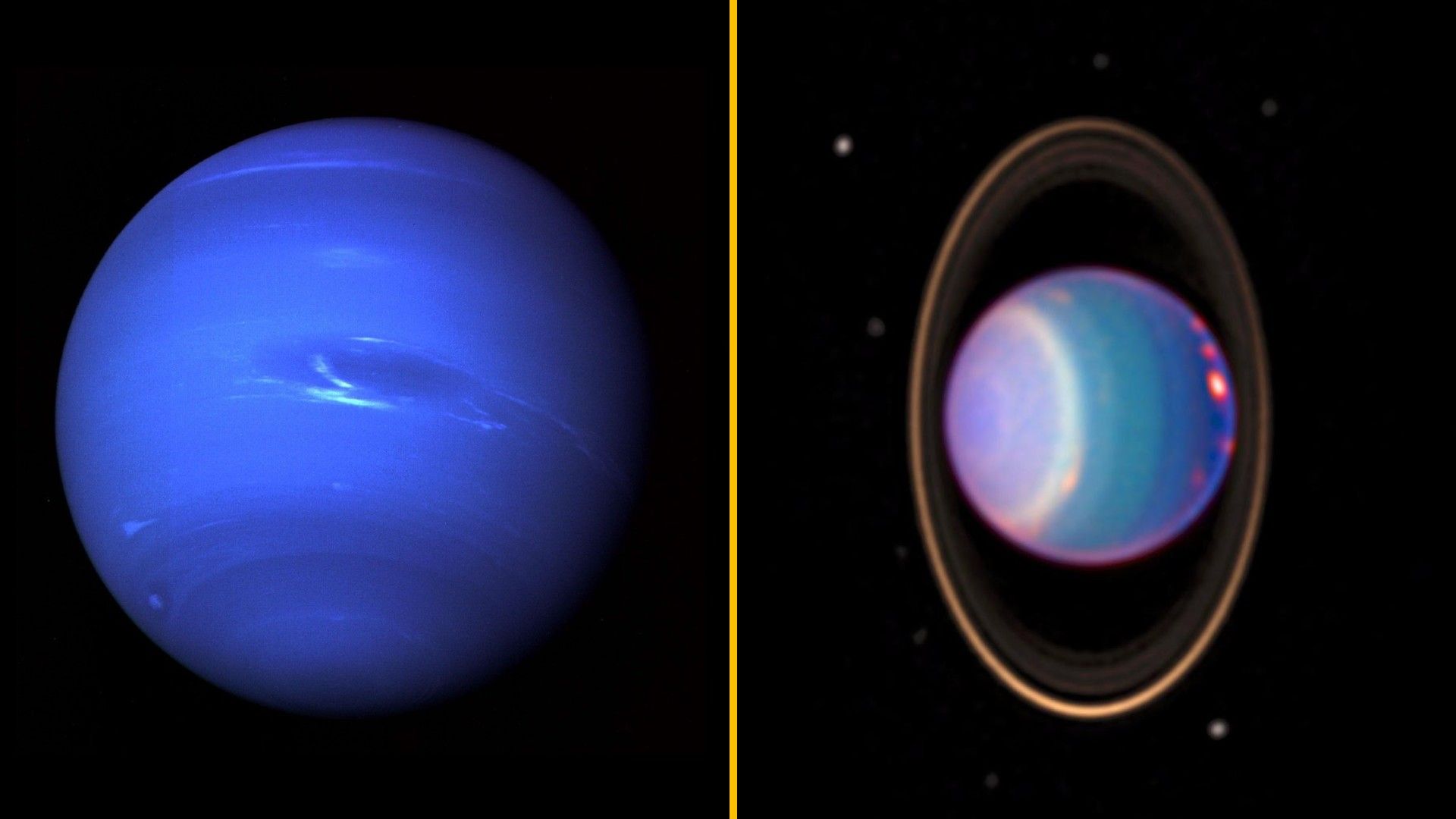
Researchers using first-principles simulations predict a new quasi-1D superionic phase in a carbon–hydrogen compound that could exist inside ice giants Uranus and Neptune at extreme pressures and temperatures. In this phase, hydrogen diffuses along a carbon lattice that forms a helical structure, producing anisotropic heat and electrical conduction. This could influence our understanding of the planets’ unusual magnetic fields and guides how such materials might behave under the extreme conditions found in their interiors.

Reevaluating Uranus and Neptune: Are They Really Ice Giants?
science9 months ago

Reevaluating Uranus and Neptune: Are They Really Ice Giants?

A new computational model suggests that Uranus and Neptune may have rockier interiors than previously thought, challenging the traditional classification of these planets as 'ice giants' and potentially explaining their complex magnetic fields. The study combines physics-based and observational data to propose that their cores contain significant rock content, which could influence their magnetic properties. Further research and dedicated space missions are needed to confirm these findings.