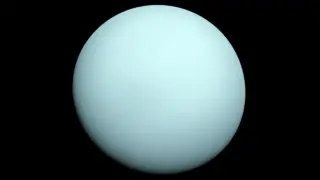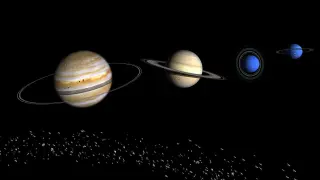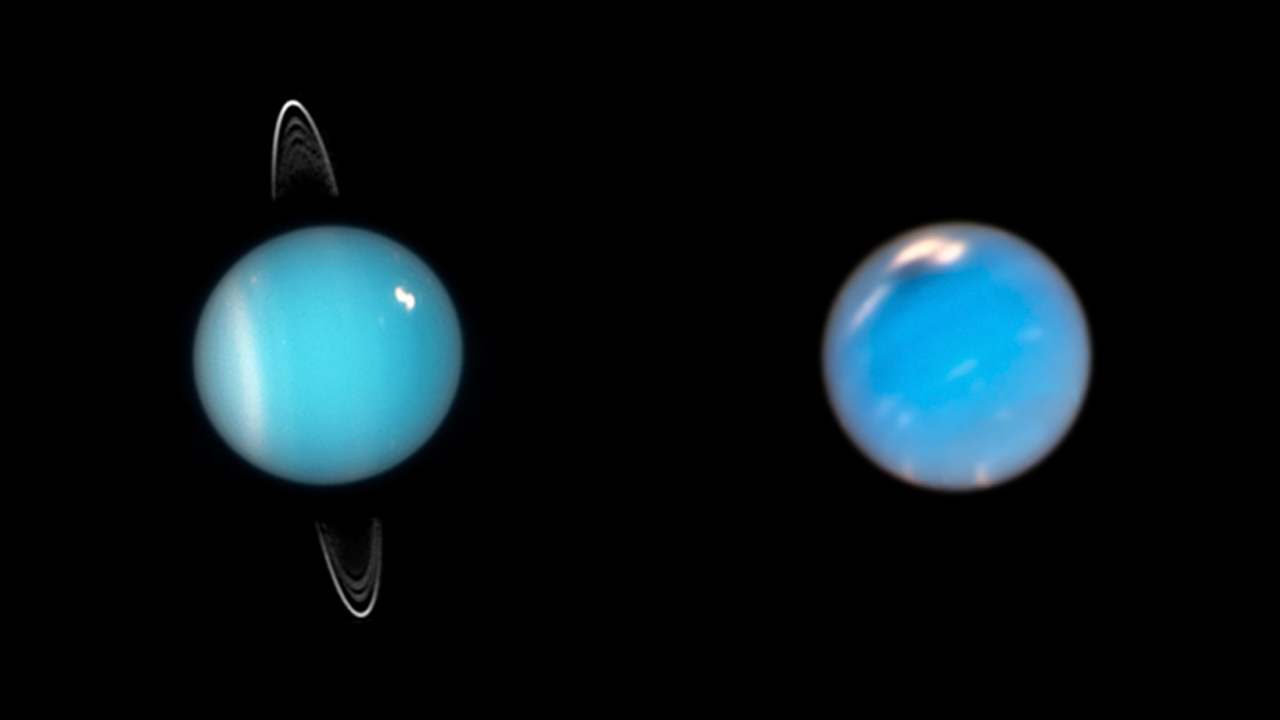
A new Astronomy & Astrophysics study finds Uranus and Neptune could have outer layers dominated by rock rather than ice, challenging the long-held “ice giant” label and prompting revisions to theories of solar-system formation and even exoplanet classifications.
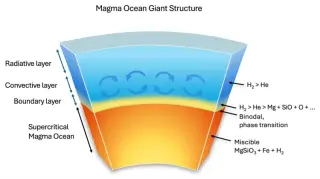
A new Astronomy & Astrophysics study models Uranus and Neptune and finds their outer shells may be composed largely of rocks rather than being purely icy, implying their atmospheres could be littered with rocky material and suggesting a possible reclassification from “ice giants” to a term like “minor giants,” though the authors caution this isn’t definitive.
Researchers using first-principles simulations predict a new quasi-1D superionic phase in a carbon–hydrogen compound that could exist inside ice giants Uranus and Neptune at extreme pressures and temperatures. In this phase, hydrogen diffuses along a carbon lattice that forms a helical structure, producing anisotropic heat and electrical conduction. This could influence our understanding of the planets’ unusual magnetic fields and guides how such materials might behave under the extreme conditions found in their interiors.
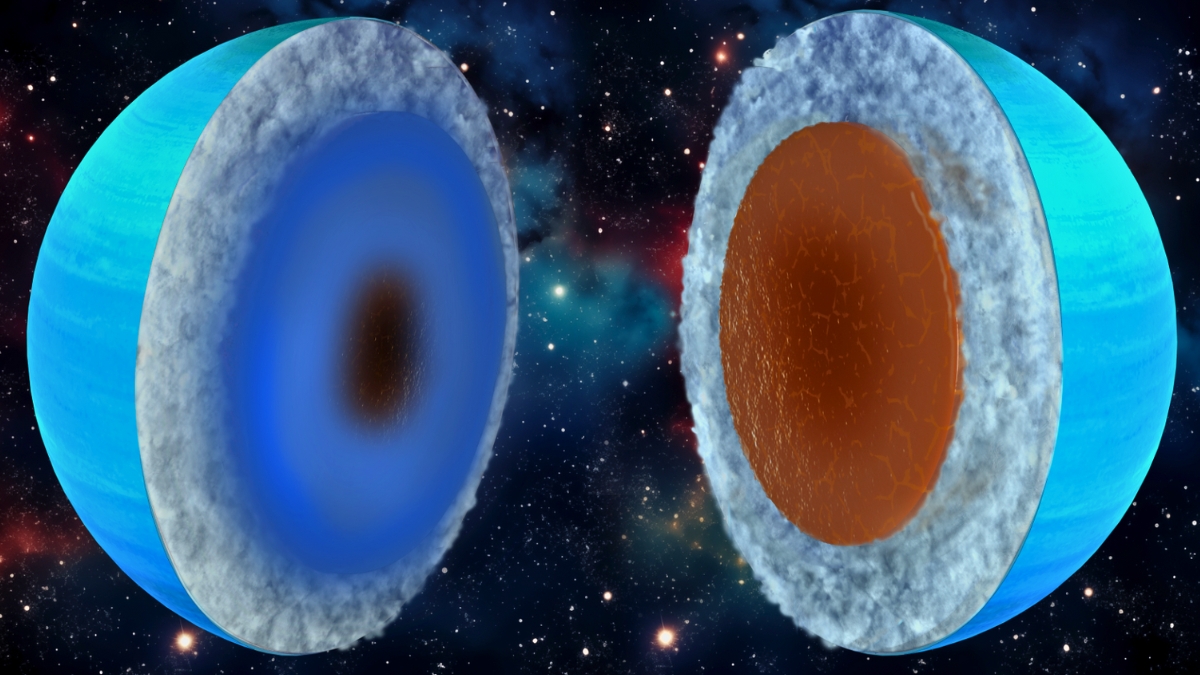
A new computational model suggests that Uranus and Neptune may have rockier interiors than previously thought, challenging the traditional classification of these planets as 'ice giants' and potentially explaining their complex magnetic fields. The study combines physics-based and observational data to propose that their cores contain significant rock content, which could influence their magnetic properties. Further research and dedicated space missions are needed to confirm these findings.
New research suggests that Uranus and Neptune may be more rocky and less icy than previously thought, challenging the traditional classification of these planets as 'ice giants' and highlighting the need for future missions to better understand their true nature.
A new study challenges the traditional view that Uranus and Neptune are 'ice giants,' suggesting they may instead have a rockier internal structure based on observational data and modeling, highlighting the need for dedicated missions to better understand these distant planets.
New research suggests that Uranus and Neptune may not be 'ice giants' as previously thought, but could instead be 'rocky giants' with interiors dominated by rock rather than ice, due to limited data and a wide range of possible interior compositions. This challenges existing models of solar system formation and highlights the need for dedicated missions to better understand these planets.
A recent study suggests that Uranus and Neptune may be better classified as 'rock giants' rather than 'ice giants' due to their interior compositions being dominated by rock and water, challenging longstanding classifications and offering new insights into planetary formation.
Landing on Uranus is impossible due to its lack of a solid surface and extreme atmospheric conditions; any probe attempting to land would be crushed by high pressures and temperatures, but scientists continue to study these planets to better understand their composition and nature.
NASA's proposed Uranus Orbiter and Probe (UOP) mission aims to explore Uranus and its moons, marking it as a top priority for 2023-2032. The mission seeks to enhance understanding of ice giants, focusing on Uranus' interior, atmosphere, rings, and moons. This exploration could provide transformative insights into planetary formation and evolution, potentially influencing our knowledge of exoplanets. The mission also considers the astrobiological potential of Uranus' moons, which may harbor liquid oceans beneath their surfaces.
New research suggests Uranus may contain significantly more methane than previously thought, challenging existing models of its composition. Scientists propose that organic-rich materials in the outer solar system could have triggered chemical reactions during the planet's formation, leading to higher methane levels. Further observations are needed to confirm these findings and refine our understanding of Uranus and Neptune.
A new study suggests that Uranus and Neptune may contain tons of methane ice in addition to frozen water, challenging previous beliefs about their composition. The findings could help solve the puzzle of how these icy worlds formed, as they coalesced from planetesimals rich in carbon. The study's authors built models of the planets' interiors and found that those with methane fit their criteria, with the methane forming a thick layer between the hydrogen-helium envelope and the water layer. This discovery could provide greater insight into these little-understood planets, although confirming their methane content would be challenging and may require future space missions.
A new study suggests that Uranus and Neptune may contain tons of methane ice in addition to frozen water, challenging previous beliefs about their composition. The findings could help solve a puzzle about how these icy worlds formed, as they coalesced from planetesimals rich in carbon. The study's authors built models of the planets' interiors and found that those with methane fit their criteria, with the methane forming a thick layer between the hydrogen-helium envelope and the water layer. This methane could have formed when hydrogen in the growing planets chemically reacted with the carbon in the planetesimals they accreted. Verifying if Uranus and Neptune are actually rich in methane would be challenging, but could be a goal for proposed missions from space agencies.
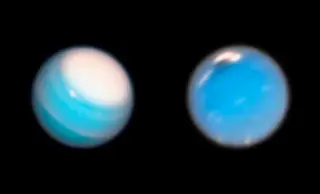
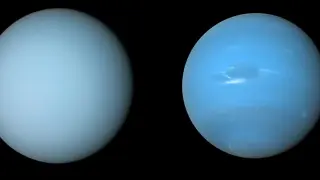
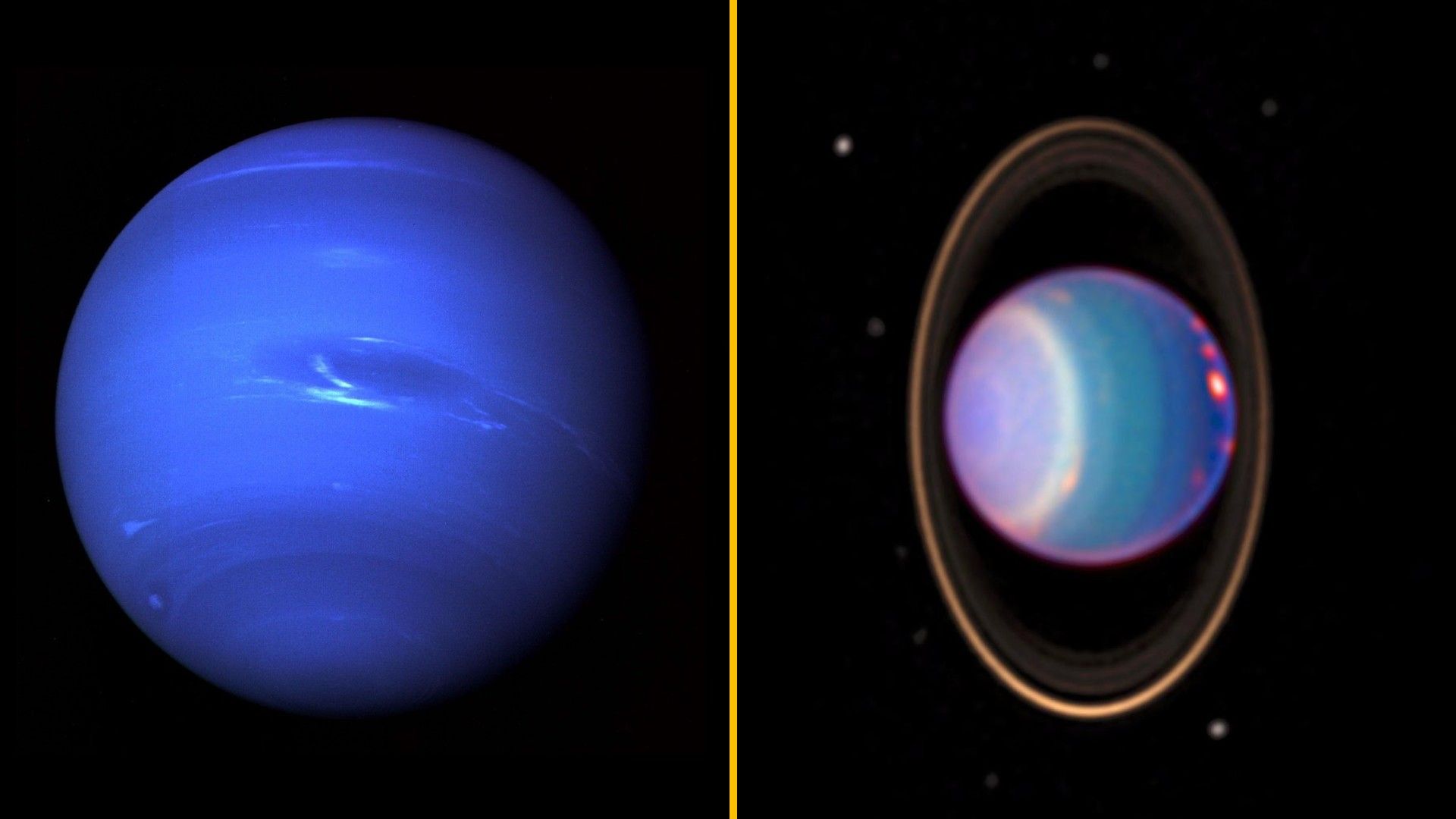
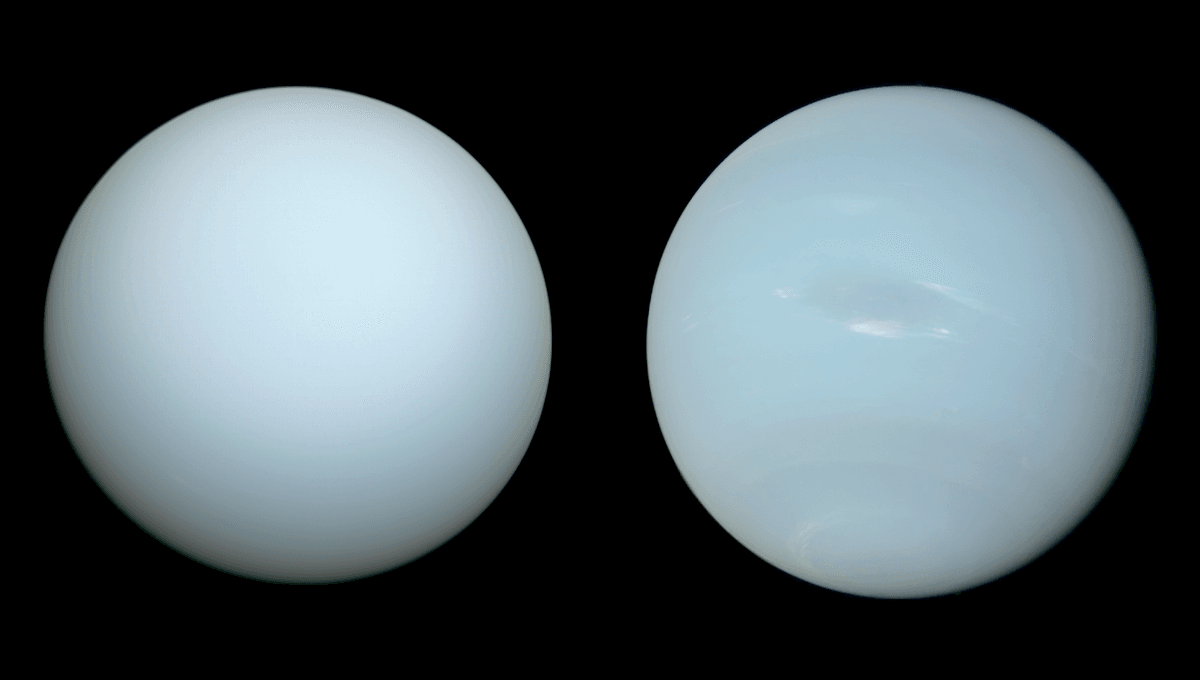
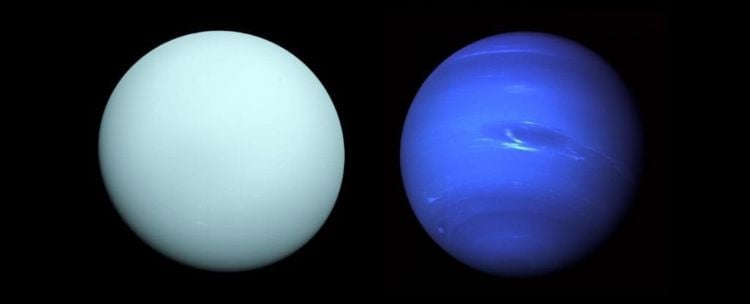
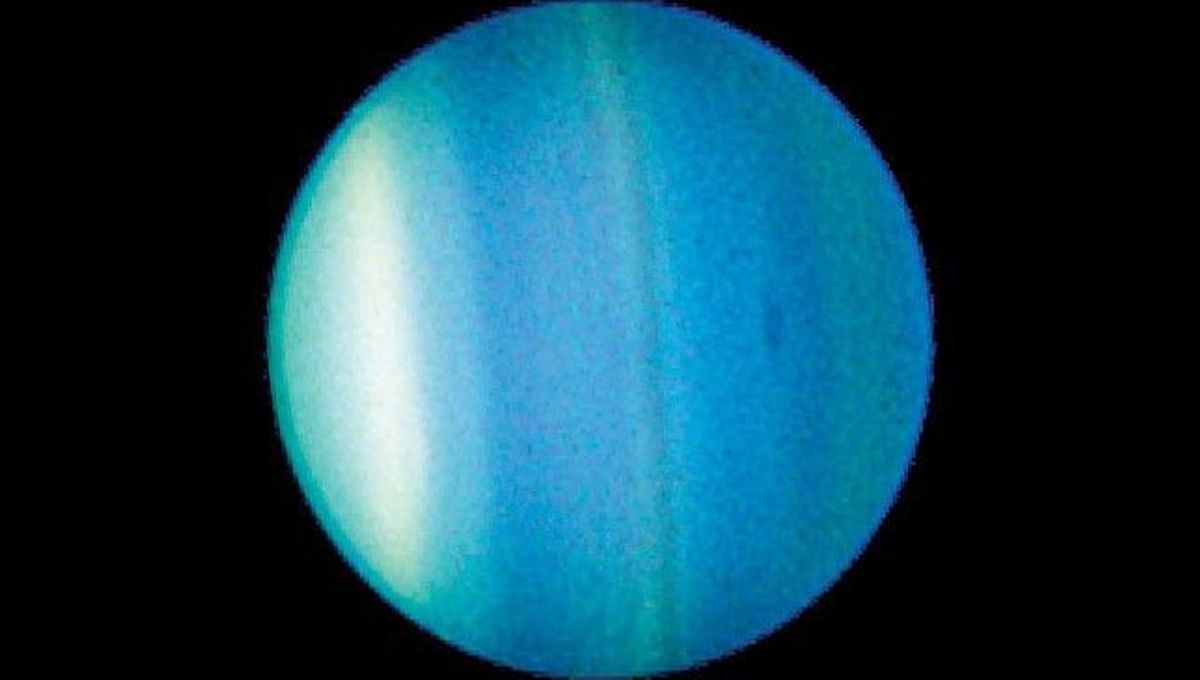
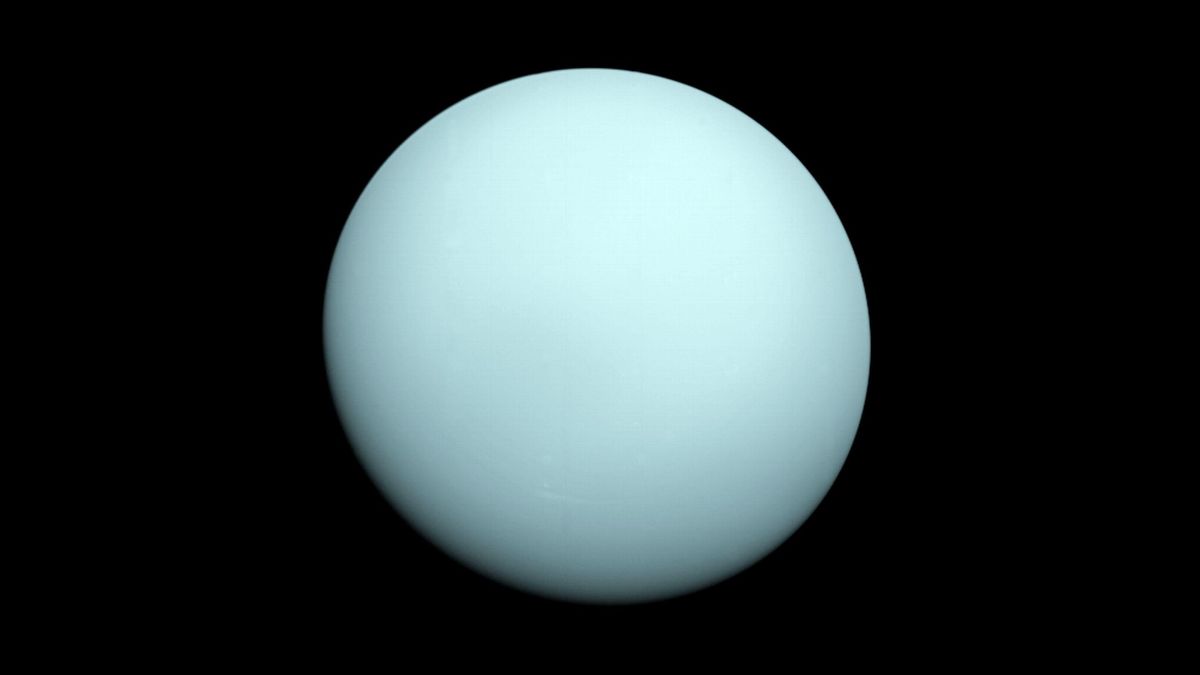
A new study published in the Monthly Notices of the Royal Astronomical Society reveals that Neptune's true color is more of a light greenish-blue, similar to Uranus, rather than the deep azure color depicted in images processed by Voyager 2 in 1989. Researchers re-balanced the color in images using data from the Hubble Space Telescope and the Very Large Telescope, providing a more accurate representation of what Neptune would look like to the naked eye. The study also investigated color changes on Uranus, attributing them to variations in methane and icy haze across its poles and equator. This research clarifies long-standing misconceptions about the colors of these ice giant planets and underscores the need for future exploratory missions.
Scientists are urging NASA to launch a robotic spacecraft to explore Uranus, one of the least explored planets in our solar system. An orbiter would spend years studying Uranus, its moons, and rings, providing valuable insights into the planet's composition, its tilted axis, magnetic field, atmospheric circulation, and the formation of ice giants. The mission would also investigate the possibility of oceans and potential for life on Uranus' moons. While no launch date has been set, the 2023 decadal survey of planetary scientists ranked a Uranus mission as the highest priority for a new NASA flagship mission.