The Delaware Working Families Party marked a watershed primary night by unseating five incumbents and backing 13 candidates, securing eight wins overall and signaling a shift toward Working Families champions in the state legislature and local offices ahead of November.
NBC News projects Michael Katz wins the Republican Delaware primary with about 77.4% of the vote, while incumbent Chris Coons captures the Democratic nomination with about 78.0%. County results show Coons leading in New Castle and Sussex counties and Katz strongest in Kent. With the vast majority of votes tallied, these results set the stage for the general election.
New Hampshire's primaries produced a potential Senate flip opportunity as Republican John Sununu won the GOP nomination and Democrat Chris Pappas secured the Democratic nod, setting the stage for a high-stakes race to replace retiring Sen. Jeanne Shaheen. The results also highlighted notable House contests, with Anthony DiLorenzo (R) and Lily Tang Williams (R) taking the 1st and 2nd District Republican nods, and Stefany Shaheen (D) and Maggie Goodlander (D) winning Democratic nominations in the 1st and 2nd Districts, respectively, signaling a busy November congressional landscape.
NBC News projects Republican former Sen. John Sununu and Democratic Rep. Chris Pappas will anchor New Hampshire’s general-election Senate race after winning their party primaries. Pappas defeated Karishma Manzur 62%–36% with about 20% of ballots counted, while Sununu benefited from Trump’s endorsement in a contest against Scott Brown. The race to succeed retiring Sen. Jeanne Shaheen is viewed as a potential battleground for Senate control, with Democrats signaling competitiveness in a state Trump has never won and Republicans optimistic about appealing to independents alongside Gov. Ayotte’s term. The winner will face a tightly watched contest in November as both parties vie for the Senate majority.
Democrat Chris Pappas and Republican former Sen. John Sununu captured New Hampshire’s Senate nominations, setting up a high-stakes general election to replace retiring Sen. Shaheen. Early tallies showed Pappas at about 62% over Karishma Manzur and Sununu at about 70% over Scott Brown, with results still coming in. Pappas, a four-term congressman with strong fundraising and name recognition, was backed by national Democrats, while Sununu leveraged deep name ID and a Trump endorsement to position himself as the experienced, independent option in a competitive race.
In New Hampshire’s primaries, Trump’s endorsement of former Sen. John Sununu shapes a pivotal GOP Senate race against Scott Brown, while Democrats led by Rep. Chris Pappas face a left-leaning challenge from Karishma Manzur; down-ballot, open-seat battles in the 1st and 2nd districts highlight establishment versus progressive contenders ahead of November.
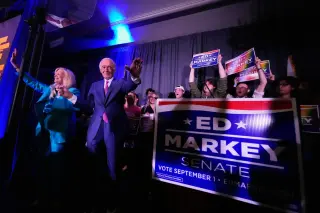
Progressives scored another big primary win with Ed Markey’s Massachusetts victory, signaling continued leftward momentum that could shape November battlegrounds, even as centrists fret about the Democrats’ ability to unite and the cycle’s mixed results show the shift isn’t uniform.
Several progressive Senate candidates won their primaries even when rivals and outside groups outspent them on ads: in Massachusetts, Ed Markey beat Seth Moulton despite Moulton’s roughly 7:1 ad spend lead; in Michigan, Abdul El‑Sayed defeated Haley Stevens even after Stevens saw about $31.3 million in ads to El‑Sayed’s $6.6 million; in Minnesota, Peggy Flanagan won as Angie Craig spent far more on ads; and in Florida, democratic socialist Angie Nixon upset Alex Vindman with Nixon spending about $66,000 versus nearly $2.2 million for Vindman, underscoring that money isn’t always decisive in these contests. The piece also notes broader primary closeness for incumbents and heavy spending by pro‑Trump groups as midterms approach, signaling ongoing debates over the role of ads in shaping outcomes.
Massachusetts’ 2026 primary largely kept incumbents in place despite talk of generational change, with a high-profile Ed Markey–Seth Moulton contest illustrating age dynamics; Boston Mayor Michelle Wu used her influence to back opponents against two state senators, a bold move that yielded closish results and signaled her growing clout on Beacon Hill. Voter turnout was notably low—about 858,000 in the Markey–Moulton race versus 1.4 million in 2020—raising questions about enthusiasm and engagement in Massachusetts politics, even as Trump offered no endorsements in the MA contest.
Live results track contested Massachusetts U.S. House primaries with ongoing counts, and WBUR directs readers to live results for other statewide races such as the governor (Republican), Senate (Democratic), and competitive State House, district attorney, and Governor's Council races.
Massachusetts kept veteran Democrats in place, with Sen. Ed Markey and Rep. Stephen Lynch winning re-nominations despite progressive challenges; Biden-backed Dan Koh won the North Shore seat to succeed Rep. Seth Moulton, signaling a mixed night for progressives in the blue state.
WBUR provides live results for the contested Massachusetts state House and Senate primaries, with links to live counts for other major races including governor, U.S. Senate and House, district attorney, and the Governor’s Council.
Massachusetts’ 1st and 8th Congressional District primaries featured longtime Democrats Richard Neal and Stephen Lynch facing younger, left-leaning challengers, as NBC News projected Neal and Lynch to win their Democratic contests. The race for Seth Moulton’s seat drew a crowded field, underscoring a broader generational shift in the state’s delegation. NBC’s live updates include district-by-district vote totals and the guidance that projections can change as votes are counted.
Axios reports that the rise of the Democratic Socialists of America and progressive challengers is eroding the cachet of “Resistance 1.0” Democrats who built credibility on impeachment. Several high-profile impeachment figures have lost or faced tough primaries to DSA-aligned rivals, signaling voters want bolder policy agendas beyond opposing Trump, and that impeachment alone is no longer a guaranteed path to victory in 2026, even as some argue it could still play a role if the party gains power.
Democrats who rose to prominence opposing Trump during his first term are losing ground in primaries as the base shifts away from anti-Trump accountability toward concerns like the cost of living and foreign policy; high-profile resistance figures such as Vindman and other impeachment managers have struggled or been ousted, signaling a broader realignment, while new faces like Oliver Gilbert III prepare to take seats and the White House sees staff changes such as James Braid departing.