SpudCells Divide Briefly, Offering Clues About Minimal Life
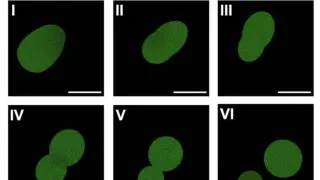
A Minnesota team built a simplified, membrane-encased system that imports nutrients and uses viral components to copy DNA, creating 'SpudCells' that feed, grow, and undergo a few rounds of division before genome pieces drift and are lost; the division is driven by merging with a food membrane and pore-protein clumping, enabling natural selection in this engineered protocell—useful for studying origin-of-life questions but not a true primitive cell.