Tag

Rdna4

All articles tagged with #rdna4

RX 9050 Split: 4GB OEM-Only SKU, 8GB Consumer Edition
technology1 month ago

RX 9050 Split: 4GB OEM-Only SKU, 8GB Consumer Edition

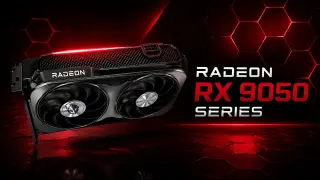
AMD confirms two RX 9050 SKUs: an 8GB consumer card expected around $279 and a 4GB OEM-only version for system integrators. Both use RDNA4 with 1,024 Stream Processors across 16 Compute Units and up to 2.6 GHz, but the 4GB model uses a 64-bit memory bus (144 GB/s) vs the 8GB model’s 128-bit bus (288 GB/s). No MBA designs; AIB partners like PowerColor, Sapphire, and ASRock are involved, with ASRock briefly listing the 4GB edition before removing it.
Sapphire Unveils RX 9050 Pulse 8GB: A Compact, Budget RDNA4 Entry GPU
technology1 month ago

Sapphire Unveils RX 9050 Pulse 8GB: A Compact, Budget RDNA4 Entry GPU

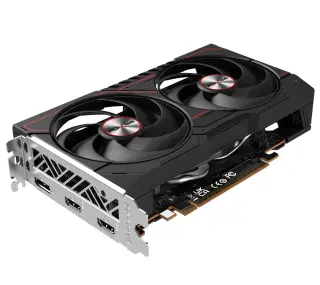
Sapphire today unveiled the Radeon RX 9050 Pulse 8GB, a compact 8GB RDNA4-based entry GPU built around a trimmed RX 9060 XT Pulse board. It uses 16 of Navi 44’s 32 compute units (1024 stream processors), includes the full 32MB Infinity Cache, and features a 128-bit GDDR6 memory bus with 8GB at 18 Gbps. The cooler is a dense aluminum fin-stack with two 6mm copper heat pipes and two 70mm fans, powered by a single 8-pin PCIe connector for about 100W TGP. Display outputs are two HDMI 2.1b and one DisplayPort 2.1a. The card measures roughly 20 cm in length and 12.2 cm in height, occupying two slots. AMD did not disclose pricing for the RX 9050 Pulse 8GB.

AMD’s RX 9050: Budget RDNA4 GPU in 4GB/8GB at $279 with Split Memory Bus
technology1 month ago

AMD’s RX 9050: Budget RDNA4 GPU in 4GB/8GB at $279 with Split Memory Bus

AMD is preparing the Radeon RX 9050, an entry-level RDNA4 GPU, offered in 8 GB and 4 GB variants for a $279 MSRP. It uses a cut-down Navi 44 core (1024 cores across 16 CUs) and ships with either a 64-bit memory bus (4 GB) or a 128-bit bus (8 GB), delivering about 144 GB/s or 288 GB/s bandwidth. The 8 GB model has ~92W TDP, while the 4 GB version could run around ~75W with tuning, targeting 1080p/medium settings with roughly 60 FPS in many titles. Availability is listed for APJ and Latin America, with prices likely above MSRP due to memory costs.

AMD Teases 8x FSR Multi-Frame Gen, Still Not Functional
technology1 month ago

AMD Teases 8x FSR Multi-Frame Gen, Still Not Functional

AMD is testing an up-to-8x Multi-Frame Generation (MFG) feature for FSR through RadeonTuner, with the driver placeholders in place but no functional support yet. The feature appears months away from release, in contrast to NVIDIA’s DLSS Dynamic MFG, and may appear on future RX 9000 / RDNA 5 hardware, while AMD still relies on software pacing for frame generation.

AMD: FSR 4.1 Arrives on RDNA3 This July, Aims for RDNA4-Level Quality
technology2 months ago

AMD: FSR 4.1 Arrives on RDNA3 This July, Aims for RDNA4-Level Quality

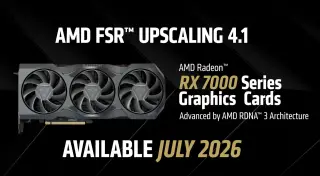
At Computex 2026, AMD says FSR 4.1 will reach RDNA3 RX 7000 GPUs in July, delivering RDNA4-level quality with a differently structured model that converts FP8 to INT8 for RDNA3; RDNA2 support is planned for 2027 after extensive optimization, using a multi-tier training pipeline on Instinct MI accelerators, Radeon Pro workstations with ROCm, and broad PC configuration testing to ensure wide compatibility.

RX 9070 GRE: A $549 GPU That Delivers Less Than Its Siblings
technology3 months ago

RX 9070 GRE: A $549 GPU That Delivers Less Than Its Siblings

Ars Technica’s review argues the RX 9070 GRE is a downgraded take on AMD’s RX 9070, with 3,072 shader cores, a 192-bit bus, and 12GB RAM at the same $549 MSRP; at 1440p it sits 10–20% slower than the regular 9070 and often trails the RTX 5070, while 4K performance with ray tracing is spotty, making memory and bandwidth the bottlenecks; overall, the GRE feels like GPU shrinkflation and not good value compared with spending a bit more on the non-GRE RX 9070 or considering Nvidia alternatives.

Sapphire RX 9070 GRE Pulse Debuts RDNA 4 with AI Upscaling for Mainstream Gaming
technology3 months ago

Sapphire RX 9070 GRE Pulse Debuts RDNA 4 with AI Upscaling for Mainstream Gaming

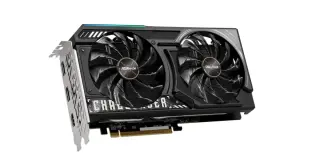
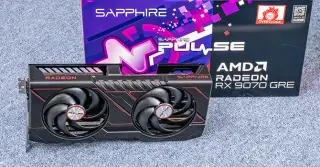
Sapphire launches the RX 9070 GRE Pulse, a mainstream RDNA 4 Navi 48 XL-based card with 3,072 stream processors and 12 GB of GDDR6 on a 192-bit bus (432 GB/s). Priced from $550, the GRE edition slots between the RX 9060 XT and RX 9070, offering a cut-down Navi 48 configuration. It introduces on‑chip AI accelerators that power FSR 4 and frame generation to close the gap with DLSS, with support for PCIe 5.0 x16, DisplayPort 2.1a, and a dual‑fan Pulse cooler. AMD promotes significant RT gains and AI-enabled upscaling across 300+ games. The review covers specs, positioning, and expected performance, efficiency, and feature set for a mid-range gaming card.

ASRock RX 9070 GRE Steel Legend: RDNA 4 Midrange Power With AI Upscaling
technology3 months ago

ASRock RX 9070 GRE Steel Legend: RDNA 4 Midrange Power With AI Upscaling

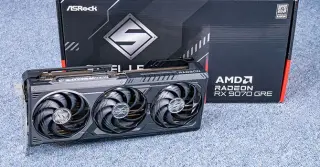
ASRock’s RX 9070 GRE Steel Legend uses AMD’s Navi 48 XL RDNA 4 GPU with 3,072 stream processors, 12 GB of GDDR6 on a 192‑bit bus (432 GB/s), and a robust triple‑fan Steel Legend cooler. It supports PCIe 5.0 x16 and DisplayPort 2.1a, and, with on‑chip AI accelerators, powers FSR 4 and frame generation in 300+ games. Priced starting around $550, AMD positions it to fill the gap between the RTX 5060 Ti and 5070, offering improved ray tracing efficiency and a strong AI upscaling story for mainstream gaming.

AMD Bets Big on RX 9070 XT to Weather Memory-Cost Pressures
technology7 months ago

AMD Bets Big on RX 9070 XT to Weather Memory-Cost Pressures

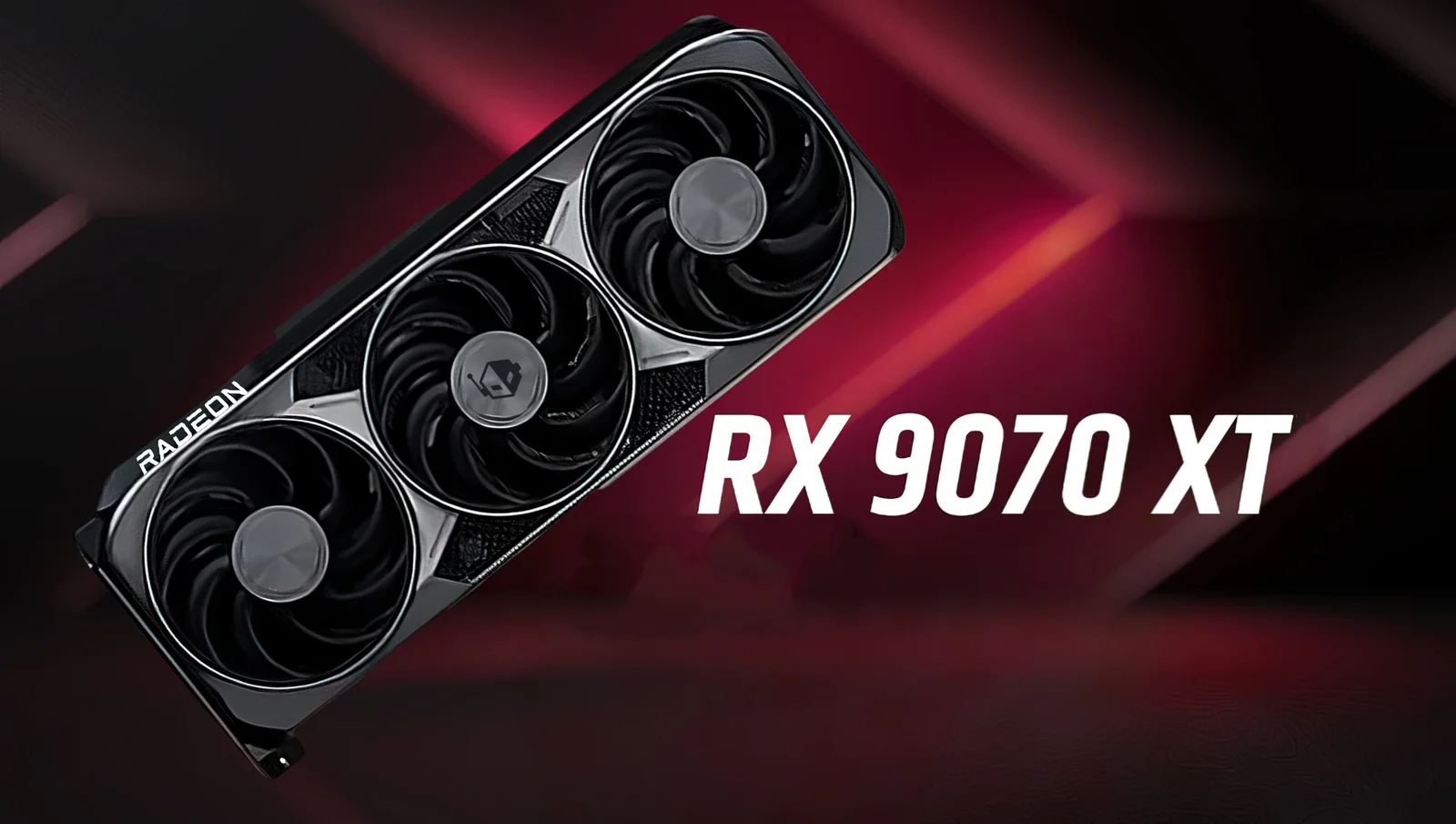
Rumors say AMD will prioritize the Radeon RX 9070 XT over its non-XT sibling to better absorb rising DRAM costs from shortages, since the XT commands a higher price and can tolerate price adjustments more easily; this mirrors NVIDIA’s strategy of focusing on profitable SKUs during memory-price volatility and may shift production toward the RX 9070 XT at the expense of the non-XT and other RDNA4 GPUs.