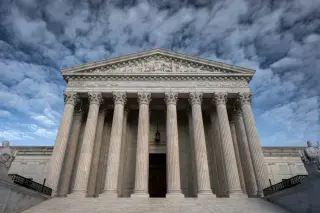
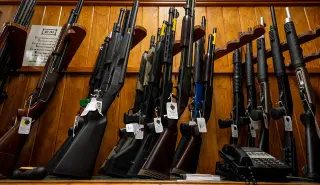
The U.S. Supreme Court begins its new term on October 5, 2026, with a docket focused on immigration detention, gun rights, and climate liability. President Trump has publicly criticized the court for blocking his mail-in ballot restrictions, despite recent wins on other executive orders.
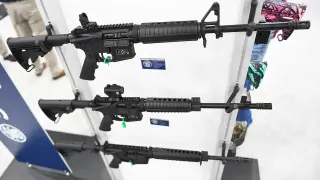
The Supreme Court began its 2026-2027 term on October 5, 2026, with a docket focused on climate liability, gun control, and immigration enforcement. The first case, Suncor Energy v. Boulder, tests whether states can sue fossil fuel companies for climate damages, with Justice Alito recused due to stock holdings. The court will also hear arguments on AR-15 bans in December and review Trump administration policies on mandatory detention and third-country deportations. A case involving Catholic preschools and LGBTQ+ enrollment rights is scheduled for November. While the court avoided some high-profile Trump cases last term, new disputes over immigration and voting laws are now pending, amid ongoing tensions between the president and the justices.
The Supreme Court begins its new term on October 5, 2026, with a landmark climate change case involving fossil fuel liability. The docket includes major challenges to AR-15 bans, religious school funding, and Trump administration immigration policies. While the court avoided some high-profile Trump cases last term, new disputes over detention and third-country deportations are now pending. Election-related litigation may also surge following the November midterms.
The Justice Department’s Office of Legal Counsel concluded that the federal prohibition on selling handguns and handgun ammunition to individuals aged 18–20 violates the Second Amendment, a non-binding opinion that prosecutors are unlikely to pursue felony charges against dealers; the ruling follows mixed circuit court outcomes on age-based gun restrictions and notes the law’s non-precedential status while highlighting the broader political and legal debate over age limits for gun purchases.
A TikTok account describes a three-day dispute in which a neighbour allegedly waved a gun at a family in their driveway and threatened to use her “2nd Amendment right” if the toddler returned. Deputies later confiscated the firearm during the civil protection order process. The Daily Dot cautions it cannot independently verify the claims, but the incident resulted in a protection order and firearm seizure, with a court date set for a longer-term order.
A federal judge reverses decades of limits on silencers and short-barreled rifles, and with the DOJ choosing not to appeal, the order could take effect, deregulating these weapons and removing the $200 tax under the 1934 act. Gun-rights advocates celebrate the ruling as a major restoration of the Second Amendment, while gun-violence groups condemn it as unsafe and urge ongoing challenges; the ruling affects the parties in the lawsuit and is not a nationwide injunction.
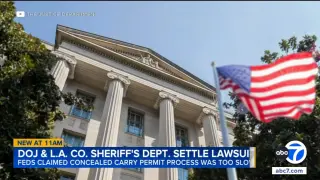
Los Angeles County Sheriff's Department reached a settlement with the U.S. Department of Justice to accelerate and modernize the concealed carry permit process, bringing procedures in line with the Bruen decision, dramatically cutting previous backlogs, establishing a Carry Conceal Unit, and moving from paper to automated processing while increasing transparency about wait times.
A federal court ruling held that once Congress eliminated the National Firearms Act taxes on suppressors, the related registration and transfer rules lost constitutional footing, prompting Gun Owners of America and Silencer Shop to begin transferring silencers without NFA paperwork. Two midnight transfers in Texas—carried out by Brandon Herrera and Texas state Rep. Wes Virdell—were described as the first lawful unregistered transfers in 92 years. U.S. District Judge James Wesley Hendrix did not issue a nationwide injunction, and the Justice Department reportedly will not appeal. The decision marks a major shift in the regulatory landscape for silencers and has been hailed by gun-rights advocates as a landmark Second Amendment victory.
A federal judge’s order lifting the transfer and making taxes under the National Firearms Act on short-barrel firearms and silencers took effect in Texas after the Trump administration declined to file an emergency appeal. The change follows the 2025 One Big Beautiful Bill that ended the NFA tax on these items, and its impact applies to states that joined the lawsuit; supporters call it a major Second Amendment win, while gun-control groups warn it could reduce public safety. The DOJ could still appeal within 60 days.
U.S. District Judge James Wesley Hendrix ruled that once Congress eliminated the National Firearms Act taxes for suppressors, the existing registration and transfer rules no longer had constitutional footing, blocking federal enforcement and letting the first suppressor transfers occur without NFA paperwork; gun-rights groups hailed it as a landmark Second Amendment victory, and the DOJ said it would not appeal.
A Philadelphia-based 3rd U.S. Circuit Court of Appeals ruled New Jersey's assault-weapons ban unconstitutional, marking the first federal appellate decision to strike down such bans under the Second Amendment and signaling potential Supreme Court influence as Bruen-related cases proceed; New Jersey says it will review options while lawmakers consider tighter restrictions.
A 3rd U.S. Circuit Court of Appeals en banc ruled that New Jersey’s assault-firearm ban and large-capacity magazine limits violate the Second Amendment when applied to the full class of semiautomatic rifles, not just the AR-15. The decision, which extends to semiautomatic rifles and magazines over 10 rounds, cites Heller and Bruen in finding the restrictions fail the historical-tradition test and are unconstitutional. The NRA hailed the ruling as a historic victory in a case it has litigated since 2018, while several judges dissented, arguing such restrictions target dangerous weapons states have long regulated. The ruling could reshape state gun-control efforts nationwide and reinforces gun-rights protections for commonly owned firearms.
A 3rd U.S. Circuit Court of Appeals panel, in an en banc decision, ruled that New Jersey's assault weapons ban and its 10-round magazine limit violate the Second Amendment under Bruen’s historical-tradition framework, extending a lower-court ruling and signaling potential changes to the state's stringent gun regulations.
The Justice Department's Civil Rights Division, led by Harmeet Dhillon, is pursuing an unprecedented, coordinated push to broaden Second Amendment rights by filing lawsuits against state gun restrictions, including California and Virginia, signaling a shift toward using civil-rights litigation to set lasting legal precedent after recent Supreme Court rulings; the strategy aims to shape the law for the long term rather than challenge every restriction.
The U.S. Department of Justice filed a federal lawsuit in California challenging AB 1127, California's Glock-style handgun restrictions aimed at devices that convert semiautomatic pistols into fully automatic weapons, arguing the law violates the Second Amendment. It seeks to block enforcement of the Glock ban and challenge parts of California’s handgun roster. California defends the measures as lifesaving public-safety tools with exemptions for dealers, law enforcement, and military. The case, filed in the Central District of California, adds to ongoing legal battles over gun control and tests how the 2nd Amendment applies to state restrictions.