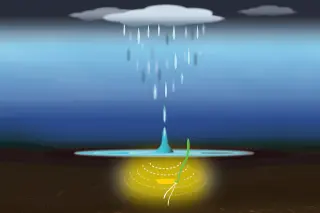
MIT engineers show that rain-induced acoustic vibrations can jostle seeds’ statoliths, waking dormant rice seeds and speeding germination by about 30–40% in shallow water; closer seeds sense the droplets more quickly, and measurements align with the predicted vibration effects, suggesting rain sound helps seeds grow and that other seed types may respond too.
Some plant seeds, known as "hard-to-start" seeds, require specific conditions to germinate, and physically dormant seeds may benefit from scarification to break down their hard shell. Using a nail clipper, lightly clip the side of the seed shell to reveal the internal seed, mimicking the natural process that occurs in the wild. This process can increase successful seed germination and lead to faster-growing and healthier seedlings, resulting in a fuller and more vibrant garden in spring.
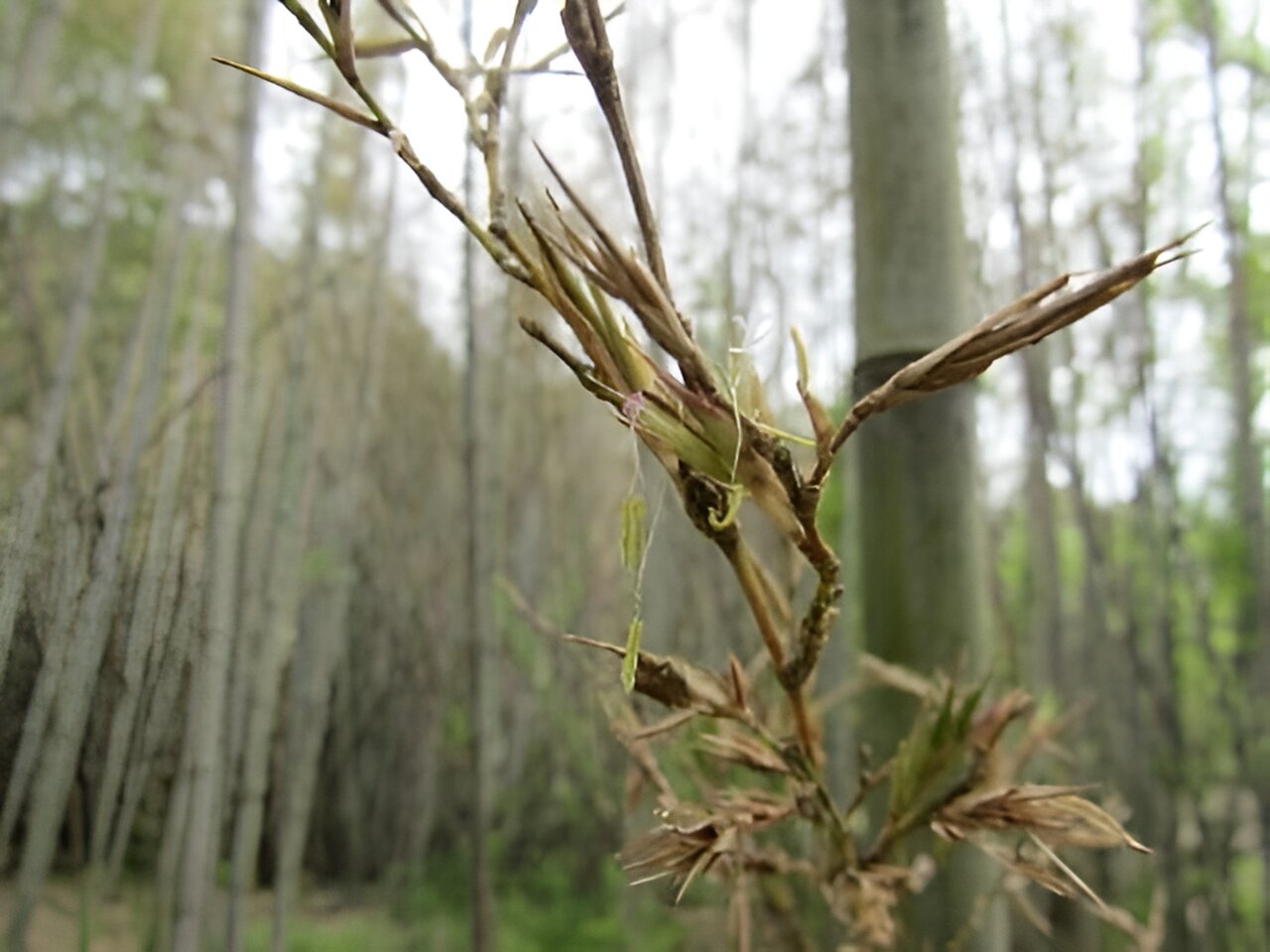
A rare flowering event of a bamboo species in Japan, Phyllostachys nigra var. henonis, occurs once every 120 years, leading to the death of the plants and potential ecological changes. Researchers have discovered that the flowering culms do not produce viable seeds, indicating a lack of reliable sexual regeneration. This could result in the transformation of dense bamboo fields into grasslands, impacting the ecology and economy of the area. The loss of bamboo can also lead to soil erosion and changes in topography. Measures such as fertilizer applications and replanting can help protect the habitat during regeneration, but the aggressive management of the spreading bamboo may be necessary. Further research is needed to understand the limited seed production and the long-term viability of this bamboo species.