
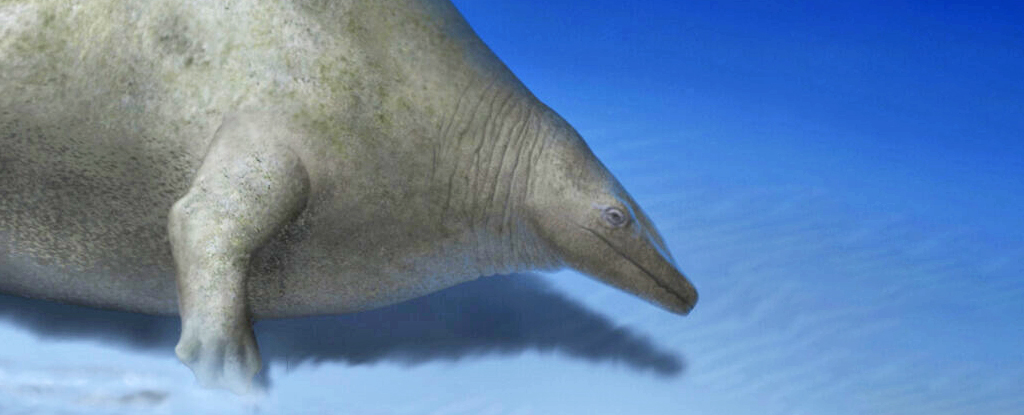
"Unraveling the Enigma of the Colossal Oddball Whale"
Paleontologists discovered the fossil of a 39-million-year-old extinct whale in Peru, initially estimated to be impossibly large. However, further analysis suggests that the whale's unusually dense bones threw off the body mass calculations, indicating it was not as massive as originally thought. The whale likely used a tactic similar to manatees to regulate buoyancy, allowing it to stay at the surface and breathe. While not the largest creature of all time, it was still considerably hefty and likely a top consumer based on body size alone.