New Fed chair Kevin Warsh argues the Fed has over-relied on financial-market pricing and should provide less forward guidance, hoping to force markets to reflect real-time data. While this could improve policy clarity, it would likely add near-term uncertainty and possibly push investors from stocks into bonds, creating more volatility in equity markets.
CAR surged to a record near $850 intraday before closing down 38% (and dipping further in premarket), as options volumes exploded and some brokers tightened margin rules with 100% cash requirements for concentrated positions. The meme-style saga comes amid a tiny float—about 36 million shares—largely controlled by two big shareholders, reviving memories of the GameStop volatility episode.
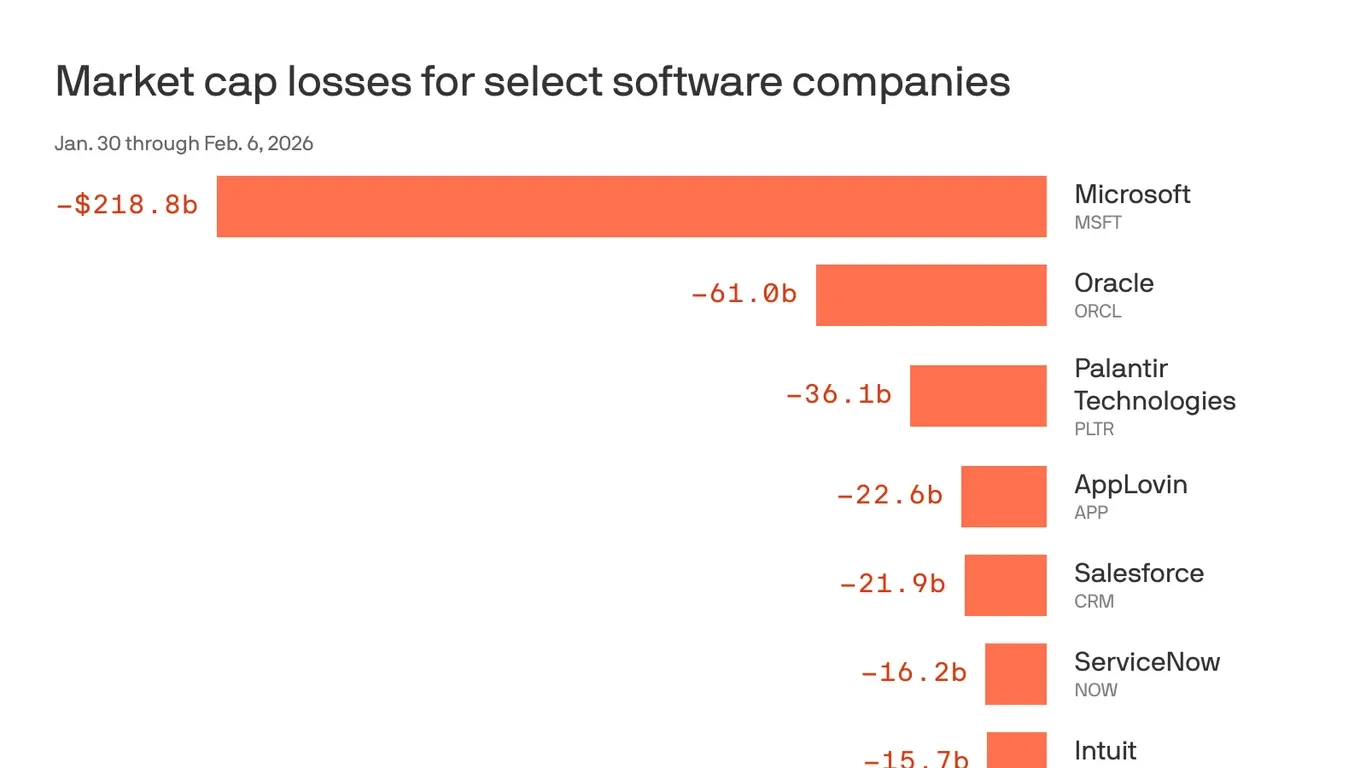
Investors slashed about $400 billion from software stocks after Anthropic unveiled tools like Claude Code and Cowork that automate coding and collaboration, signaling AI's potential to replace large swaths of software work and compress profits; while some see opportunities in AI-enabled toolkits, the market is pricing in broader disruption across many industries.
Wall Street's fear gauge, the Vix, reached a six-month high as stock options tied to $2.5 trillion in market value are set to expire, potentially leading to increased volatility in the stock market. Of the $2.5 trillion, $1.7 trillion worth are linked to the S&P 500. Large option expiration days often result in heightened trading activity and intraday volatility. The rising Vix has made this expiration particularly significant, with some investors closely monitoring the event. While a rising Vix may indicate more market pain ahead, it also benefits option-selling strategies. Additionally, the popularity of shorting volatility and selling covered calls has increased this year. Rising Treasury yields are also causing concern among traders, with U.S. stocks selling off as the 10-year Treasury yield approached 5%.