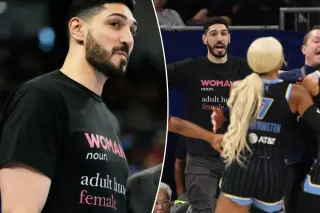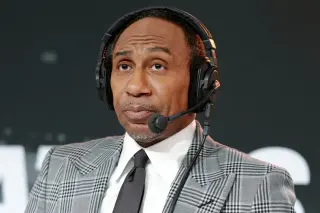
ESPN's Stephen A. Smith criticized the WNBA's handling of the transgender athlete controversy and urged a clear, biology-based eligibility rule—only players who are women should be eligible—while the league forms a task force to discuss transgender participation following the Sophie Cunningham incident.
WNBA star Sophie Cunningham defended comments in support of bans on transgender athletes in youth sports, arguing the move is about protecting young girls in locker rooms and ensuring fair competition. In an ESPN interview, she stressed she’s not aligned with any political party and aims to speak truth with love. The Hill frames her stance within a broader policy debate following a Supreme Court ruling earlier in the summer.
Norway credits its global sports strength to a policy of broad, joyful participation and affordable access from childhood, avoiding early specialization to nurture talent while maintaining competitiveness; the approach is tied to strong public investment and political consensus that sports should be accessible to every child. The country also backs sanctions on Russia in sport and supports Israel’s suspension from FIFA through federations, reflecting its use of institutional influence. Separately, FIFA is anchoring its Americas strategy with a permanent Miami office to manage upcoming events, including the 2030 men’s World Cup, the 2031 women’s World Cup, and the LA28 Olympics, highlighting sport’s evolving geopolitics and commercial footprint.
The Supreme Court ruled that states may ban transgender girls from female sports teams under the Constitution and Title IX, but stopped short of requiring bans or broad transgender-rights rulings beyond athletics. The decision is narrowly framed around sports, with Justices Kavanaugh and Thomas emphasizing safety, fairness, and biological distinctions, while Justice Gorsuch notes the ruling relies on Title IX text rather than reworking wider rights. Liberal justices and advocates say many transgender rights issues remain for future cases, and the ruling leaves ongoing battles over bathrooms, locker rooms, and funding to subsequent litigation and policy fights.
The Supreme Court ruling affirms states’ power to regulate transgender athletes in girls’ sports, but the country remains split: 27 states have laws protecting bans, 23 lack such laws, and 19 still allow transgender athletes in girls’ events, with four relying on school or athletic-association policies instead of formal state statutes. California and Illinois vow to maintain their protections, while Nevada’s governor is pushing for new legislation in response to the decision. The piece surveys a broad patchwork of approaches across many states, notes ongoing lawsuits and policy fights, and suggests the debate over balancing fair play with transgender protections will continue into the next legislative cycle.
The Supreme Court, with a conservative majority, upheld Idaho and West Virginia laws banning transgender girls from girls’ sports teams, signaling support for similar bans in about 25 states; proponents say the ruling is narrow and not a nationwide ban, while many states still permit inclusive policies. Trans athletes and families vow to keep advocating for fair access and safety in sports amid ongoing backlash, threats online, and concerns about enforcement and privacy.
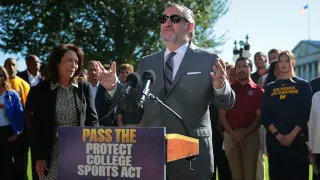
The Big Ten and SEC issued a joint statement criticizing how the Protect College Sports Act has been handled, saying university leaders had limited time for feedback and insufficient engagement with Senate staff before the revised bill. They note progress with the Senate Commerce Committee and welcome amendments, reaffirm their commitment to protecting student-athletes and establishing national standards and long-term stability for college athletics, and pledge to continue bipartisan engagement to refine the legislation.
The Trump administration has given San Jose State University 10 days to revise its transgender athlete policy, signaling federal scrutiny of campus rules governing student-athlete eligibility and participation.
Ian Schieffelin, a Clemson athlete, was arrested on suspicion of DUI and will miss some games this season as per Clemson's policy, with the coaching staff expressing disappointment but relief that no one was harmed.
President Donald Trump signed an executive order to prepare for the 2028 Los Angeles Olympics, emphasizing a stance against transgender women participating in women's sports, promising strong testing measures, and pledging federal support for security and success of the Games.
The USOPC has updated its policies to align with a federal order, now barring transgender women from women's competitions, which may impact USA Ultimate's inclusive policies, though it currently allows transgender women to compete in the women's division. The situation highlights ongoing shifts in sports policies regarding transgender athletes, with organizations like USA Fencing and NCAA also adjusting their rules.
The U.S. Olympic & Paralympic Committee has updated its policies to comply with President Trump's executive order banning transgender women from competing in women's sports, implying that transgender women will no longer be eligible for women's divisions, though the policy does not explicitly mention transgender individuals. The impact on future Olympic participation remains unclear, and no openly transgender athlete has yet won an Olympic medal.
The University of Pennsylvania will ban transgender athletes from competing in women's sports following a federal investigation into Lia Thomas's participation, aligning its policies with current eligibility guidelines and emphasizing a biology-based definition of gender, amidst ongoing debates over transgender rights in sports.
The University of Pennsylvania has agreed to ban transgender women from its women's sports teams following a federal civil rights case related to Lia Thomas, a transgender swimmer. The school will restore records and titles to affected female athletes, issue apologies, and adopt biology-based definitions of gender, in a move seen as aligning with broader efforts to restrict transgender participation in women's sports.
The U.S. Department of Education has accused California of violating the civil rights of female students by allowing transgender athletes to compete in school sports, urging the state to change its policies within 10 days to avoid enforcement actions. The investigation follows ongoing disputes over transgender participation in sports, with federal authorities emphasizing compliance with Title IX, while California officials maintain their policies are lawful under state law.