Blocking nitric oxide normalizes autism-like traits in mice
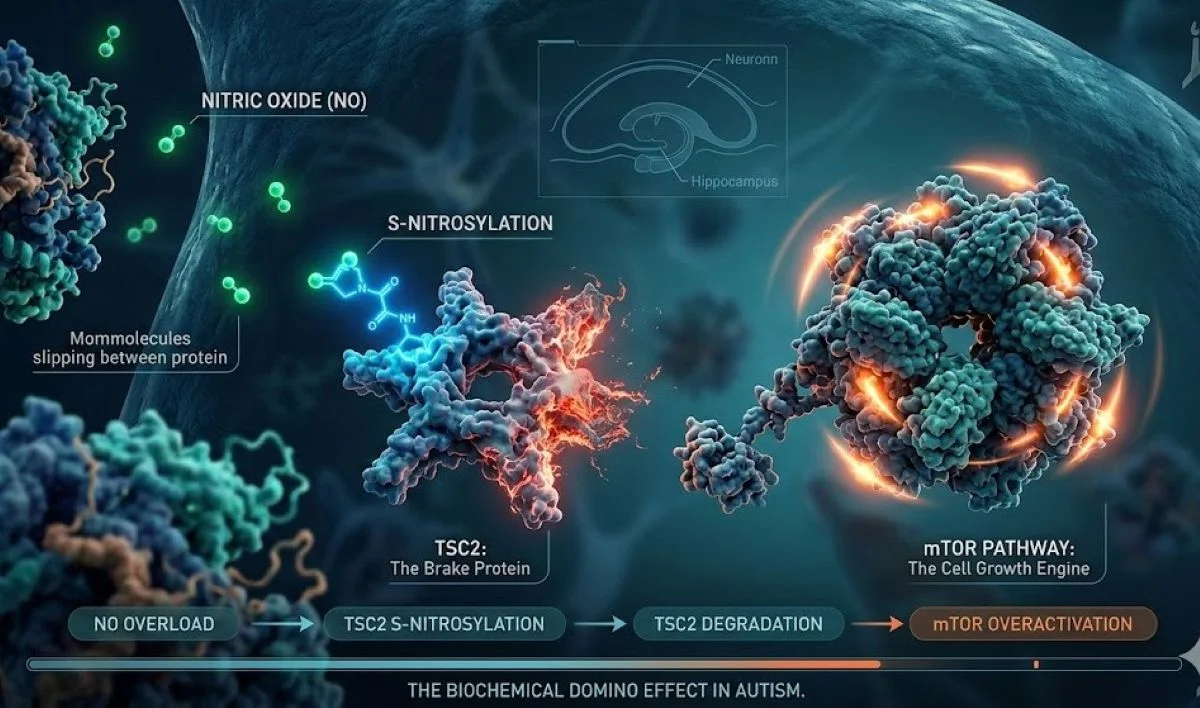
Researchers show that high levels of brain nitric oxide cause S-nitrosylation and destruction of the TSC2 brake protein, hyperactivating the mTOR growth pathway and leading to autism-like behaviors in Shank3/Cntnap2 autism-model mice. Blocking nitric oxide preserves TSC2, slows the mTOR pathway, and restores typical brain function and social behaviors in these mice; conversely, activating mTOR in healthy mice induces autism-like traits. The mechanism appears in human SHANK3-mutant neurons and in blood samples from autistic children, suggesting a conserved NO–TSC2–mTOR axis and a potential drug target, though limitations include small human sample sizes and the need for broader studies.