
CNBC Reveals 2026 NFL Valuations: Who Commands the Biggest Price Tags
CNBC released official 2026 valuations for all 32 NFL teams, ranking franchises by market value and highlighting league-wide trends.

All articles tagged with #valuations
CNBC released official 2026 valuations for all 32 NFL teams, ranking franchises by market value and highlighting league-wide trends.

Following the Padres and Angels selling for a combined $7.9B, based on Forbes valuations (Padres at $3.1B, Angels at $2.8B), the piece names eight MLB owners the author hopes will sell: Castellini (Reds), Nutting (Pirates), Dolan family (Guardians; minority stake now held by David Blitzer with a possible majority by 2027), Monfort (Rockies), Pohlad (Twins), Ilitch (Tigers), John Henry (Red Sox), and Hal Steinbrenner (Yankees). It argues these regimes underperform, misalign with fan interests, or lack urgency, even as the league enjoys blockbuster sales and shifting ownership dynamics.

Stan Kroenke will buy the Los Angeles Angels and Angels Broadcast Television for $4 billion, a record MLB valuation that values the club at 10 times 2025 revenue. CNBC's updated MLB valuations show the average team at about $4.04 billion, with the Yankees at $12 billion and the Marlins at $2.2 billion, highlighting how location and stadium economics helped push values higher since March.

CNBC updates NBA valuations after the pending $12.5 billion Lakers sale, lifting the league’s average team value to about $6.68 billion and pushing the Warriors to $13 billion; the Knicks and Bulls each rise roughly 26%, with all 30 teams revalued based on sale dynamics, arena economics, market size, and investor interest.

Sportico’s 2026 NFL valuations show the 32 teams are worth a combined $299 billion, up 31% year over year to an average of $9.34 billion per team—the biggest jump since tracking began. The Dallas Cowboys top the list at $15.5 billion, with the Rams, Giants, Patriots and Jets rounding out the top five. The rise is driven by record media deals, strong local revenue and sponsorships, and ongoing investor interest, highlighted by high-profile sales and LP stake deals across the league.

A curated look at 10 ’80s car models that have transformed from affordable daily drivers into hot collectibles, with auction values ranging from about $13k to well over $2 million. Highlights include the rare 1987 Buick GNX and the Porsche 959, whose values showcase how rarity, performance, and pop culture pedestal the era’s cars into multi‑thousand to multi‑million dollar status, while models like the DeLorean DMC‑12 and Ferrari Testarossa remain highly sought after in the collector market.

Morgan Stanley says the Magnificent Seven—NVDA, MSFT, GOOG, AMZN, META, AAPL, TSLA—are now trading at their cheapest valuation premium versus the S&P 500 in over a decade as AI infrastructure outlays weigh on cash flow and forward profitability; Alphabet is the notable outlier with YTD gains, but the group overall faces pressure from higher AI-capex financing costs and a potential Fed hike, signaling limited upside for Mag7 in the near term.

Yahoo Finance notes that the broad market’s forward P/E remains below its 2026 starting point because earnings have surged, even as stock prices stay high. With second-quarter earnings growth around 23.3%—above long-term averages and ten of eleven sectors expected to post YoY gains—a sustained earnings boom could lift estimates and support higher prices, potentially delivering a Q3 where rising earnings and stock prices reinforce each other.

U.S. chip stocks extended their premarket selloff on Thursday as lofty valuations and ongoing AI spending weigh on sentiment, with Micron and Western Digital down about 2% and peers like Coherent, Marvell, AMD, Intel and Microchip slipping around 1–2%. The broader semiconductors index slid about 6% after Wednesday’s tech retreat, with Micron having tumbled earlier in the week. Meta Platforms rose roughly 8.8% after Bloomberg reported it is exploring a cloud business to monetize excess AI computing capacity, potentially selling access to AI models hosted on its infrastructure or to raw GPU power; Meta also plans up to $145 billion in capex this year to expand data centers. The moves come ahead of the key U.S. jobs report as markets brace for Fourth of July holidays.

Microsoft trails the Magnificent 7 as AI-capex and potential software disruption spook investors, with June on pace for an ~18% drop and a ~24% YTD decline, erasing about $857 billion in value and pushing the stock toward multi-year lows; Oracle faces similar headwinds, funded largely by debt, highlighting a shared investor skepticism about AI-driven growth and valuations despite heavy AI commitments. Bulls like Michael Burry have taken a bullish stance on Microsoft at these levels.

A market researcher warns that surprisingly low valuations for AI stocks may signal investor fear that the AI data-center boom could slow; if AI adoption underwhelms, demand for chips and related infrastructure could fall, potentially sparking a market pullback akin to the dot-com bust, with examples like Nvidia, Micron, Broadcom and SanDisk trading at modest forward P/Es versus the S&P 500’s ~21.5.

SpaceX’s $60 billion acquisition of Cursor has sparked a debate on AI valuations, with Ackman and Palihapitiya arguing the premium reflects AI software’s ability to own core workflows at the application layer; analysts say the deal signals a broader trend of premium pricing for enterprise AI platforms, a view echoed by SpaceX’s stock reaction.
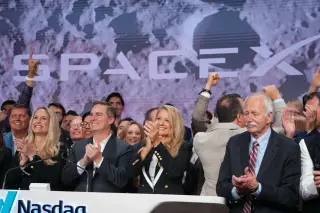
SpaceX’s public debut has investors buzzing about a megacap valuation, but Morningstar says the deal is significantly overvalued at about $780 billion, far below its IPO price. Musk’s fortune has surged from Zip2 and PayPal into SpaceX and Tesla stock, putting him onto a paper trillionaire path; however, governance concerns (super voting shares) and other IPO terms have some investors wary as Nasdaq moves to broaden SpaceX’s index-fund inclusion.

The Motley Fool weighs SpaceX and Anthropic as potential trillion-dollar IPOs in 2026. SpaceX is the farthest along with an S-1 and a roughly $1.77 trillion valuation, spanning Starlink, rocket launches, and xAI, with Starlink profitable yet the company posting a $4.9B net loss in 2025. Anthropic, now filing a confidential S-1, is centered on software and its Claude AI suite, with revenue run rate rising from about $9B to $47B in early 2026 and potentially reaching $1.2 trillion-plus in implied valuation. While both carry risks, the author favors Anthropic on the basis of tangible revenue momentum and defensible growth, though he plans a cautious approach—open a small starter position after the IPO and add over time if the stock stays attractive.

Generative AI and the ChatGPT moment have triggered a private-market valuation reset, leaving hundreds of pre-AI unicorns inflated by the 2021–2022 boom with little fresh funding and shrinking exits. Companies that last raised in 2021 or 2022 have seen steep declines, and many aren’t raising new money, pushing investors toward AI-native firms or discounted acquisitions as the likely path to liquidity. Legacy software players face pressure to pivot to AI-first models and new pricing schemes as the landscape shifts away from growth-at-any-cost toward AI-driven efficiency.