President Trump voted by mail in Florida’s primary for the second time this year while lobbying Congress to pass the SAVE America Act, which would impose stricter mail-in voting rules and require voter ID, despite his long-standing criticisms of mail-in voting.
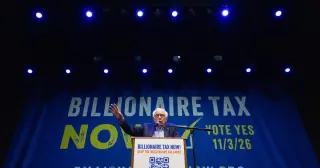
A UC Berkeley/Times poll finds California voters are deeply divided on Prop 40, a one-time 5% wealth tax on billionaires’ assets to backfill federal healthcare cuts; 48% support, 41% oppose, and 11% undecided, with younger, minority, and lower-income voters more supportive, while unions back the measure though concerns about wealthy residents fleeing persist. Prop 39, a voter ID and citizenship verification measure, is just over half opposed, with Democrats largely against and Republicans in favor. Countermeasures Prop 41 (tax/spending audits) and Prop 42 (ban on certain new taxes) show mixed support (Prop 41: 35%/37% oppose; Prop 42: 40%/37% oppose; ~25% undecided). Turnout and messaging in November could swing the outcomes, per polling of 4,207 registered voters (2,310 likely voters) conducted Aug. 3–9 with ~2.5-point MOE.
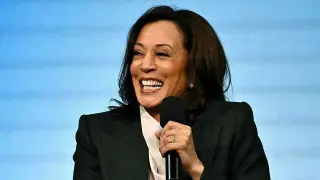
Conservatives seize on Kamala Harris’s remark that the SAVE America Act would require proof of identity to vote, turning her comments into a promotional moment for the GOP bill as Trump pushes its passage; Democrats warn the measure could disenfranchise eligible voters, while supporters point to public backing for voter-ID ideas.
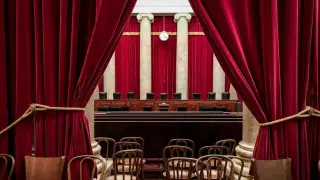
The Senate adjourned for its August recess after approving a short-term government funding bill to avert a shutdown and confirming Todd Blanche, while several high-priority items—most notably the SAVE America Act, a sweeping voter-ID push, cryptocurrency regulation, and college athletics reform—remained stalled amid GOP infighting and campaign-season pressures.
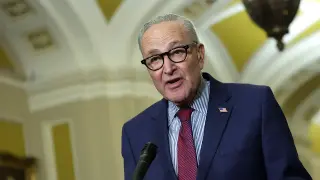
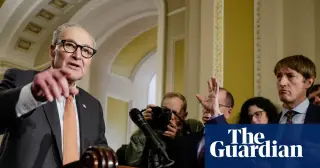
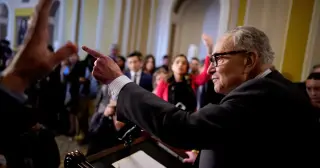
Senate Democrats, led by Schumer, have long supported voter ID in principle, but all Democrats voted against Sen. Husted’s stripped-down bill requiring photo ID. Republicans had tried to attach it to the SAVE America Act, but the measure failed on party lines, illustrating political sensitivity around voter-ID ahead of the midterms.
Senate Republicans failed to muster the 60 votes to pass a narrowed voter-ID provision of the SAVE America Act before recess, with 52 voting in favor, two senators not voting, and Democrats opposing. GOP leaders plan to try again when the Senate reconvenes in September, despite limited voter appetite for the measure. The day also saw the Senate advance government funding through December 11 and confirm Todd Blanche as attorney general.
A Sacramento Superior Court judge ruled that California Attorney General Rob Bonta’s ballot label and summary for Proposition 39 accurately describe the measure’s effect, which would require government-issued ID to vote. A separate judge tentatively found that the backers’ description claiming the measure would make voting easier was misleading, prompting changes to the voter guide language. The rulings shape how Prop 39 is presented to voters, with reactions from Bonta and opponents.
NYC Mayor Zohran Mamdani's plan for city-run grocery stores with 30% discounts is drawing fire over a proposed “customer card” to curb bulk buying; officials insist the voluntary loyalty-style card is not an ID for residency or income, but critics say the scheme resembles voter-ID measures and accuse opponents of hypocrisy, arguing the policy could divert savings away from intended New Yorkers.
President Trump is pressing Senate Republican Leader John Thune to back major GOP goals—killing the filibuster, passing a voter ID bill, and a party-line budget—despite Thune and many Republicans saying there’s no majority support; the clash underscores deep rifts within the GOP as incumbents brace for August recess with a fragile 53-seat majority.
House Republicans are pressuring the Senate to quickly pass a Trump-backed budget reconciliation package that would authorize up to about $73 billion in new deficits for defense and Iran-related operations, up to $12 billion in farm aid, and up to $10 billion to advance the SAVE America Act’s voter-ID changes. The plan relies on a simple-majority reconciliation to bypass the filibuster, but Senate Leader Thune has shown hesitance while the White House and Trump push for movement ahead of the midterms.
California Democrats, led by gubernatorial frontrunner Xavier Becerra and Assembly Speaker Robert Rivas, have launched a fundraising-backed effort to defeat Prop 39, a statewide voter-ID ballot measure. The campaign faces a fundraising edge for proponents but argues the initiative would restrict voting; opponents include SEIU California, California Teachers Association and Planned Parenthood, with a coordinated effort under 'No on 39 — Block Trump’s Election Rigging' tying the issue to national politics.
Republicans in the House and Senate are mired in internal fights over a summer funding plan, with the House pushing a stopgap bill and partisan add-ons while Democrats resist, raising the risk of a government shutdown before the midterms. The filibuster remains a sticking point, and Trump’s push on voter-ID legislation deepens divisions as lawmakers race to avert a funding gap with a two-month window before August recess.
The House passed the Stop Insider Trading Act 232-198, which would bar members of Congress from buying individual stocks while in office, while allowing them to keep existing holdings and to sell portions of their portfolios if they publicly disclose seven days before the sale; penalties for mis-disclosures would rise to at least $2,000 or 10% of the transaction value. The bill also adds a voter-ID requirement, drawing Democratic opposition, and its fate in the Senate remains unclear, with critics calling it a weak reform that falls short of a full ban.
The House voted to allow debate on a $95 billion budget reconciliation bill that would fund election-integrity measures, including voter ID and a proof-of-c citizenship requirement in voter registration, a GOP win for Speaker Mike Johnson amid Democratic opposition and uncertain prospects in the Senate.
In a This Week exchange, ABC's Jon Karl challenged Sen. Mark Warner over Virginia's voter ID rules, correcting Warner's claim that the state requires photo ID; Virginia allows IDs including non-photo documents and an ID Confirmation Statement for in-person voting, with provisional ballots if no ID is shown. Warner argued for broader, uniformly applied government-issued IDs but warned the SAVE America Act—a federal standard requiring citizenship proof to register and photo ID to vote—could disenfranchise voters. The discussion referenced a Pew survey showing national support for photo ID and noted the House's initial passage of the SAVE Act.