

Tag

Water Footprint

All articles tagged with #water footprint

Cup of Coffee, Ocean of Water: The Hidden Footprint Behind Every Sip
environment1 month ago

Cup of Coffee, Ocean of Water: The Hidden Footprint Behind Every Sip

A standard cup of coffee is said to require about 140 litres of water—mostly to grow the beans (green water)—while the water you pour into the kettle is only a few hundred millilitres; the 140‑litre figure blends green, blue and gray water and can obscure where and how water stress occurs, so the real takeaway is to consider upstream farming context and sourcing when judging coffee’s environmental impact.

AI’s unseen water toll could reach 765 billion litres in 2025
technology1 month ago

AI’s unseen water toll could reach 765 billion litres in 2025

A peer-reviewed model estimates AI-related water use in 2025 could range from about 312.5 to 764.6 billion litres (peaking at 765 billion), driven by data-centre cooling and electricity production. It’s not a global meter reading—it's a boundary-bound estimate built from limited disclosures, meaning real totals are uncertain. Water used in manufacturing and construction is excluded. Advances in cooling and cleaner power can cut on-site use, but transparency about where AI workloads run and site-level water/power metrics is essential to clarify the footprint.

Beef’s Environmental Toll: 15,400 Litres of Water and 99 kg CO2e Per Kilogram
environment3 months ago

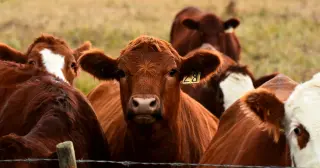
Beef’s Environmental Toll: 15,400 Litres of Water and 99 kg CO2e Per Kilogram

Two peer‑reviewed datasets estimate that producing one kilogram of beef from dedicated herds uses about 15,400 litres of water and emits roughly 99 kg CO2e (100-year GWP). Water use is mostly for feed; the range across systems is wide (roughly 3,000–26,000 L/kg). Emissions come mainly from enteric methane, land‑use change, and farm operations; dairy-beef has a smaller footprint (~33 kg CO2e/kg) and the global average is about 60 kg CO2e/kg. Reducing beef consumption would cut both water use and emissions, with chicken as a lower‑footprint alternative (~90% reduction for the same protein). The article notes debates on green water, GWP timeframes, and regenerative grazing, but beef remains the most environmentally intensive widely consumed food.