government1 min read
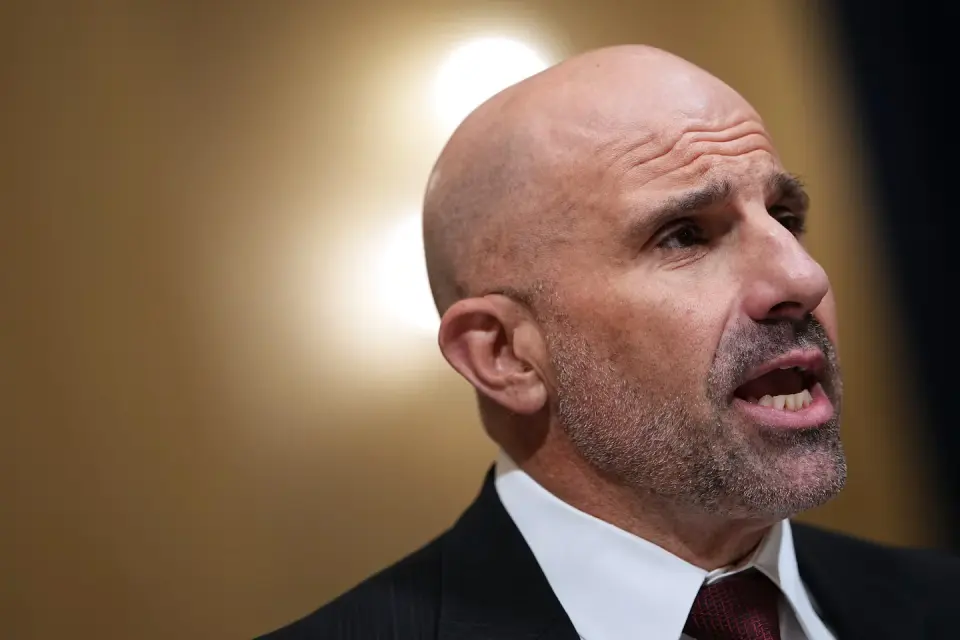
FBI Deputy Director Christopher Raia to Retire in December
1 day ago•Source: The Washington Post
View original source
The latest government stories, each synthesized from multiple sources with added background and context.

A new Government Accountability Office report reveals that ICE spent over $1.1 billion to acquire 11 warehouses for detention, paying up to five times assessed values. The agency is now selling seven of these facilities, risking significant financial loss, after abandoning the expansion plan due to local opposition and infrastructure concerns.

Government Executive•7 days ago
The Washington Post•8 days ago
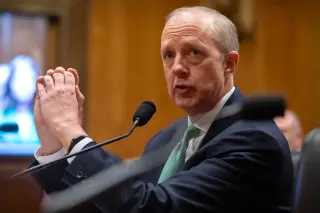
President Donald Trump has nominated Eric Ueland, the current deputy director of the Office of Management and Budget, to serve as the next comptroller general of the United States. This move aims to secure a 15-year appointment for a GAO leader before the lame duck session ends, bypassing the traditional bipartisan selection process. While Republicans support the rapid confirmation, Democrats and legal experts argue the procedure violates statutory requirements and threatens the agency's independence from the executive branch.

FEMA and the FCC conducted a routine nationwide Emergency Alert System test on November 17, 2026, at 2:20 p.m. Eastern. The one-minute alert on radio and TV required no public action. The timing coincided with recent tech outages, fueling unfounded conspiracy theories about a global blackout, though officials confirmed the drill was a standard legal requirement.

The White House has established a 'tiger team' comprising officials from the FAA, Defense Department, and intelligence agencies to prevent future nationwide ground stops. This follows a four-hour disruption on November 13 that grounded 3,500 aircraft and canceled thousands of flights. While the administration requests $50 billion for modernization, Republican lawmakers are skeptical, citing unspent funds from a previous $12.5 billion appropriation and demanding clearer accountability before approving new spending.

The San Francisco Board of Supervisors unanimously approved the Microenterprise Home Kitchen Operations (MEHKO) program on November 10, 2026. This ordinance allows residents to prepare and sell food from their homes, pushcarts, or wagons, provided they pass health inspections and pay an $828 annual fee. The move responds to vendor complaints about the high cost of mandatory commissary kitchens, which average $1,000 monthly. While proponents highlight economic relief for immigrant-owned businesses, critics raise concerns regarding fire safety, competition with established restaurants, and the permit fee. The program caps home-based sales at 90 meals and $100,000 annually, with higher limits for cart operators. Implementation details and start dates remain pending, though the city estimates a half-million-dollar setup cost.

The Defense Department’s Cybersecurity Maturity Model Certification (CMMC) remains paused, but a task force has identified multiple pathways to address industry concerns without scrapping the program. Key recommendations include clarifying Controlled Unclassified Information (CUI) marking, adopting NIST SP 800-171 Revision 3, and expanding compliance timelines. While DoD declined to comment, experts argue that immediate actions like issuing waivers or improving assessor consistency could mitigate costs and restore trust in the defense industrial base.

The Department of Homeland Security (DHS) has rejected a recommendation from the Government Accountability Office (GAO) requiring Immigration and Customs Enforcement (ICE) to use technology that automatically activates body cameras when officers draw weapons. While CBP uses such automated triggers, ICE relies on manual activation, leading to inconsistent recording during critical incidents. The GAO report highlights that neither agency has updated its camera deployment plans since 2022 and 2024, respectively, and lacks clear operational guidance for agents. DHS argues that automatic activation poses privacy risks and could inadvertently record sensitive interactions, whereas the GAO maintains that manual controls fail to ensure compliance with recording policies during use-of-force events.

The encampment at Williamson and South Baldwin streets in Madison remains active despite Mayor Satya Rhodes-Conway’s repeated calls for its immediate end. The site, established after the July 22 fatal shooting of Corey Ruiz by police, now includes tents, barricades, and memorial items. While city officials cite safety, business losses, and emergency response delays as reasons for removal, protesters and some residents argue for preserving the memorial and addressing systemic issues. The city is offering hotel vouchers and outreach services to facilitate a peaceful transition, but tensions remain high.

Gov. Mikie Sherrill signed the Fair Price Protection Act, banning surveillance pricing and prohibiting grocery stores from using shoppers’ digital history, biometric, or genetic data to tailor prices. The law creates a private right of action for consumers and allows the state to sue retailers, with penalties up to $10,000 for a first offense and $20,000 for subsequent violations. It also pauses electronic shelf labels for a year while the state studies potential misuse and takes effect Aug. 1, 2027. The measure does not ban dynamic pricing or loyalty programs, and makes New Jersey an early adopter of limits on personalized pricing.

North Carolina’s State Health Plan board voted to restore Blue Cross Blue Shield of North Carolina as the plan’s manager (and for a separate pharmaceutical benefits contract) starting in 2028, reversing the 2023 move to Aetna. The switch could influence premiums, covered services, and who’s in-network, and may spark legal disputes as political priorities shift under Treasurer Brad Briner.

The Agriculture Department is pursuing a nationwide reorganization that relocates thousands of Washington, D.C.-area staff to five regional hubs, with many employees asked to move or resign. Unions have filed suit seeking a preliminary injunction, arguing the plan would degrade key programs and violate congressional funding restrictions, while noting attrition could parallel a large workforce reduction. USDA officials say the move is not intended as a large-scale reduction, but internal documents indicate substantial staffing cuts across multiple agencies as part of the plan.