
investing19.8 min read
SCHD ETF’s Recent Dip and Rising Payouts Make October a Strategic Entry Point for Monthly Investors
5 days ago•Source: 24/7 Wall St.

The latest investing stories, each synthesized from multiple sources with added background and context.

Financial outlets are debating the optimal single-ETF strategy for long-term investors. 24/7 Wall St. advocates for the Vanguard S&P 500 ETF (VOO) in a Roth IRA, citing its 0.03% expense ratio and 318% ten-year return. TipRanks suggests a diversified trio of Vanguard funds (VTI, VXUS, BND) for early retirement, while Yahoo Finance highlights similar long-term holding strategies for different age groups. The core consensus is that low-cost, automated, and passive index investing outperforms active management over decades.

24/7 Wall St.•17 days ago
Yahoo Finance Singapore•18 days ago
Intel stock rose about 4% after reports SK Hynix was in early talks to produce memory chips at Intel’s Ohio site, potentially giving Intel’s foundry strategy an external anchor. But no deal is signed, timelines are years out, and export restrictions could limit product mix, so the upside hinges on a firm agreement and a paying tenant rather than the mere chatter.

Elon Musk claims Starlink's next‑gen V3 satellites will deliver roughly 100x the current bandwidth, which he says could translate to about a 10x increase in Starlink revenue even if monetization per bit falls tenfold. The current network spans about 11,000 satellites (SpaceX notes ~9,600 broadband sats) with ~800 Tbps capacity serving ~12 million subscribers; management says a roughly 1,000‑satellite V3 fleet is needed before customers see meaningful improvements (expected around Q2 next year). The claim is not audited. SpaceX's Connectivity revenue was $4.29B in Q2, ARPU has declined from $85 to $66, and backlog sits around $47.5B with a goal of $100B in annualized revenue. Investors should watch monetization, demand, ground infrastructure, spectrum, and regulatory clearance to determine how much of the capacity converts to cash.

Chevron CEO Mike Wirth argues that the world’s emergency oil buffers are depleted and backs a self‑funded Venezuela expansion to more than double output by the early 2030s, funded by cash from Chevron’s existing Venezuelan ventures. The plan follows strong Q2 results (EPS $6.06, revenue $67.2B, free cash flow $18.1B) and a stock near $214 with a ~3% dividend, and hinges on OPEC+ discipline and demand, but political sanctions risk could cap upside as Brent sits around $109 per barrel.
NVDA delivered a powerhouse quarter with about $96.2B in revenue (up ~106% year over year), 75% gross margin, 60.4% operating margin, and ROIC over 92%, plus a Q3 revenue guide near $108B amid a supply‑constrained AI buildout. With debt to equity around 0.07 and free cash flow of roughly $21B, Nvidia sits at the center of AI infrastructure through 2030, backed by hyperscaler orders and sizable buybacks, even as AI slowdown headlines swirl. Risks include circular financing commitments (NVDA guaranteeing hundreds of billions for partners and AI labs), but the author plans to keep buying on dips, arguing compute equals revenue in this thesis.

JPMorgan projects roughly $320 billion in Tesla robotaxi revenue by 2035, with about $314 billion flowing to a Tesla-owned fleet rather than individual owner cars, reframing the opportunity as a capital-heavy mobility operator model. The note comes as Tesla reports Q2 2026 revenue of $28.24B with slim margins and negative free cash flow, highlighting the capital and regulatory risks needed to reach the upside.
Micron Technology issued the strongest quarterly revenue guidance in its history—about $50 billion in Q4 revenue with an ~86% gross margin and a forward P/E around 6—yet its stock fell, wiping roughly $57 billion from its market value as memory supply tightness worsens. The company’s contract book, consisting of 16 five-year take-or-pay agreements worth about $100 billion in minimum commitments, provides multi-year revenue visibility even as an Intel-backed memory startup adds competitive pressure. Tight DRAM/NAND supply is expected to persist beyond 2027, with Chinese HBM signals reflecting broader scarcity rather than MU sales; management also signaled higher capital returns to shareholders, underscoring a long-term AI memory thesis despite near-term volatility.
Oracle enters tonight’s earnings report down about 18% year-to-date despite a $638 billion backlog that could drive a beat; traders are positioning for limited upside as options activity shows heavy calls selling at the $150 strike even as analysts expect roughly $1.74 per share on about $19.1 billion in revenue for Q1 FY2027, with cloud growth strong and a consensus target near $241. The backdrop—large backlog, cloud momentum, and RMBS-like visibility—suggests a potential narrative reset if the print dominates expectations, even as valuation sits rich at around 28x trailing earnings.
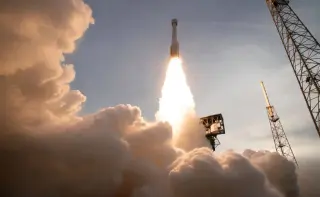
Rocket Lab’s stock has fallen after a Neutron test delay, but a top Wall Street analyst still sees substantial upside: a record $2.36 billion backlog and over $1 billion in new Q3 contracts support a bull case centered on Neutron commercialization, Space Systems growth, and defense wins (Space Force/SDA). With a Street-high target of $150, the implied upside exceeds 2x from current levels near $64, while consensus targets hover around $111; risks include further Neutron delays and dilution.

NVIDIA just posted the semiconductor sector’s biggest quarterly revenue push, led by Data Center growth, but the stock still trades in the low-20s on forward earnings. While consensus targets sit around $327 by 2027, a 24/7 Wall St. model envisions a base case near $310 and a bull case near $355 within a year; most strikingly, the piece argues a $600 NVDA price by 2030 could be achievable if EPS climbs toward $25 by 2031 and hyperscaler/cloud capex remains robust. Key catalysts cited include lower unit costs from Vera Rubin’s efficiency gains and a $1.3 trillion hyperscaler buildout, but risks include zero China data-center revenue in outlook, higher memory costs, and potential supply constraints or China decoupling that could derail multiple expansion.

Broadcom (AVGO) posted a blowout AI-focused quarter with Q3 AI semiconductor revenue up 221% year over year to $16.7 billion and guided Q4 AI revenue of about $21.7 billion, while management projects $350 billion in AI semiconductor shipments over the next two years and aims for roughly $30 per share in fiscal 2028. 24/7 Wall St. gives AVGO a Buy with a $422.39 price target, arguing the six-named-XPU customer roadmap and hyperscaler partnerships could rewrite the AI supply chain, potentially delivering an upside near 19% today, though risks include customer concentration and supply-chain constraints.