
FAA Certifies Boeing 737 MAX 10, Ending Decade-Long Delay and Unlocking Premium Cabin Plans
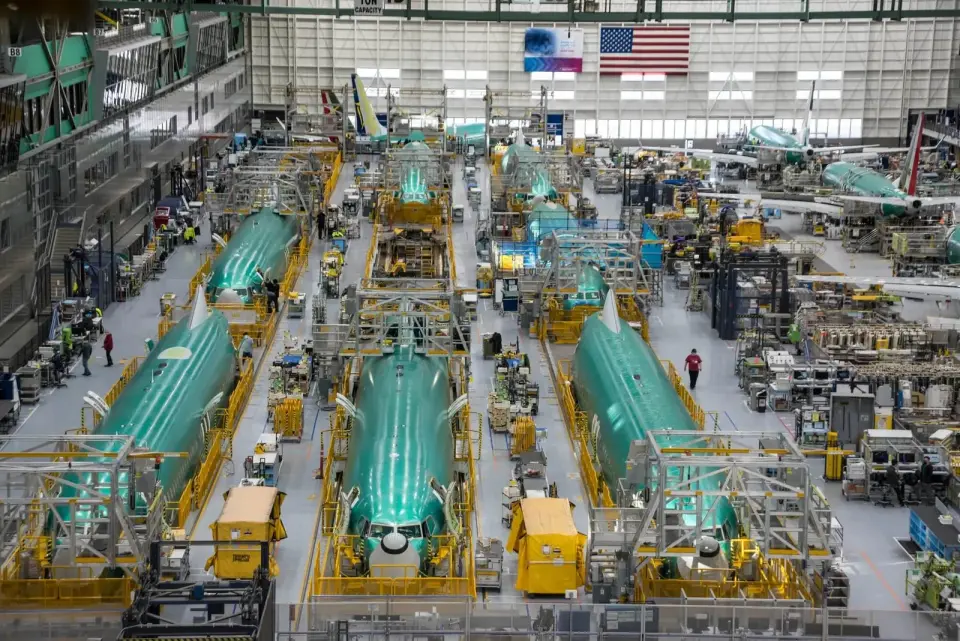
The FAA certified the Boeing 737 MAX 10 on October 20, 2026, clearing the final hurdle for the largest variant of the 737 family. This approval follows years of delays caused by safety crises, engineering changes, and a recent navigation software glitch that regulators deemed non-critical. While the aircraft can seat up to 230 passengers, deliveries are not expected until 2027. Airlines are using the extra space to expand premium cabins, with Alaska Airlines planning lie-flat beds and American Airlines adding 24 first-class seats.
Key points
- FAA issued an amended type certificate and production authorization for the 737 MAX 10 on October 20, 2026.
- The aircraft, which seats up to 230 passengers, was originally scheduled for service in 2020 but faced delays due to 2018-2019 crashes and 2023 anti-icing issues.
- Boeing has orders for 1,555 MAX 10s from over 30 customers, representing roughly 30% of its MAX backlog.
- Alaska Airlines plans to introduce 12 lie-flat Aurora Suites on at least 25 aircraft starting in 2028.
- American Airlines will configure its MAX 10s with 24 first-class seats, while Delta expects deliveries to begin in 2027.
- Transportation Secretary Sean Duffy criticized the U.S. certification process as slower than European and Chinese counterparts.
Background
The 737 MAX 10 certification concludes a decade-long struggle for Boeing following two fatal crashes in 2018 and 2019 that killed 346 people. Recent hurdles included a 2023 engine anti-ice failure, a 2024 cabin panel blowout, and a September 2026 navigation software glitch. The FAA cleared the software issue in early October, determining it did not pose a safety risk, which paved the way for the final approval. This certification completes the 737 MAX lineup, following the approval of the MAX 7 in August 2026.
How outlets are covering it
CNBC emphasized the economic and regulatory implications, with Transportation Secretary Sean Duffy arguing that the U.S. certification process is too slow compared to Europe and China, hindering American competitiveness. Boeing’s CEO Stephanie Pope framed the approval as a new standard for commercial aviation. In contrast, Live and Let's Fly focused on passenger experience, highlighting how airlines are using the larger aircraft to expand premium cabins rather than just increasing economy density. While all sources agree on the certification date and passenger capacity, they differ in emphasis: CNBC and KOMO focused on the regulatory and manufacturing recovery, while Live and Let's Fly detailed specific cabin configurations for Alaska, American, and Delta. KOMO noted that some MAX 10s are already built and ready for delivery, whereas Live and Let's Fly noted that cabin configurations still require separate certification.
Why it matters
The certification allows Boeing to resume deliveries of its largest narrowbody jet, a critical step in recovering from years of safety scandals and production halts. For airlines, it unlocks the ability to deploy larger aircraft on high-density routes, potentially improving profitability through lower per-seat costs. For passengers, it may lead to more premium seating options, such as lie-flat beds on transcontinental routes, though this depends on airline configurations. The approval also signals a gradual return to normalcy in Boeing’s relationship with the FAA, which has eased production restrictions over the past 18 months.
What to watch
Boeing expects to begin delivering the 737 MAX 10 in 2027, with some units already built. Alaska Airlines anticipates its first delivery in the second quarter of 2027, but its lie-flat suites will not debut until 2028. Airlines must still certify their specific cabin configurations before service. Boeing is also working to certify the 777-9, which is six years behind schedule. The FAA will continue to monitor Boeing’s production and safety compliance as it ramps up manufacturing at its Everett and Renton facilities.
- Boeing 737 MAX 10 Finally Wins FAA Approval, Clearing The Way For A Different First Class Experience Live and Let's Fly
- Boeing wins FAA approval for 737 Max 10 after years of delays as Duffy says certification process should be faster CNBC
- Boeing's largest 737 MAX jet wins FAA certification, clearing way for deliveries of 1,555 ordered planes Fox Business
- U.S. Transportation Secretary at Boeing’s Everett plant to announce 737 MAX approval KOMO
- Boeing’s Last 737 MAX Jet Gets Approval to Carry Passengers WSJ
Want the full story? Read the original reporting
Read on Live and Let's Fly