
Asian tech stocks slide again as AI bubble fears trigger global market intervention
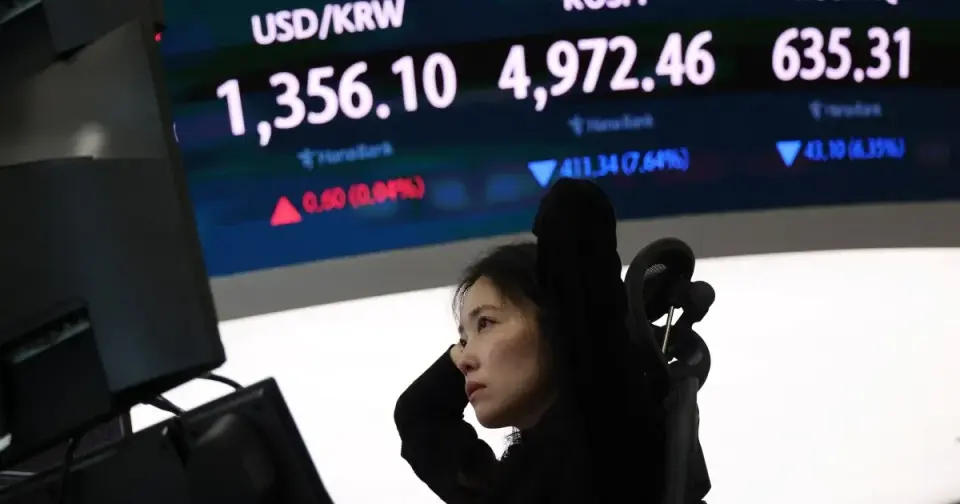
Asian stock markets fell sharply on Monday as fears over the sustainability of the artificial intelligence boom intensified following a severe sell-off on Wall Street. South Korea’s Kospi index dropped up to 5.8 percent, while indices in China and Hong Kong also declined. The volatility prompted Asian governments to implement emergency measures, including easing margin requirements in China and preparing stabilization funds in South Korea, to prevent further panic selling.
Key points
- South Korea’s Kospi index fell as much as 5.8 percent, with major chipmakers Samsung Electronics and SK Hynix dropping over 3 percent, according to Al Jazeera and the Financial Times.
- The sell-off followed a 3.7 percent drop in the US S&P 500 and a 5.3 percent fall in the Nasdaq Composite on Friday, which erased all of the Nasdaq’s gains for 2026, as reported by Al Jazeera.
- China lowered its minimum margin requirement for securities from 100 percent to 80 percent effective November 30 to encourage buying, according to Bloomberg.
- South Korean officials announced they would activate a stabilization fund if necessary and relax daily limits on share buybacks for three months, per the Financial Times.
- Taiwan’s Taiex index initially fell but rebounded to gain 2.5 percent, while Japan’s markets remained closed for a public holiday, according to Al Jazeera.
Background
This latest volatility follows a severe sell-off on Friday, November 20, when Asian markets plunged between 1.9 percent and 6.2 percent despite the record initial public offering of Anthropic. Earlier in November, markets had also reacted to concerns over AI debt and inflation, with the Kospi previously dropping 7.57 percent in October. The current crisis is compounded by the departure of Nvidia CEO Jensen Huang amid allegations of espionage and extramarital affairs, which triggered regulatory scrutiny and a 14 percent drop in Nvidia’s stock on Friday.
How outlets are covering it
Al Jazeera emphasizes the broad market decline and the uncertainty surrounding the AI boom, noting that global AI-related investment is expected to reach $2.7 trillion in 2026. The Financial Times highlights the specific impact on South Korean chipmakers and the government’s proactive stance in warning against panic selling. Bloomberg focuses on the regulatory response, detailing China’s decision to ease margin requirements to stimulate market activity. Yahoo Finance points out that despite a rebound in US futures, Asian investors remained cautious due to fears of tighter regulation and higher interest rates, with the VIX fear gauge spiking to its highest level since April.
Why it matters
The continued decline in Asian tech stocks signals deepening investor anxiety about the sustainability of multitrillion-dollar AI investments, which are largely debt-fueled. The intervention by Asian governments indicates that the market correction has reached a level of severity requiring direct policy responses to stabilize financial systems. This volatility also reflects broader geopolitical and regulatory risks, including US restrictions on chip exports to China and potential slowdowns in data center construction due to the new Democratic majority in Congress.
What to watch
Investors will closely watch whether the US market rebounds as futures suggest, and if Asian governments’ intervention measures, such as South Korea’s stabilization fund and China’s margin adjustments, effectively halt the sell-off. The coming week will likely focus on whether the market has found a bottom, with analysts monitoring semiconductor export data and any further regulatory actions regarding AI infrastructure and chip access.
- Asian stock markets tumble as AI bubble fears mount Al Jazeera
- China Lowers Margin Requirement to 80% to Boost Stock Liquidity Bloomberg.com
- Tech stock sell-off deepens in Asia Financial Times
- Asian tech back in the firing line as traders track Wall St rout Yahoo Finance
- AI tech rout prompts US investors to rush into value stocks Reuters
Want the full story? Read the original reporting
Read on Al Jazeera