
Ariane 6 Launches Amazon Satellites as ULA Vulcan Remains Grounded
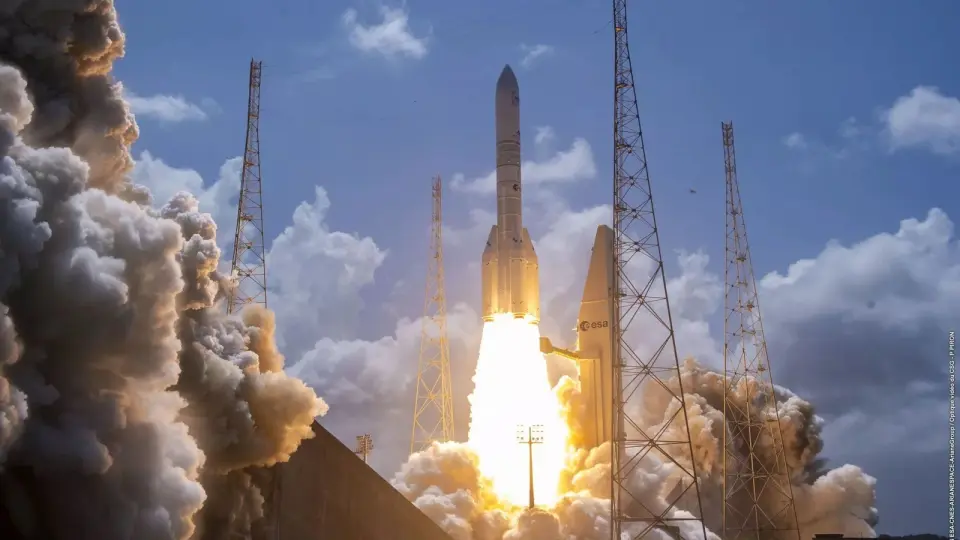
Amazon is launching 36 internet satellites via Ariane 6 on Nov. 23, its first deployment since a Vulcan Centaur failure on Nov. 15 destroyed 40 spacecraft. ULA attributes the failure to inadequate fuel supply to Blue Origin engines, grounding the rocket indefinitely. This setback intensifies concerns for the U.S. Space Force, which faces a launch capacity bottleneck as SpaceX shifts focus to Starship.
Key points
- Ariane 6 is scheduled to launch 36 Amazon Leo satellites from Kourou, French Guiana, at 6:09 a.m. ET on Nov. 23.
- This is Amazon's first satellite deployment since a Vulcan Centaur failure on Nov. 15 destroyed 40 Leo satellites.
- ULA preliminary data indicates the Vulcan failure resulted from inadequate fuel supply to the first-stage BE-4 engines, not engine performance issues.
- The Vulcan Centaur remains grounded with no return-to-flight date, impacting ULA's customers including the U.S. Space Force and Amazon.
- SpaceX successfully tested its Starship vehicle on Nov. 14, reinforcing its dominance while ULA and Blue Origin struggle with launch reliability.
Background
Amazon Leo aims to deploy over 3,200 satellites to compete with SpaceX's Starlink, which has over 11,000 operational spacecraft. Amazon has booked rides on multiple rockets, including ULA's Vulcan Centaur, Blue Origin's New Glenn, and SpaceX's Falcon 9. The Vulcan Centaur had been grounded for nine months following solid rocket booster nozzle issues in February 2026. Blue Origin's New Glenn rocket has also been grounded since a May 2026 pad explosion, with a return to flight targeted for January 2027.
How outlets are covering it
Space.com emphasizes the immediate launch of 36 satellites via Ariane 6 as a recovery step for Amazon's constellation. Scientific American highlights the broader implications for U.S. spaceflight, noting that the Vulcan failure could delay NASA's Artemis program and Space Force missions, especially if Blue Origin's BE-4 engines are implicated. Air & Space Forces Magazine focuses on the national security impact, stating that the failure tightens the launch capacity bottleneck for the Space Force, which has already swapped missions to SpaceX. Spaceflight Now details the technical investigation, confirming that ULA points to fuel supply issues rather than engine failures, which is significant for Blue Origin's New Glenn rocket. All sources agree that the Vulcan Centaur is grounded and that Amazon is diversifying its launch providers to mitigate risks.
Why it matters
The Vulcan Centaur failure and subsequent grounding threaten the launch schedules of critical U.S. government and commercial missions. With SpaceX shifting focus to Starship and Blue Origin's New Glenn also grounded, the U.S. faces a potential launch capacity crisis. This could delay national security missions, NASA's Artemis program, and Amazon's broadband constellation, highlighting the fragility of the current launch ecosystem and the need for diversified launch providers.
What to watch
ULA and Blue Origin will continue investigating the Vulcan Centaur failure, with the Federal Aviation Administration overseeing the process. ULA aims to return to flight as safely and quickly as possible, but no date has been set. Blue Origin targets a New Glenn return to flight in January 2027. Amazon will continue launching satellites via Ariane 6 and SpaceX's Falcon 9 while awaiting Vulcan's return. The U.S. Space Force may explore alternative vendors or use the Defense Production Act to ensure launch capacity.
- Watch live Nov. 23: Amazon launching 1st batch of internet satellites since Vulcan Centaur failure Space
- The Vulcan rocket failure could haunt U.S. spaceflight for years to come Scientific American
- ULA’s Latest Launch Failure Spells Trouble for Space Force Air & Space Forces Magazine
- Vulcan failure investigation focuses on ‘inadequate fuel supply’ to booster engines Spaceflight Now
- Opinion: SpaceX Has a “Monopoly” in Space. That’s Bad News for Amazon’s Leo. But Also Bad for SpaceX TIKR.com
Want the full story? Read the original reporting
Read on Space