
AI Job Displacement Lags Predictions as Work Nature Shifts
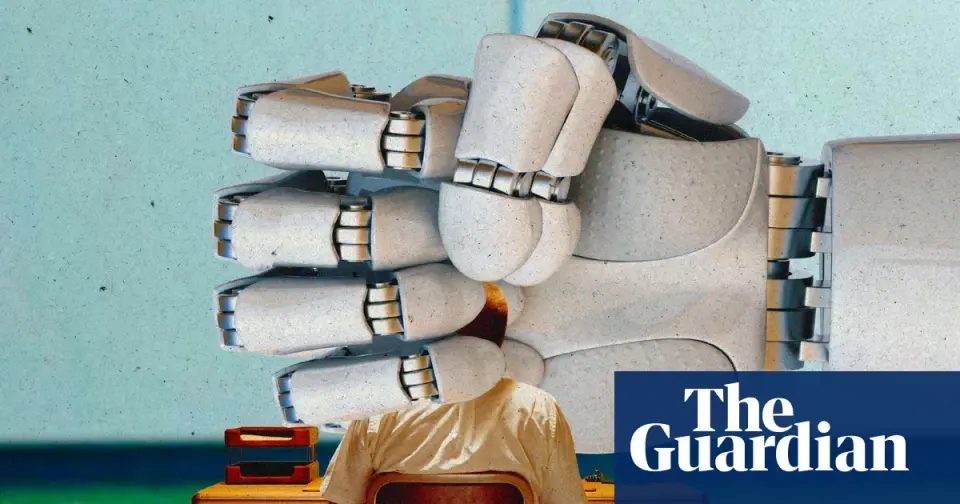
Despite dire warnings from tech leaders, mass job losses from AI have not materialized. Instead, the labor market is experiencing a shift in job requirements, with employers increasingly demanding AI skills. Physical and high-judgment roles remain resilient, while economists warn of a future rise in freelance work and skill-based turbulence.
Key points
- Stanford Institute data shows unemployment for AI-exposed workers rose by 0.77 percentage points since 2022, less than the 0.85 point rise for less-exposed groups.
- 74% of employers now view AI skills as a strong advantage or requirement, with 13% mandating them company-wide.
- Recent graduates face 5.6% unemployment, though this is attributed to multiple factors including remote work trends and pandemic-era hiring corrections.
- MIT professor Paul Osterman predicts a shift toward freelance and contract work, noting 35% of the US workforce is already easily replaceable.
- Physical jobs like firefighting and piloting remain 'AI-proof' due to the need for real-time human judgment and spatial awareness.
Background
In July 2026, hundreds of economists and AI researchers, including Nobel laureates, signed an open letter urging policymakers to create guardrails for AI's economic impact. Around the same time, the Federal Reserve appointed Xbox CEO Asha Sharma to co-lead a task force on AI and jobs, a move scrutinized given Microsoft's recent announcement of 3,200 layoffs. These events highlighted growing institutional concern about AI's labor market effects, even as data suggested the full impact was still unfolding.
How outlets are covering it
The Guardian emphasizes that while mass job destruction has not occurred, the nature of work is changing through 'turbulence,' where roles are consolidated and AI skills become mandatory. CNBC, via Resume Now, focuses on the resilience of physical and high-judgment occupations, such as firefighting and piloting, arguing that these roles require uniquely human abilities like danger detection and spatial awareness that AI cannot replicate. While The Guardian highlights the long-term risk of freelance work and skill obsolescence, CNBC presents a more immediate view of 'AI-proof' careers that rely on physical stamina and real-time decision-making.
Why it matters
The delay in mass job displacement does not mean AI is irrelevant to employment. Instead, it signals a transition where job quality and requirements are changing faster than job counts. Workers face a rising bar for AI proficiency, while policymakers and unions must address the potential shift toward precarious freelance work and the need for public policy to protect lower-skilled workers.
What to watch
Economists expect the full impact of AI on the labor market to take years to manifest, as adoption is slowed by the need to change systems and job titles. Political opposition to AI datacenters and safety concerns may further delay adoption. In the meantime, workers are negotiating AI use in collective bargaining agreements, and employers are continuing to adjust hiring practices to match new AI-driven skill sets.
- AI was supposed to destroy jobs. Where’s the carnage? The Guardian
- These 10 'AI-proof' jobs require ‘uniquely human’ skills, says report—you have to 'react in real time' CNBC
- AI is cutting graduate jobs. These are the skills young people will need SMH.com.au
- AI Is Making These Jobs ‘Irreplaceable’ Even As Hiring Rates Plunge 24% Forbes
- Prediction: AI Won't Cause Many Lost Jobs. That's Good News for These 2 ETFs. The Motley Fool
Want the full story? Read the original reporting
Read on The Guardian