
Bessent Warns Yen Volatility Could Force Higher US Interest Rates
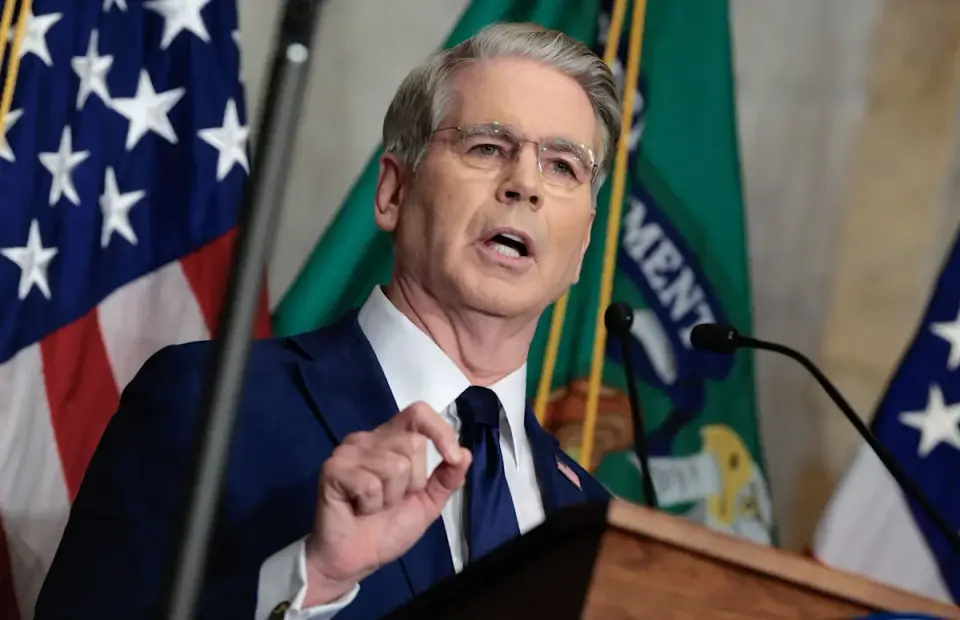
US Treasury Secretary Scott Bessent has warned that a 'disorderly' Japanese yen could ultimately lead to higher interest rates in the United States. This statement follows recent coordinated currency interventions between Washington and Tokyo, which aimed to stabilize the yen and prevent broader financial turmoil. While the move was framed as a 'signal of friendship' by President Donald Trump, it raises questions about the long-term impact on US borrowing costs and global monetary policy.
Key points
- Bessent linked yen instability to potential increases in US interest rates, suggesting that currency volatility could have broader economic repercussions.
- Recent US-Japan currency interventions were described as an informal 'currency alliance' by Citi strategists, though not a formal monetary union.
- The interventions involved the Federal Reserve's Foreign and International Monetary Authorities facility and the Treasury's Exchange Stabilization Fund.
- Japan's Vice Finance Minister Atsushi Mimura characterized the latest action as the culmination of this policy coordination.
- Citi noted that Bessent is concerned about prolonged yen weakness recreating conditions similar to the late 1990s Asian currency crisis.
Background
This development follows earlier concerns raised by economists about potential dollar debasement and the impact of large deficits on long-term yields. Previous coverage highlighted Bessent's efforts to cool long-term yields through various financial maneuvers, including currency interventions. The recent actions are part of a broader strategy to manage global financial stability and prevent inflationary pressures from currency swings.
How outlets are covering it
Yahoo Finance emphasizes Bessent's warning about the potential impact of yen volatility on US interest rates, highlighting the direct link between currency stability and monetary policy. Investing.com, through Citi's analysis, frames the recent interventions as an informal 'currency alliance' rather than a formal monetary union, suggesting a more nuanced approach to policy coordination. Citi also notes that the interventions may serve as a warning to Japanese Prime Minister Sanae Takaichi, whose reflationary policies could further weaken the yen. The perspectives differ in their emphasis on the immediate political and economic implications versus the broader strategic coordination between the US and Japan.
Why it matters
The stability of the Japanese yen is crucial for global financial markets, as its weakness can lead to increased borrowing costs and inflationary pressures in the US. Bessent's warning underscores the interconnectedness of global economies and the potential for currency volatility to impact domestic monetary policy. Understanding these dynamics is essential for investors and policymakers navigating the current economic landscape.
What to watch
Markets will closely watch the Jackson Hole symposium and subsequent G7 and G20 finance meetings for further policy signals. The outcome of these events could provide clarity on the future direction of US-Japan currency coordination and its impact on global interest rates. Additionally, the response of European authorities to the US intervention in the euro market will be a key indicator of broader international monetary policy trends.
- Bessent Says a ‘Disorderly Yen’ Could Ultimately Raise US Rates Yahoo Finance
- Japan Spent Record $98.7 Billion to Prop Up Yen in Joint Move With U.S. WSJ
- Bessent Says a ‘Disorderly Yen’ Would Risk Higher US Rates Bloomberg.com
- Japan spent record $96.5 billion to support yen over past month, ministry data shows Reuters
- Breaking down the U.S.-Japan “currency alliance” Investing.com
Want the full story? Read the original reporting
Read on Yahoo Finance