
Big Mac Index Turns 40: Israel Rises to Second Most Expensive, But Critics Question Its Economic Validity
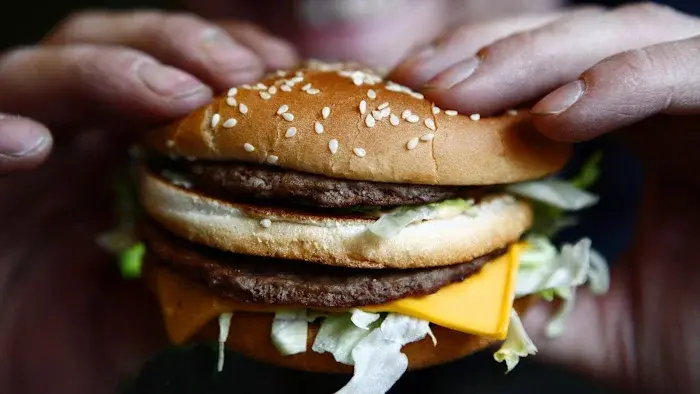
The Economist’s Big Mac Index marks its 40th anniversary, revealing that Israel now has the second most expensive burger globally, behind only Switzerland. While the index suggests the shekel is overvalued by nearly 40%, Financial Times analysis argues the tool is flawed because the Big Mac is not a uniform global commodity, but rather a proxy for local labor and rent costs.
Key points
- Israel’s Big Mac price rose to $7.67, placing it second globally behind Switzerland ($9.04), up from eighth place in January 2026.
- The Economist calculates the Israeli shekel is overvalued by nearly 40% against the dollar based on purchasing power parity.
- Financial Times argues the Big Mac is not a homogeneous good, as McDonald’s adjusts ingredients, salt, and beef sources locally, undermining the index’s theoretical basis.
- The Economist notes that labor costs account for approximately 45.5% of the burger’s price, making the index a proxy for labor and rent rather than pure commodity pricing.
- Currency misalignments are at their widest since the mid-1990s, with the IMF reporting the largest gap in global goods prices relative to the US in 40 years.
Background
The Big Mac Index was launched in 1986 by The Economist to illustrate purchasing power parity, the theory that identical goods should cost the same worldwide when adjusted for exchange rates. It has since become a staple in economics textbooks, spawning over 50 academic articles. Previous coverage of McDonald’s focused on operational hacks and menu variations, but this index remains a primary tool for assessing currency valuation, despite its limitations.
How outlets are covering it
The Economist emphasizes the index’s utility in highlighting currency mispricings, noting that the Swiss franc and Israeli shekel are significantly overvalued. It attributes price differences to local factors like rent and labor, which are not tradable across borders. In contrast, the Financial Times criticizes the index’s premise, arguing that the Big Mac is not a globally traded commodity due to local adjustments in ingredients and sourcing. The FT suggests the index better reflects real effective exchange rates driven by labor costs rather than purchasing power parity. The Jerusalem Post and Calcalist highlight the specific impact on Israel, noting that price increases and a stronger shekel drove the country’s rise in the rankings, while Deutsche Bank’s report corroborates that Tel Aviv has the highest McDonald’s prices globally.
Why it matters
The Big Mac Index serves as a simplified, accessible tool for understanding complex currency valuations and inflation trends. Its 40-year history provides a long-term dataset for tracking economic shifts, such as the divergence in global prices since 2010. However, debates over its accuracy highlight the challenges of using single-product metrics to assess macroeconomic health, especially when local labor and rent costs dominate the price structure.
What to watch
Economists will continue to monitor currency misalignments, which are currently at their widest since the mid-1990s. The IMF’s data suggests that floating exchange rates may take 5-6 years to offset inflation differences. Future iterations of the index may incorporate adjustments for GDP per capita to better account for productivity gaps between rich and poor nations.
- Beefing with the Big Mac Index Financial Times
- Despite 40 years of our Big Mac index, currencies are still mispriced The Economist
- World’s 2nd most expensive Big Mac: Israel jumps six spots to No. 2 on Economist index The Times of Israel
- Israel jumps to second place globally in Big Mac Index The Jerusalem Post
- Israel has the world's second most expensive Big Mac calcalistech.com
Want the full story? Read the original reporting
Read on Financial Times