
Beijing injects $53.6bn into state banks and insurers to bolster financial stability
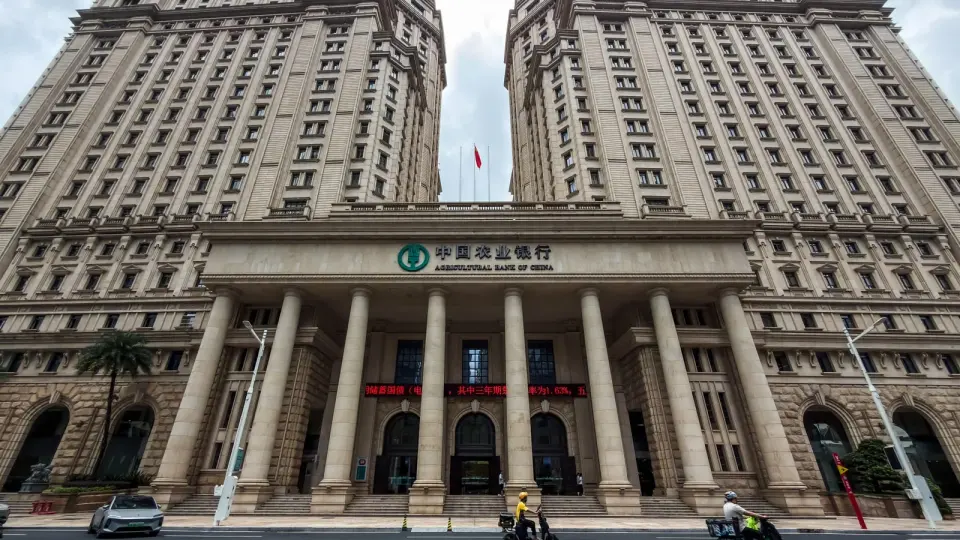
China’s Ministry of Finance is leading a 360 billion yuan ($53.6 billion) capital injection into three state-owned banks and five insurers. This is the first time Beijing has recapitalized insurers, addressing deteriorating solvency ratios caused by low interest rates. The move aims to strengthen the financial system’s ability to support the real economy and absorb shocks, though analysts note the package is smaller than market expectations and may have limited short-term impact due to weak credit demand.
Key points
- A total of 360 billion yuan is being allocated to eight financial institutions, including Agricultural Bank of China, Industrial and Commercial Bank of China, and China Life Insurance.
- The injection includes 160 billion yuan for Agricultural Bank of China and 100 billion yuan for ICBC via private A-share placements, with proceeds used entirely to replenish capital.
- China Life Insurance will receive 35 billion yuan, while China Taiping Insurance gets 7 billion yuan; People’s Insurance Company of China plans to raise up to 15 billion yuan.
- The insurance sector’s solvency ratio dropped to 180.6% in Q2 2026 from 204.5% in 2025, though it remains above the 100% regulatory minimum.
- Shares of the affected banks and insurers fell on Monday, with Agricultural Bank of China dropping 2.7% and China Taiping Insurance losing nearly 4%.
Background
This recapitalization follows a 500 billion yuan injection into four major state banks last year and a March pledge to issue 300 billion yuan in special treasury bonds. It addresses ongoing margin compression in the banking sector, where net interest margins have hit record lows as Beijing maintains low lending rates to support struggling borrowers.
How outlets are covering it
CNBC emphasizes that the package is smaller than anticipated, suggesting lower urgency for aggressive capital replenishment, while highlighting the strategic goal of preparing banks for AI and advanced technology investment cycles. BBC frames the injection as a broad effort to boost the slowing economy amid trade tensions and an aging population, citing Xinhua’s focus on enhancing risk resistance. The Guardian notes the role of state insurers in supporting the stock market and managing smaller, higher-risk insurers, while acknowledging the challenge of eroding profitability due to low rates. All sources agree on the scale and recipients but differ in emphasis: CNBC focuses on market reaction and strategic intent, BBC on macroeconomic stability, and The Guardian on market support and regulatory oversight.
Why it matters
The injection signals Beijing’s commitment to financial stability as a pillar of national security, but its limited size and the persistent weakness in credit demand suggest that fiscal stimulus may be insufficient to drive significant economic growth. It also reflects the state’s strategy to use capital markets and state-owned enterprises to manage economic risks and support priority sectors.
What to watch
Analysts expect policymakers to provide incremental stimulus to meet growth targets, with faster government bond issuance and infrastructure projects. The capital injections may allow banks to accelerate the disposal of non-performing loans and strengthen lending capacity, but the impact on the broader economy remains constrained by weak credit demand.
- China pulls in Big Tobacco to help with smaller-than-expected finance-industry capital injections cnbc.com
- China to pump $54bn into state banks and insurers to boost economy BBC
- Beijing to Inject Billions Into Banks, Insurers to Boost Growth WSJ
- China prepares £40bn stimulus for financial sector amid fears over sluggish growth The Guardian
- China to pump $54 billion into state banks, insurers in capital-boosting push Reuters
Want the full story? Read the original reporting
Read on cnbc.com