
Fuel Prices Stay High as Midterm Looms, Testing Trump's Economic Legacy
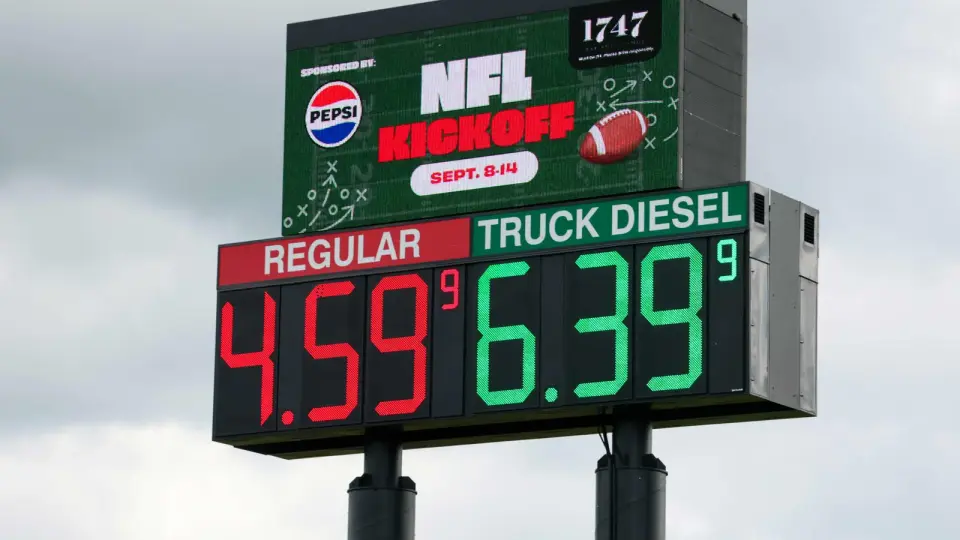
Gas and diesel prices remain elevated ahead of the November 3 midterms, with little sign of relief. The national average for gasoline sits at $4.36 per gallon, while diesel hovers near $6.28. Prediction markets assign an 87% chance that gas stays above $4 on Election Day. These high costs, driven by the ongoing Iran conflict and supply chain disruptions, are a top voter concern, particularly in competitive Senate races in agricultural and heating-heavy states. While the administration has attempted various measures to lower prices, analysts suggest these actions offer only temporary or minimal relief.
Key points
- The AAA national average for gasoline is currently $4.36 per gallon, down slightly from a peak of $4.56 in May but still well above pre-war levels.
- Diesel prices reached a peak of $6.53 in September and currently stand at $6.28, with a 68% chance of remaining above $6 on Election Day.
- Prediction market Kalshi gives an 87% probability that gas prices will stay above $4 on November 3, though only a 42% chance they will exceed $4.25.
- High fuel costs are disproportionately affecting farmers, truckers, and residents in states like Iowa, Kansas, and Alaska, which have competitive Senate races.
- Democrats have a 63% chance of flipping the Senate, according to Kalshi, with affordability cited as a primary driver of voter sentiment.
Background
Since the start of the Iran war in February 2026, fuel prices have surged significantly. Gasoline rose from under $3 to over $4, while diesel hit record highs. This spike has contributed to rising inflation, reaching 3.4%, and prompted the Federal Reserve to raise interest rates. The conflict has disrupted oil flows through the Strait of Hormuz and strained global supply chains, creating a persistent economic strain that has overshadowed other positive economic indicators.
How outlets are covering it
CNBC and Slate emphasize the political risk to Republicans, noting that high fuel prices are a top voter concern and have improved Democrats' chances of winning the Senate. The American Prospect argues that the administration's short-term tactics, such as the red-dye diesel waiver, are ineffective and that the root cause is the Iran war. BBC highlights the administration's latest move, a deal with Russia to release diesel, but notes that analysts view this as a temporary fix that may backfire. While all sources agree prices are high, they differ on the efficacy of presidential interventions, with BBC and The American Prospect suggesting these measures are largely symbolic or counterproductive.
Why it matters
Fuel prices are a critical factor in the 2026 midterm elections, directly impacting voter sentiment and the viability of Republican candidates in key states. The sustained high costs are squeezing household budgets and increasing inflation, which could determine the outcome of competitive Senate races in agricultural and heating-dependent regions. The inability to lower prices quickly may solidify a political narrative that the administration is failing to address core economic concerns.
What to watch
Analysts expect prices to remain elevated through Election Day, with any significant drop unlikely unless geopolitical tensions in the Middle East and Europe resolve. The administration may continue to pursue short-term measures, but experts warn that without a resolution to the Iran conflict, supply constraints will persist. The outcome of the midterms will likely hinge on how voters perceive the administration's handling of these economic pressures.
- Little relief expected for gas prices ahead of Election Day, according to prediction markets CNBC
- The Political Economy of Diesel The American Prospect
- Trump wants to reduce the cost of fuel as the midterms loom - will it work? BBC
- Trump’s war with Iran doubles the cost of his rides in ‘the Beast’ The Times
- We Have a New Contender for Dumbest Political Move of the Century Slate
Want the full story? Read the original reporting
Read on CNBC