
Sticky US Inflation and Oil Spike Push Fed Rate Hike Odds Above 90%
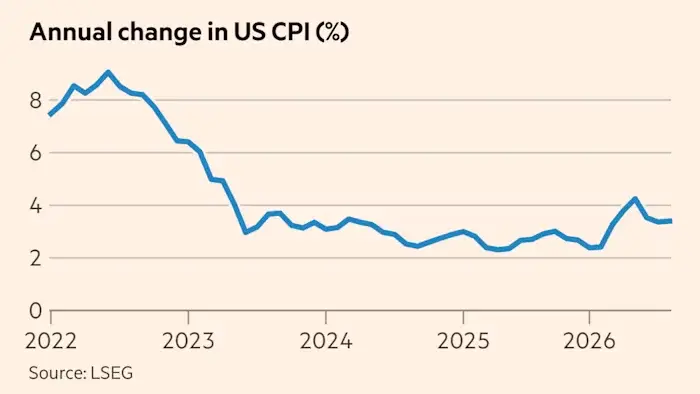
US inflation remained stuck at 3.4% in August, driven by a surge in fuel costs. This data, combined with oil prices exceeding $100 a barrel, has pushed market expectations for a Federal Reserve interest rate hike next week to over 90%.
Key points
- The Bureau of Labor Statistics reported that the annual Consumer Price Index (CPI) held steady at 3.4% in August, matching July's level and economist forecasts.
- Core inflation, which excludes food and energy, rose to 2.4% annually, down slightly from 2.5% in July, but the monthly core increase of 0.3% was higher than expected.
- Gasoline prices jumped 3.9% in August, accounting for over one-third of the monthly CPI increase, as Brent crude surpassed $100 a barrel due to Middle East conflicts.
- Traders now assign a 90% probability to a quarter-point interest rate hike by the Federal Open Market Committee (FOMC) at its meeting next week, up from roughly 70% before the report.
- The Fed's preferred inflation measure, the Personal Consumption Expenditures (PCE) index, stood at 3.7% in July, remaining above the central bank's 2% target for over five years.
Background
This development follows a period of persistent inflation and rising bond yields. In July, the Fed kept rates steady at 3.5%-3.75% despite three dissenting votes favoring a hike. Recent months have seen oil prices climb from the mid-$80s to over $100 per barrel due to geopolitical tensions, pushing 10-year Treasury yields near 5% and raising concerns about a potential recession or stagflation.
How outlets are covering it
Outlets agree on the core data but differ on the interpretation of the Fed's likely response. The Financial Times and CNBC emphasize the hawkish shift, noting that the report validates Fed Chair Kevin Warsh's recent warning that the central bank has 'work to do' if inflation does not fall. The New York Times highlights the political tension, noting that a rate hike would conflict with President Trump's demands for lower rates, while also pointing out that some Fed officials, like John C. Williams, still argue for patience if inflation cools. AP News focuses on the direct impact of the Iran war on consumer wallets, particularly through high gas and diesel prices. While all sources cite the 3.4% headline figure, CNBC notes that the core monthly increase was slightly higher than forecast, a nuance the Financial Times downplayed in favor of the annual core rate.
Why it matters
The August CPI report is the final major inflation indicator before the Fed's policy meeting. A rate hike would increase borrowing costs for mortgages and consumer loans, potentially slowing economic growth. Conversely, failing to act could risk inflation expectations becoming entrenched, leading to higher long-term interest rates and market volatility. The decision will also test the Fed's independence amid political pressure from the White House to lower rates.
What to watch
The Federal Reserve will announce its decision on interest rates on Wednesday. Markets are pricing in a 25 basis point increase. Investors will watch for Fed Chair Kevin Warsh's commentary on the pace of future tightening and whether the central bank expects inflation to return to its 2% target without further rate hikes. The next PCE inflation report is scheduled for September 30.
- US inflation held steady at 3.4% in August as high fuel prices persist Financial Times
- Inflation persisted in August, potentially locking in a Fed interest rate hike cnbc.com
- CPI Report Today: Inflation Rose 3.4% in August; Odds of Rate Hike Jump — Live Updates WSJ
- CPI Report Live Updates: Elevated Inflation Keeps Pressure on Fed to Raise Interest Rates The New York Times
- US inflation accelerated last month as gas prices spiked, squeezing Americans’ finances AP News
Want the full story? Read the original reporting
Read on Financial Times