
Halloween Costume Prices Soar to $59.29 Average as Tariffs Drive Inflation
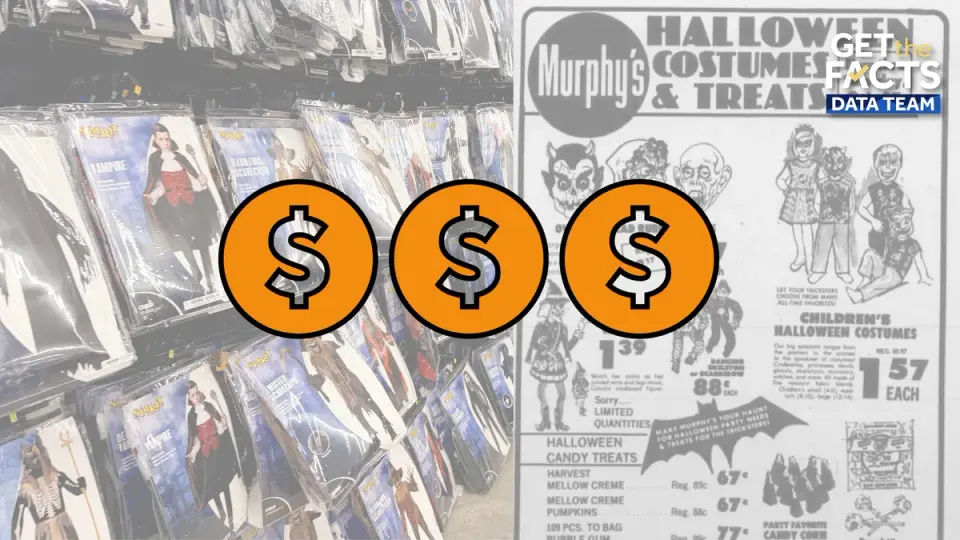
U.S. consumers are expected to spend an average of $59.29 on Halloween costumes in 2026, with total industry revenue reaching $13.5 billion. A data analysis by WLWT reveals that basic Spider-Man costumes have increased from $2.94 in 1974 to $49.99 today, even after adjusting for inflation. Seventy-nine percent of shoppers report expecting higher prices this year due to tariffs, according to the National Retail Federation.
Key points
- The Halloween and Costume Association reports the average adult costume spend is $59.29 in 2026.
- Total U.S. Halloween spending is projected at $13.5 billion, with $4.4 billion allocated specifically for costumes.
- A WLWT data team compared historical newspaper ads to current retail prices, finding a basic Spider-Man costume cost $2.94 in 1974 versus $49.99 at Spirit Halloween in 2026.
- Inflation-adjusted, the 1974 price equates to $19.39 in 2026 dollars, indicating a significant premium for modern variants.
- Seventy-nine percent of shoppers surveyed by the National Retail Federation expect higher prices this year, citing tariffs as a primary driver.
Background
This financial analysis follows recent cultural coverage regarding the 'Halloween body' trend, which has intensified social media pressure on consumers to achieve specific physical standards before October 31. Additionally, high-profile events such as Heidi Klum's annual bash, featuring elaborate and expensive prosthetic costumes, highlight the growing commercialization and complexity of modern Halloween celebrations. These cultural shifts contribute to the broader economic trend of rising consumer expenditure on seasonal goods.
Why it matters
The sharp rise in costume costs reflects broader economic pressures, including tariff-driven inflation, that are affecting discretionary spending. As consumers face higher prices for basic items, the financial burden of seasonal traditions may influence household budgets and retail strategies for the holiday season.
What to watch
Retailers may continue to adjust pricing strategies in response to tariff impacts, while consumers might seek alternative options or delay purchases. Future analyses could track whether the current price surge persists into the post-Halloween period or if it is a seasonal anomaly.
Want the full story? Read the original reporting
Read on WLWT