
Iran War Costs U.S. Households $2,000, Moody's Estimates
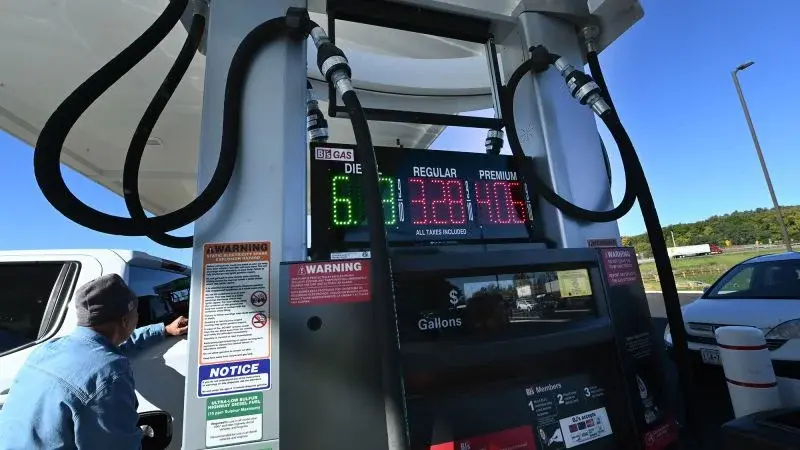
The Iran war has added approximately $2,000 to the average American household's costs since late February, according to Moody's. This $265 billion total is driven by soaring energy prices and higher interest rates, with fuel costs alone accounting for $1,100 per household. While the White House dismisses these figures, consumer confidence has plummeted ahead of the midterm elections.
Key points
- Moody's estimates the war has cost U.S. consumers $265 billion, or $2,000 per household.
- Energy prices, including gasoline and heating oil, account for $1,100 of that total.
- Higher interest rates have added $360 to household costs, pushing 30-year mortgage rates to 7.4%.
- Gasoline prices have averaged $4.34 per gallon, up from $2.98 before the conflict began.
- The Pentagon has reported $45.1 billion in direct military spending for the war.
Background
This escalation follows earlier reports in September indicating the war had already cost households $1,650. In October, a Congressional report detailed the loss of 81 aircraft, adding billions in replacement costs. The current economic strain is part of a broader pattern of rising costs linked to the conflict, which began in late February 2026.
How outlets are covering it
Moody's and CNN emphasize the direct financial burden on consumers, linking high costs to declining approval ratings for President Trump. USA Today frames the issue as a political liability for Republicans, arguing the war is a direct cause of economic pain that voters will punish in midterms. Conversely, the White House dismisses Moody's chief economist Mark Zandi as a 'Democrat donor' who is 'frequently wrong,' arguing that high prices are a necessary cost to prevent Iran from acquiring nuclear weapons. The Energy Institute blog offers a technical critique, noting that while the $130 billion fuel cost estimate is robust, it may overstate the burden by ignoring demand elasticity and attributing all price changes solely to the war, ignoring other factors like Ukrainian strikes on Russian refineries.
Why it matters
The economic fallout from the Iran war is reshaping the political landscape ahead of the 2026 midterm elections. With consumer confidence in a tailspin and 27% of Americans approving of Trump's economic handling, the $2,000 per household cost is likely to be a central issue for voters. The sustained high prices for fuel and housing are eroding savings and forcing reliance on credit, creating a potential crisis for the administration's political base.
What to watch
Analysts expect further financial pain as the war continues, with no end in sight. Heating oil costs are projected to jump 21% this winter, and airlines are raising fares due to jet fuel prices. As the midterm elections approach, the White House will likely continue to defend the war's necessity, while opposition parties will focus on the economic impact to sway voters. The conflict's duration and the resolution of the Strait of Hormuz blockade will be critical in determining whether these costs stabilize or continue to rise.
- The Iran war is costing American households $2,000 each, Moody’s estimates CNN
- Trump's Iran war is costing us. Voters can make the GOP pay | Opinion USA Today
- Iran war costing US households average of $2K each: Moody’s The Hill
- How Much Has the Iran War Cost the Average Family So Far? Gizmodo
- Pain at the Pump: $130 Billion and Counting Energy Institute Blog
Want the full story? Read the original reporting
Read on CNN