
Heating oil costs surge 31% as Northeast faces steepest winter bill increases
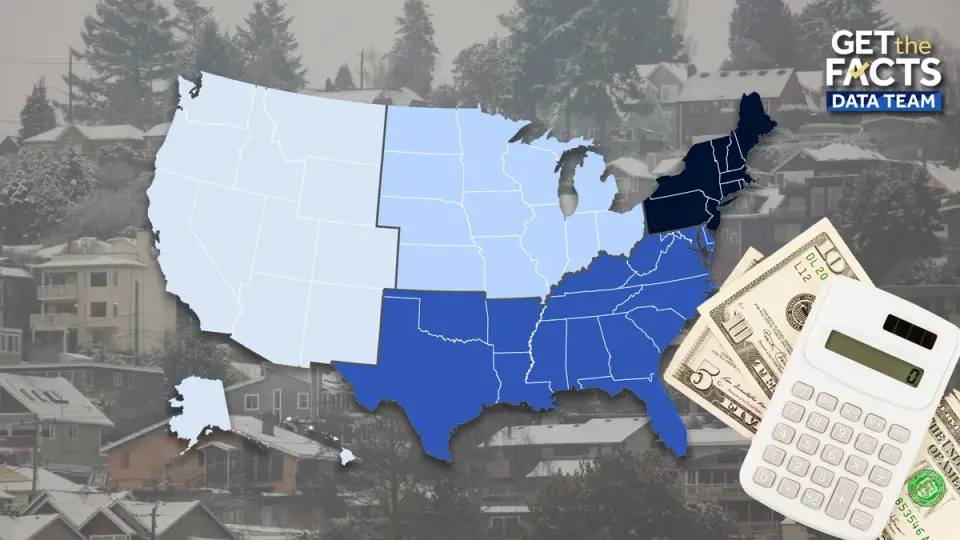
U.S. households are projected to spend an average of $1,030 on heating this winter, an 8.7% to 9% increase from last year. The Northeast faces the steepest rise, with heating oil costs jumping 31% to nearly $2,300 per household due to the U.S.-Iran conflict and global supply disruptions.
Key points
- National Energy Assistance Directors Association (NEADA) projects average U.S. heating costs will rise 8.7% to 9%, reaching $1,030 from mid-November to mid-March.
- Heating oil costs are expected to surge 31% to $2,297, driven by Brent Crude prices exceeding $100 per barrel due to the U.S.-Iran war and Strait of Hormuz disruptions.
- The Northeast faces the highest costs, with electricity bills averaging $1,885 compared to $1,499 in the Midwest, driven by higher rates and longer winters.
- Electricity costs are projected to rise 9% due to increased demand from AI data centers and aging grid infrastructure.
- NEADA is requesting an additional $3 billion in Low Income Home Energy Assistance Program (LIHEAP) funding to help households manage rising costs.
Background
Previous coverage from our archive noted that despite a stronger El Niño expected to bring warmer weather, U.S. households are still projected to face a significant increase in heating costs. The Northeast has been identified as the region most affected by reliance on heating oil and higher electricity rates, with experts urging energy-efficiency measures and assistance program participation.
How outlets are covering it
While all sources agree on the overall 8.7% to 9% increase in heating costs, they emphasize different drivers. WBBH and CNN highlight the U.S.-Iran war and global oil market disruptions as primary factors for the 31% surge in heating oil costs. Heatmap News adds that Houthi attacks on Saudi oil tankers and Ukrainian drone strikes on Russian refineries are further straining global supply, with diesel prices surging past $6 per gallon. CNN also notes that electricity costs are rising 9% due to AI data center demand and aging grid infrastructure, a factor less emphasized in other sources. All sources agree that the Northeast will face the steepest increases due to longer winters and heavier reliance on heating oil.
Why it matters
Rising heating costs are forcing households to make difficult budget decisions, with some cutting back on non-essential expenses or relying on federal assistance. The 31% surge in heating oil costs is particularly severe for the Northeast, where many households rely on oil for heating. This could exacerbate energy poverty and strain social services, as LIHEAP funds may not be sufficient to cover the increased costs.
What to watch
NEADA is urging households to prepare for higher bills by sealing leaks, replacing old furnaces, and exploring energy-assistance programs. The organization is also requesting additional LIHEAP funding from Congress. Oil-heat customers are facing a dilemma over when to purchase fuel, as prices are expected to rise gradually over the winter. The EIA has raised its price forecast for both 2026 and 2027, indicating that supply constraints may persist.
- 'No room left in their budgets': US heating bills expected to rise this winter Gulf Coast News and Weather
- Home heating costs expected to rise 8.7% this winter; expert offers money-saving tips 13wham.com
- Get ready for a 30% jump in heating oil costs this winter as Iran war drives up prices CNN
- New Englanders Will Pay Through the Nose to Stay Warm This Winter Heatmap News
- Rising oil prices create 'huge worry' as winter looms BBC
Want the full story? Read the original reporting
Read on Gulf Coast News and Weather