
September Housing Collapse: Pending Sales Plunge 11.3% as Mortgage Rates Spike to 7.6%
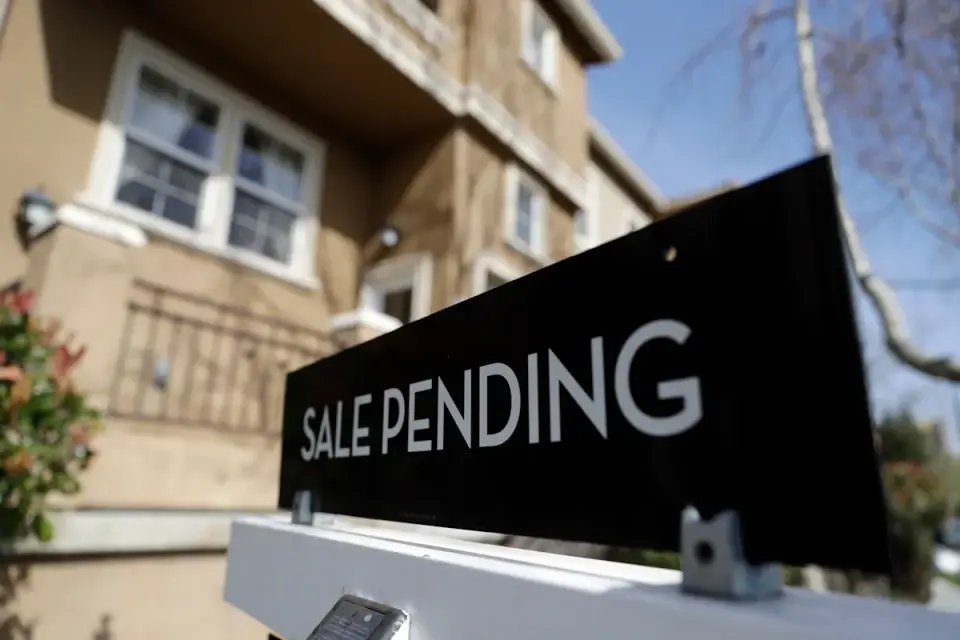
U.S. pending home sales fell 7.3% month-over-month and 11.3% year-over-year in September, reaching their lowest levels since at least 2001. This sharp decline followed a rapid rise in 30-year fixed mortgage rates, which climbed from approximately 6.7% to 7.6% during the month. The drop was steeper than economist forecasts, which had predicted a modest 0.5% monthly decrease. While job growth and income gains remain stable, rising borrowing costs have significantly reduced housing affordability, causing buyers to pause. Regional data shows declines across all areas, with the South and West experiencing the largest month-to-month drops. Additionally, home construction starts fell 4.56% to an annualized 859,000, marking the lowest level since September 2025, and homebuilder sentiment hit a 14-year low.
Key points
- Pending home sales dropped 7.3% from August and 11.3% from the previous year, hitting lows not seen since 2001.
- The 30-year fixed mortgage rate rose from roughly 6.7% to 7.6% in September, outpacing income growth and reducing affordability.
- Economists forecasted a much smaller decline, expecting only a 0.5% month-over-month drop and a 3.9% annual decrease.
- Home construction starts fell 4.56% to 859,000 annualized, the lowest since September 2025, while building permits dropped 4%.
- Homebuilder sentiment reached a 14-year low, with current sales, future expectations, and buyer traffic all declining.
- Regional declines were broad, with the South down 8.2% and the West down 9.2% month-over-month; Virginia Beach saw the largest annual drop at nearly 20%.
Background
This sharp contraction follows a trend of weakening housing activity in 2026. In late September, existing-home sales had already declined 2.2% year-over-year, marking the slowest pace of the year, while contract cancellations reached 14.5%, a near-record high. Simultaneously, rising Treasury yields pushed the 30-year mortgage rate to 7.58% by late September, its highest since November 2023. Despite record home equity levels, with $11.5 trillion available for borrowing, homeowners have largely avoided taking on new debt due to these higher rates and economic uncertainty. The current data confirms a deep freeze in the market, with construction starts hitting a 14-month low.
How outlets are covering it
Both Yahoo Finance and CNBC agree on the core statistics: pending sales fell 7.3% month-over-month and 11.3% year-over-year, driven by rising mortgage rates. However, they emphasize different aspects of the market's distress. Yahoo Finance focuses on the regional disparity, noting that while no region was immune, the smallest annual declines occurred in both the weakest and strongest markets, such as Nashville and Hartford. It highlights that affordability is the primary constraint despite stable job growth. CNBC, in contrast, emphasizes the broader construction and sentiment collapse, noting that homebuilder sentiment hit a 14-year low and that construction activity is expected to remain moribund into 2027. CNBC also points out that builders are using price cuts and incentives to unload inventory, which is cutting into profit margins. Both sources cite NAR chief economist Lawrence Yun, but CNBC adds commentary from Nationwide Financial and the National Association of Home Builders regarding the long-term drag on economic growth and supply-side constraints.
Why it matters
The plunge in pending sales and construction starts signals a significant slowdown in the housing sector, which is a major driver of U.S. economic growth. The disconnect between strong job markets and weak housing activity highlights how sensitive the market is to interest rate changes. As mortgage rates remain elevated, affordability challenges are likely to persist, potentially leading to further declines in new construction and home sales. This could impact related industries, including construction, retail, and financial services, and may influence Federal Reserve policy decisions regarding interest rates in the coming months.
What to watch
Analysts expect home construction activity to remain low through 2027 as the market adjusts to a higher rate environment. Builders are likely to continue using price cuts and incentives to clear inventory, which may pressure profit margins. The focus will shift to whether mortgage rates stabilize or continue to rise, as this will determine the pace of recovery in pending sales and new construction. Additionally, the impact of elevated construction costs and weaker consumer confidence on buyer traffic will be closely monitored in upcoming months.
- Home contract signings plunged in September amid higher mortgage rates Yahoo Finance
- September data shows housing market in a deep freeze CNBC
- Why Americans have stopped buying new homes The Economist
- US pending home sales fall to record low as mortgage rates surge Financial Times
- Homebuyers are canceling sales at near-record rates Yahoo Finance
Want the full story? Read the original reporting
Read on Yahoo Finance