
The Great Sentiment Disconnect: Why Americans Feel Poor While the Economy Booms
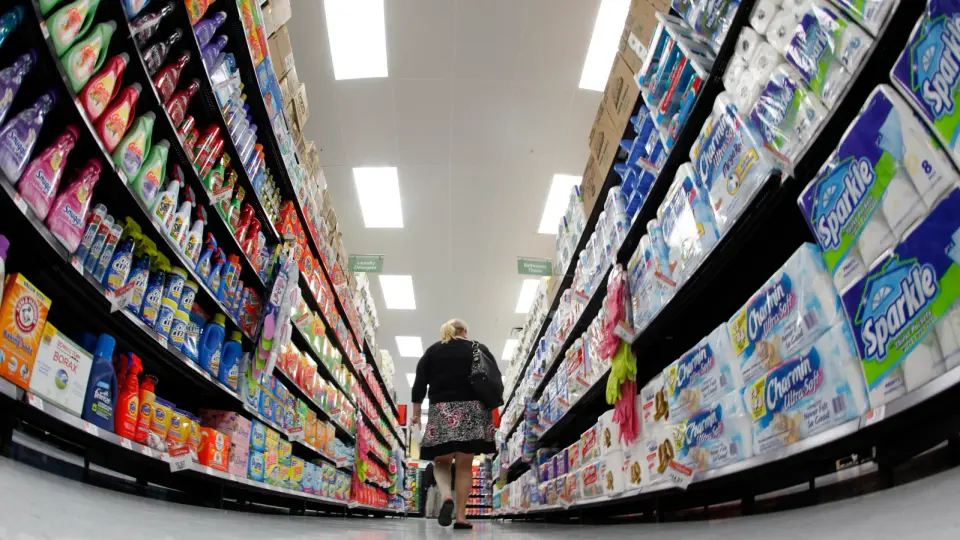
A persistent gap has emerged between objective economic indicators and subjective consumer sentiment in the United States. While spending and employment remain resilient, public mood has not recovered to pre-pandemic levels. Economists are increasingly relying on hard data over sentiment surveys, though some argue deeper analysis of survey distributions could reveal critical insights about wealth inequality and spending habits.
Key points
- Consumer sentiment has remained below pre-pandemic levels for six years, despite a recovery in the jobs market and spending.
- Chicago Fed President Austan Goolsbee stated that sentiment is no longer a reliable leading indicator for consumer spending.
- Consumer spending surged 0.9% in August, with real growth hitting its strongest level since March 2025.
- September payroll growth softened, but economists attribute this to a 'low hire, low fire' trend rather than mass layoffs.
- The Federal Reserve is prioritizing objective metrics like inflation and hiring over subjective mood surveys for forecasting.
Background
This disconnect follows a period where consumer sentiment dropped sharply during the pandemic and has never fully rebounded. Recent economic data shows resilience, but public perception lags behind. This situation contrasts with historical patterns where sentiment reliably predicted economic direction. The current environment includes stable inflation and strong discretionary spending, yet public mood remains gloomy.
How outlets are covering it
USA TODAY and AP News highlight the disconnect between strong economic data and low sentiment, noting that spending is robust despite pessimism. AP News emphasizes high gas prices as a driver of pessimism. A Wealth of Common Sense offers a broader critique, arguing that sentiment is lower than during the 2008 crisis and 1970s stagflation. It attributes this to cumulative price increases, housing costs, wealth inequality, and political polarization. The outlet also suggests that the shift to online surveys in 2024 may skew results toward sensationalism. USA TODAY notes that economists are moving away from sentiment as a primary tool, focusing instead on objective statistics, while some researchers suggest analyzing survey distributions could reveal spending concentration among the wealthy.
Why it matters
The divergence between mood and economic reality complicates policy-making and forecasting. If sentiment no longer predicts spending, traditional economic models may fail to anticipate downturns. Understanding the true drivers of consumer behavior, such as wealth inequality or housing mobility, is crucial for assessing long-term economic stability and the effectiveness of monetary policy.
What to watch
The Federal Reserve will continue to monitor objective indicators like inflation and hiring rather than sentiment. Researchers may explore deeper analysis of survey data to understand spending distribution. Consumer spending is expected to remain strong, but the persistent gloom could impact discretionary purchases if economic conditions worsen. The debate over the reliability of sentiment surveys will likely continue among economists and policymakers.
- Americans feel more and more glum, data shows. Economists are over it USA Today
- Why is Consumer Sentiment so Low? awealthofcommonsense.com
- Americans' view of the economy sinks to the lowest level since 2014, Conference Board survey says AP News
- US consumer confidence near 12-1/2-year low amid labor market fears Reuters
- Americans Haven’t Felt This Glum About The Economy Since 2014 Investopedia
Want the full story? Read the original reporting
Read on USA Today