
US Diesel Prices Stay Near Record Highs Despite Trump's Supply Pushes
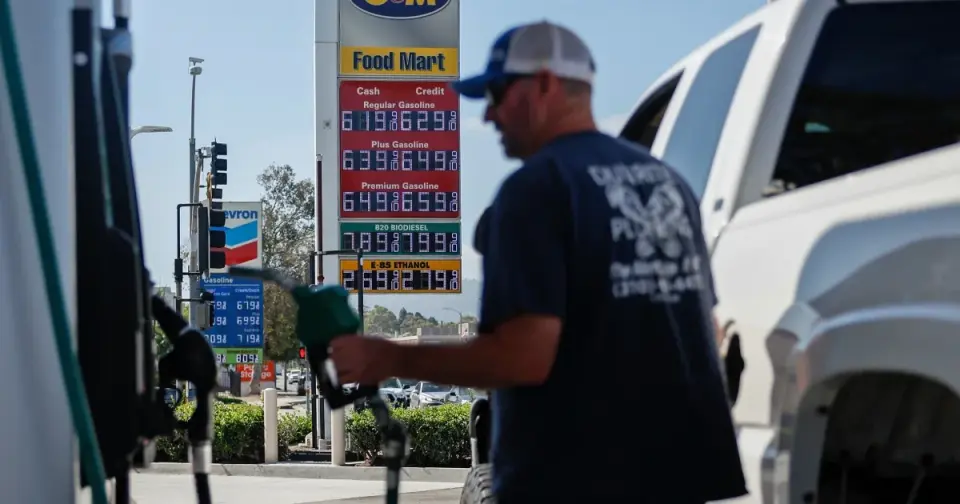
US diesel prices remain near record highs at $6.28 per gallon, up 70% since the US-Israel war with Iran began. Despite two major administrative moves to boost supply, prices have not fallen significantly. The first move was pressuring G7 allies to release 100 million barrels of oil reserves. The second was an executive order allowing tax-exempt 'red-dye' diesel on public roads. Industry experts argue these measures offer only temporary relief, as the root cause is a global supply crunch driven by conflicts in the Middle East and Ukraine. With the November 3 midterm elections approaching, high fuel costs are pressuring Republican constituencies, including farmers and truckers, and contributing to President Trump's record-low 32% approval rating.
Key points
- US diesel prices averaged $6.28 per gallon on Thursday, up 70% since the start of the US-Israel war with Iran.
- The administration pressured G7 allies to release 100 million barrels of oil and petroleum products to ease supply concerns.
- Trump signed an executive order allowing tax-exempt 'red-dye' diesel to be used on public roads through year-end.
- Industry groups report limited uptake of red-dye diesel due to unclear tax liabilities, logistical hurdles, and risks of fines.
- A Reuters/Ipsos poll shows cost of living is the top voter concern, with Trump's approval rating at a record-low 32%.
- Analysts state that only a durable end to conflicts in the Arabian Gulf and between Russia and Ukraine can significantly lower prices.
Background
This situation follows a period of rising energy costs, with oil prices topping $100 per barrel in September due to Middle East tensions. In early October, industry groups already warned that the red-dye diesel order would offer minimal relief due to implementation complexities. The current crisis is part of a broader global fuel supply crunch triggered by the US-Israel war with Iran and the ongoing Russia-Ukraine conflict, which have disrupted energy flows and reduced refining output.
How outlets are covering it
NBC News emphasizes that the G7 reserve release largely covers previous commitments rather than adding new supply, and that the red-dye diesel order has seen limited industry uptake due to tax and logistical issues. BBC highlights a new deal with Russia to release 300,000 tonnes of diesel immediately, which Trump claims will bring prices down fast, but notes that analysts view this as a temporary measure. The Washington Post frames these actions as last-minute attempts to lower prices ahead of the midterms, noting that the president has 'basically pulled all of the small levers' available. All sources agree that the fundamental issue is a tight global market for refined products, not taxation, and that durable solutions require resolving geopolitical conflicts.
Why it matters
High diesel prices are a critical issue for the November 3 midterm elections, as they affect traditional Republican constituencies such as farmers, truckers, and rural voters. The cost of living is the top concern for voters, and high fuel prices are contributing to a record-low approval rating for President Trump. The inability to lower prices despite multiple policy interventions could impact the narrow congressional majorities held by Republicans.
What to watch
The administration is pursuing longer-term energy policies while focusing on easing temporary disruptions. Treasury Department guidance is expected to clarify rules for using red-dye diesel. However, analysts predict that high prices will persist for at least four to six months due to damage to Middle Eastern facilities, even if conflicts are resolved. The next few weeks will show whether the Russian diesel deal and other measures have any significant impact on prices before the midterms.
- Trump’s moves to boost diesel supplies have not yet lowered prices NBC News
- US diesel prices remain high despite Trump's moves to boost supplies Yahoo Finance
- Trump wants to reduce the cost of fuel as the midterms loom - will it work? BBC
- Analysis | Trump is trying last-minute ways to bring down prices The Washington Post
- Little relief expected for gas prices ahead of Election Day, according to prediction markets CNBC
Want the full story? Read the original reporting
Read on NBC News