
US Markets Enter Deep Correction as AI Valuations Collapse Amid Rate Hikes and Leadership Crisis
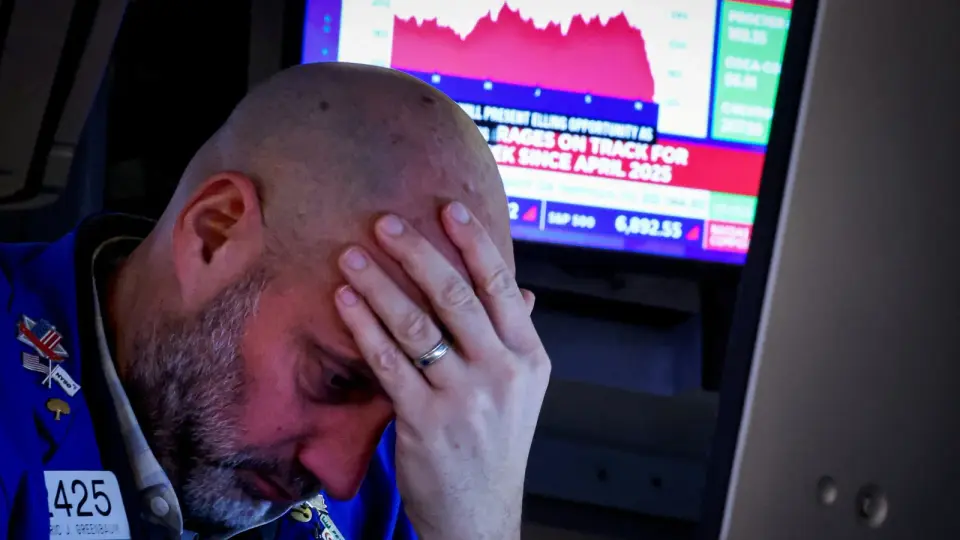
US stock indices have dropped into correction territory, with the Nasdaq falling 18% from its peak. The decline is driven by a combination of rising interest rates, political backlash against AI data centers, and the ouster of Nvidia CEO Jensen Huang. While some analysts view this as a healthy correction of overpriced assets, others argue the bubble burst is inevitable due to the low cost of competing Chinese AI models.
Key points
- The S&P 500 ended the week of Nov. 20 at 6,910, down 12% from its record high, while the Dow Jones fell 12% to 48,147.
- The Nasdaq Composite, heavily weighted toward technology, finished at 22,618, representing an 18% drop from its peak of 27,723.
- The Federal Reserve is predicted to raise interest rates in December, increasing the cost of financing for AI infrastructure and reducing the present value of future earnings.
- Democrats swept the November midterms, signaling intent to restrict AI data center construction, a project widely opposed by the public.
- Jensen Huang was ousted as CEO of Nvidia following a scandal involving a suspected Chinese spy, raising questions about the company's future growth trajectory.
- The cyclically adjusted price-to-earnings (CAPE) ratio for the S&P 500 stood at 36.44, approaching levels seen during the 1999-2000 dot-com bubble.
Background
Previous coverage noted that US markets had already entered a correction in late March 2026 due to geopolitical tensions, and that California faced potential budget deficits linked to AI-driven market gains. Earlier reports also highlighted that China’s tech sector had shed $2.4 trillion in value due to weak demand and US sanctions, suggesting global AI sentiment was already fragile before the current US sell-off.
How outlets are covering it
USA Today attributes the market plunge to a confluence of factors, including the Federal Reserve’s rate hike, the political backlash against data centers, and the leadership crisis at Nvidia. They emphasize that AI stocks were 'priced to perfection' and that the market is reacting to previously overlooked warning signs. In contrast, the Center for Economic and Policy Research (CEPR) argues the bubble burst is fundamentally driven by the economics of AI pricing. CEPR points out that Chinese open-weight models offer comparable performance at a fraction of the cost of US frontier models, making the projected trillion-dollar revenues for companies like OpenAI and Anthropic implausible. While USA Today frames the drop as a potential 'healthy feature' of markets correcting overvaluation, CEPR suggests the current decline is merely the beginning of a larger adjustment as investors realize the limited demand for expensive, high-tier AI services.
Why it matters
The correction signals a shift from boundless optimism to fundamental skepticism regarding AI profitability. Rising interest rates and political resistance to data centers threaten the massive borrowing required for AI infrastructure. If the market continues to fall, it could trigger broader economic instability, as seen in previous warnings about state budget shortfalls and global tech sector collapses.
What to watch
Investors will watch the Federal Reserve’s December meeting for interest rate decisions. The market will also assess whether Nvidia can maintain growth without its former CEO and how new Democratic legislation impacts data center projects. Analysts suggest that unless AI companies can demonstrate sustainable revenue growth independent of high valuations, further corrections may follow.
- Stocks are tumbling. Has the AI bubble finally burst? USA Today
- How much more air can come out of the AI trade? The Economist
- Pop! Goes the Bubble Paul Krugman | Substack
- US futures rally as AI rout pauses, Asian authorities prop up stocks Reuters
- The Economics Behind the Collapse of the AI Bubble Center for Economic and Policy Research
Want the full story? Read the original reporting
Read on USA Today