
Used Car Prices Hit Record Highs as Affordable Inventory Vanishes
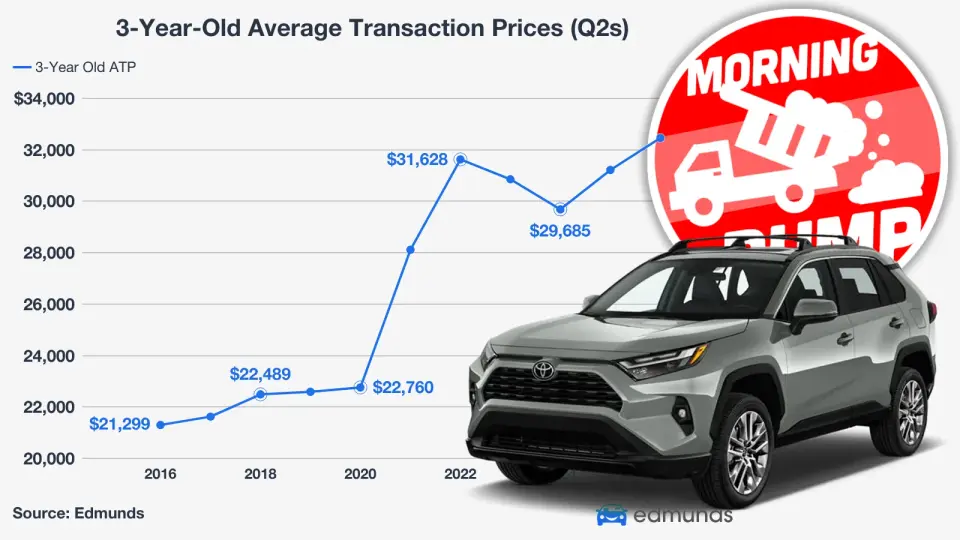
The average price for a three-year-old used car reached a record $32,461 in Q2 2026, driven by persistent supply shortages and shifting consumer preferences. Affordable options under $20,000 are increasingly scarce, forcing buyers to accept older, higher-mileage vehicles. While new car affordability remains stable for those with trade-ins, the broader market faces structural challenges from trade tariffs and reduced manufacturing output.
Key points
- Edmunds reports the average transaction price for a three-year-old used car hit a record $32,461 in Q2 2026, exceeding pandemic-era peaks.
- iSeeCars data shows only 11.4% of three-year-old used cars cost less than $20,000, down from nearly 50% in 2019.
- Cox Automotive notes that vehicles priced below $15,000 had just 32.2 days of supply in July, well below the 46-day market average.
- In the $10,000-$15,000 bracket, the average vehicle age rose to 8.7 years with 98,222 miles, compared to 4.7 years and 58,250 miles in 2019.
- Americans added $211 billion in new auto loans in Q2 2026, reflecting continued demand despite rising costs.
Background
This trend follows a period of semiconductor shortages during the pandemic that permanently repriced the used car market. Earlier coverage noted that while some housing markets remained affordable, broader consumer goods, including vehicles, have seen sustained price inflation. The current situation contrasts with 2019, when lower-priced inventory was more abundant, and highlights a shift where 'trimflation' and model mix changes have reduced the supply of entry-level vehicles.
How outlets are covering it
The Autopian attributes the price surge to a combination of 'trimflation,' where automakers prioritized higher-trim models, and a shift in consumer preference away from small sedans. It also highlights the impact of US-Canada trade tensions, noting that tariffs have made it more expensive to build cars in the US, potentially reducing domestic jobs. USA Today focuses on the practical trade-offs for buyers, noting that a $20,000 budget now buys a 3-year-old Kia or a 7-year-old Toyota, emphasizing the lack of mid-range options. Motor1.com provides a broader historical context, showing that the percentage of three-year-old cars under $20,000 has dropped by 76.9% since 2019, and notes that even mainstream models like the Honda Civic have seen used prices rise by nearly 45%. While The Autopian points to policy and supply chain issues, Motor1 emphasizes the sheer statistical decline in affordable inventory, and USA Today highlights the specific brand-level trade-offs consumers face.
Why it matters
The rising cost of used cars directly impacts household budgets and consumer debt, as evidenced by the surge in auto loans. The scarcity of affordable vehicles forces buyers to choose between older, higher-mileage cars or taking on more debt, affecting financial stability. Additionally, the trade policy disputes between the US and Canada may have long-term effects on domestic manufacturing jobs and vehicle availability, potentially exacerbating the supply shortage. This trend also signals a broader shift in the auto market, where affordability is increasingly linked to vehicle age and mileage rather than just brand or model, changing how consumers approach car purchases.
What to watch
Negotiations between the US and Canada over auto tariffs are ongoing, with Trump proposing new rules that could take effect soon. If tariffs remain high, automakers may accelerate automation to cut costs, potentially reducing manufacturing jobs. The used car market may see further price increases if supply remains constrained, or slight relief if new car production ramps up and more vehicles enter the used market. Buyers may continue to face trade-offs between age, mileage, and price, with affordable options remaining scarce in the near term.
- Why It’s Getting So Hard To Find An Affordable Used Car The Autopian
- Want a cheap used car? Check these 10 brands that cost less than $20K USA Today
- Another Study Shows That Car Prices Remain Wild thetruthaboutcars.com
- Used Cars Under $20,000 Are Disappearing. And The Numbers Are Brutal Motor1.com
- Used Lots Getting the Business F&I and Showroom
Want the full story? Read the original reporting
Read on The Autopian