
Brent Crude Surges Past $105 as Hormuz Attacks and Gulf Hurricane Squeeze Supply
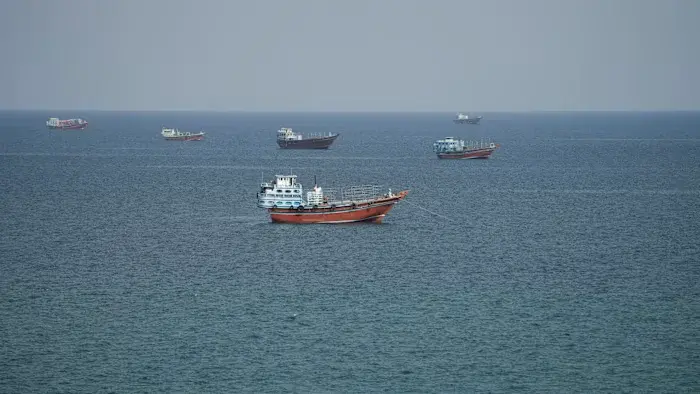
Oil prices jumped 5% on Thursday as Brent crude exceeded $105 per barrel, driven by a surge in tanker attacks in the Strait of Hormuz and production halts in the US Gulf of Mexico due to Hurricane Isaias. While shipping traffic had recently recovered to nearly 90% of pre-war levels, it has since collapsed to a two-month low. The price spike triggered a global bond sell-off and raised inflation fears, even as US President Donald Trump stated the US would not attack Iran before the November midterm elections.
Key points
- Brent crude rose 4.1% to $104.28, while West Texas Intermediate increased 3.6% to $91.49, after peaking at 5% higher earlier in the day.
- UK Maritime Trade Operations reported nine attacks on vessels near the Strait of Hormuz in the first week of October, compared to 13 in all of September.
- Tanker traffic through the strait fell to 4 million barrels on Tuesday, down from a late-September peak of 15 million barrels per day.
- Houthi attacks on Saudi airports killed three people, while Iran fired missiles at a tanker off Oman, marking the first such attack outside the strait in a month.
- Hurricane Isaias forced Shell and Chevron to halt production in the Gulf of Mexico, adding to supply constraints.
- The International Energy Agency confirmed it would not add to the 400 million barrels of oil released in March, though it pledged to accelerate the release of the remaining 100 million barrels.
Background
This escalation follows a fragile recovery in oil flows through the Strait of Hormuz, which had reached nearly 80% of pre-war levels by late September. Previous reports indicated that while crude volumes were rising, refined fuel flows remained constrained and global inventories were depleted. The current surge in attacks marks a reversal of that trend, with traffic dropping to its lowest level since late July.
How outlets are covering it
The Financial Times and CNN emphasize the sharp decline in shipping volumes and the record number of attacks as the primary drivers of the price spike. CNN highlights the 'tug-of-war' between improving supply and lingering threats, noting that European diesel prices rose 6% and inflation fears are intensifying. The Guardian focuses on the macroeconomic fallout, detailing a global bond sell-off and rising yields in the UK, France, and Germany, as well as the potential for US strikes on Iran before the midterms. OilPrice.com notes that producers are now willing to risk vessel damage to move oil, as there are no alternative routes to international markets. All sources agree on the immediate impact of the hurricane and the attacks, but differ in emphasis: CNN and the Guardian highlight the financial market reaction and inflation risks, while OilPrice.com focuses on the logistical desperation of Gulf producers.
Why it matters
The spike in oil prices threatens to reignite global inflation, forcing central banks to consider interest rate hikes. The disruption in the Strait of Hormuz, a critical chokepoint for global energy, could lead to further supply shortages and higher energy costs for consumers and businesses worldwide. The geopolitical tension between the US and Iran, combined with the hurricane's impact on US production, creates a volatile environment for energy markets and global economic stability.
What to watch
Investors will monitor the pace of the IEA's remaining 100 million barrel release and any further developments in US-Iran negotiations. The path of Hurricane Isaias will determine the extent of production losses in the Gulf of Mexico. Additionally, the frequency of attacks in the Strait of Hormuz will be a key indicator of whether oil flows can recover or if prices will continue to rise.
- Oil prices jump on tanker attack and slowing flows through Strait of Hormuz Financial Times
- Oil prices jump amid record tanker attacks in Hormuz | CNN Business CNN
- Stock Market Today: Oil Rises, Dow Futures Slide After Fresh Tanker Attack — Live Updates WSJ
- Oil Jumps 5% as Iran Steps Up Attacks on Hormuz Tankers Crude Oil Prices Today | OilPrice.com
- Oil prices jump 5% on Middle East tensions and US hurricane threat The Guardian
Want the full story? Read the original reporting
Read on Financial Times