
U.S. Strategic Petroleum Reserve hits 40-year low amid Iran conflict
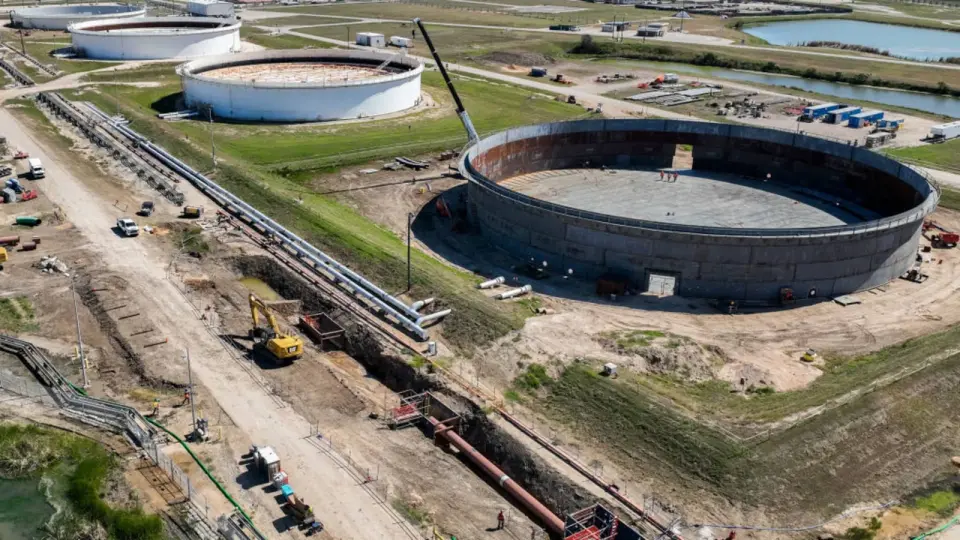
The U.S. Strategic Petroleum Reserve (SPR) dropped below 300 million barrels last week, reaching its lowest level since 1983. The reserve fell by 6.1 million barrels to 298.7 million, driven by a 172 million barrel release ordered by President Trump in March following Iran’s disruption of oil exports through the Strait of Hormuz. While the SPR’s authorized capacity is 714 million barrels, current levels raise concerns about future flexibility. The reserve is expected to reach 243 million barrels once the current release concludes, though officials note it remains above the 70 million barrel minimum required for safe operation.
Key points
- The SPR inventory decreased by 6.1 million barrels to 298.7 million, marking the lowest level since January 1983.
- President Trump ordered the release of 172 million barrels in March after Iran restricted oil exports via the Strait of Hormuz.
- The SPR’s authorized storage capacity is 714 million barrels, but current levels are far below this maximum.
- The reserve is projected to fall to 243 million barrels when the current release is completed.
- The Department of Energy states the minimum amount of oil needed for safe operation is approximately 70 million barrels.
- A May report by the Government Accountability Office warned that aging infrastructure limits the SPR’s drawdown and fill capabilities.
Background
The SPR was created in 1975 to serve as a buffer against supply disruptions. In recent years, presidents have increasingly relied on the reserve to stabilize energy markets. President Biden released 180 million barrels in 2022 following Russia’s invasion of Ukraine, the largest release in the SPR’s history. Our archive indicates that as of July 2026, the SPR was already at its lowest level since 1983, with analysts warning that dwindling reserves limit the U.S. government’s ability to influence oil prices amid ongoing tensions in the Middle East. The current drawdown follows a broader trend of using the SPR to address geopolitical shocks, though experts note that frequent releases accelerate the degradation of storage infrastructure.
How outlets are covering it
CNBC emphasizes the historical significance of the SPR’s low level and the potential risks to its operational capability due to aging infrastructure. The outlet highlights concerns from the Government Accountability Office about construction outages and cavern issues that limit the reserve’s flexibility. Newsquawk, a trading-focused source, frames the SPR drawdown as a transfer of stock rather than a loss of supply, noting that the barrels move from government caverns to commercial hands. It suggests that while the immediate effect is mildly bearish for crude prices, the long-term implication is a reduced capacity for future releases, which could eventually force a refill decision that shifts the government from seller to buyer. Newsquawk also notes that the pace of draws and any signaling on replenishment pricing could influence deferred spreads in the oil market.
Why it matters
The SPR’s low level reduces the U.S. government’s ability to respond to future supply disruptions, potentially leaving the country more vulnerable to price spikes. The reserve’s aging infrastructure and limited operational capacity could exacerbate this vulnerability, especially if another major conflict or chokepoint closure occurs. As oil prices remain elevated due to the Iran conflict, the SPR’s depletion may force the U.S. to rely on other, less effective levers to stabilize energy markets. The situation also highlights the broader trend of using strategic reserves to address geopolitical shocks, which could accelerate the degradation of the SPR’s infrastructure and limit its long-term utility.
What to watch
The SPR is expected to reach 243 million barrels when the current release is completed. The U.S. government may need to initiate a refill process to restore the reserve to a more sustainable level, though this could be complicated by aging infrastructure and ongoing construction outages. Any decision on replenishment pricing could influence oil market dynamics, as a shift from seller to buyer could anchor deferred spreads. The pace of future draws and any legislative or executive actions to address the SPR’s operational limitations will be key factors in determining the reserve’s long-term viability.
- Oil in U.S. Strategic Petroleum Reserve falls below 300 million barrels, lowest since 1983 CNBC
- U.S. Strategic Petroleum Reserve drops below 300 million barrels qz.com
- US crude oil supplies at 45-year low WOODTV.com
- US emergency oil reserve falls below 300M barrels for first time since 1980s thehill.com
- Stocks of crude oil in the US SPR fell by about 6.1mln bbls to 298.7mln bbs last week, lowest since 1983 newsquawk.com
Want the full story? Read the original reporting
Read on CNBC