
Data Centre Cooling Shifts from Water to PFAS and Direct Liquid Systems
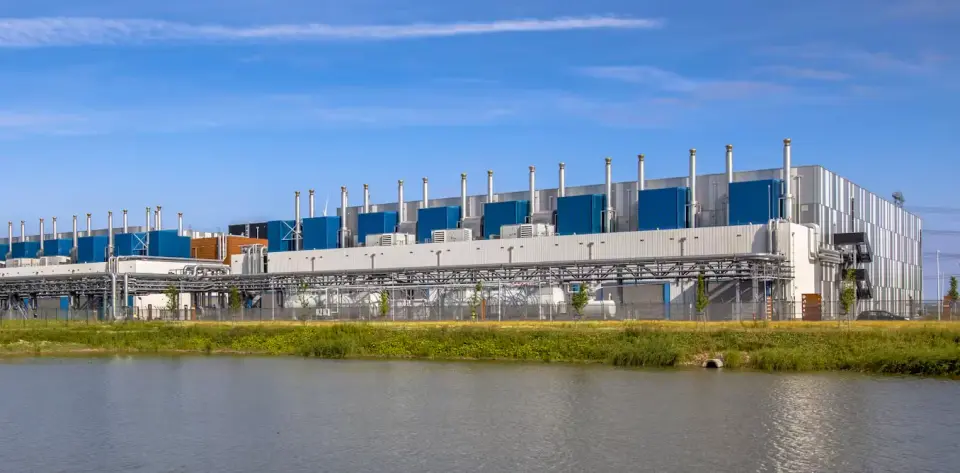
As AI-driven data centre expansion strains global water supplies, the industry is pivoting toward direct-to-chip liquid cooling and immersion systems to reduce consumption. However, experts warn these alternatives may introduce unregulated PFAS pollution, creating a new environmental trade-off.
Key points
- A UN report projects that AI data centres will consume water equivalent to the needs of 1.3 billion people by 2030, driving a search for alternatives to traditional evaporative cooling.
- Direct-to-chip liquid cooling uses water to extract heat directly from CPUs and GPUs, achieving higher temperatures (60°C+) and reducing the energy required for fans and compressors compared to air cooling.
- While direct liquid cooling lowers water usage, it often relies on PFAS-based fluids for immersion cooling, raising concerns about 'forever chemical' contamination in air and soil.
- In the US Midwest, data centres account for roughly 50% of the increase in electricity demand, with Ohio alone hosting over 200 facilities and facing significant water stress in the Great Miami Buried Valley Aquifer.
- Regulatory gaps exist: UK and EU PFAS bans are not fully effective for two years, allowing current data centre construction to use restricted chemicals without immediate legal consequence.
Background
The global push for AI infrastructure has intensified scrutiny of data centre resource consumption. Previous coverage highlighted the financial risks of massive AI campuses, such as the $14bn Meta-BlackRock project in El Paso and the $15bn refinancing for a Google-backed facility in Texas, underscoring the scale of investment. Simultaneously, water scarcity remains a critical human rights issue, as seen in Kibera, Nairobi, where lack of access drives severe social instability. The current shift in cooling technology represents a response to these compounding pressures on water and energy grids.
How outlets are covering it
The Conversation emphasizes the technical superiority of direct-to-chip cooling for energy efficiency, noting that while air is safer, it is a poor heat conductor, leading to high electricity use. WVXU highlights the regional impact in the US Midwest, where data centres are driving up electricity prices and straining local aquifers, with experts noting that 80% of a data centre's water footprint is actually at the power plant, not the facility itself. Air Quality News raises a critical counterpoint: while new cooling methods save water, they may release PFAS into the atmosphere. Experts like Dr. Jennifer Brandon argue that without comprehensive environmental studies, it is unclear whether PFAS pollution is a better trade-off than water depletion, especially given that PFAS persists in the environment for centuries.
Why it matters
The transition to water-saving cooling technologies is not a simple solution but a complex trade-off between water conservation and chemical pollution. As data centres become critical national infrastructure, the lack of regulatory frameworks for PFAS emissions and the strain on local water resources pose long-term health and environmental risks that current planning policies may not adequately address.
What to watch
Regulators in the UK and EU are expected to implement stricter PFAS restrictions within two years, but a gap remains where current construction can proceed without these constraints. In the US, state agencies like the Ohio EPA are conducting studies on water availability to guide future approvals, while the industry continues to adopt hybrid cooling systems that balance water and electricity use. Monitoring for airborne PFAS is likely to increase as public awareness grows.
- There’s a better way to cool data centres that cuts their huge thirst for water The Conversation
- What we do and don't know about the environmental impact of data centers wvxu.org
- AI’s water problems run deep Fast Company
- AI data centres are being criticised for the water they use, but one kilogram of beef can require roughly 15,000 litres to produce — a staggering reminder that some of the biggest environmental costs are still sitting on our plates Space Daily
- Hidden impact: PFAS, air pollution and data centres Air Quality News
Want the full story? Read the original reporting
Read on The Conversation